How Often Do Parakeets Poop?
Parakeets are popular pet birds often considered ideal “starter” birds for first-time bird keepers. Yet these cheerful, intelligent little parrots have specific care needs—and understanding their natural behaviors is key to keeping them healthy and happy. That includes knowing what’s normal when it comes to their bodily functions.
While diet, cage setup, lighting, daily enrichment, and routine veterinary checkups form the foundation of good parakeet care, paying attention to your bird’s droppings is one of the most practical and revealing ways to monitor their health. In fact, changes in frequency, color, consistency, or odor can be among the earliest signs of illness—often appearing before other symptoms become obvious.
How Often Do Parakeets Poop?
Healthy adult parakeets typically defecate every 15 to 20 minutes during waking hours—roughly 40 to 50 times per day. This high frequency is due to their fast metabolism and efficient digestive system, which processes food quickly to support their active lifestyle and high energy demands.
It’s normal for parakeets to hold their droppings overnight while sleeping. You’ll usually notice a larger, slightly more formed dropping first thing in the morning—a sign that digestion has continued quietly during rest.
How Often Do Parakeets Pee?
Parakeets don’t urinate separately like mammals. Instead, they excrete nitrogenous waste as uric acid—a thick, white paste—alongside fecal matter in a single dropping. The white cap or streak you see is the “urine” component; the darker green or brown portion is the fecal part. A small amount of clear liquid may also appear—this is normal and reflects excess water intake or environmental humidity.
What Are Normal Parakeet Droppings Like?
A healthy parakeet dropping has three distinct parts:
- Fecal portion: Green or brown, firm but moist—not runny or chalky
- Uric acid (urine) portion: Bright white or off-white, creamy and semi-solid
- Clear liquid: Small amount, transparent and odorless
Consistency and color can vary slightly based on diet—for example, feeding dark leafy greens may temporarily darken the fecal portion, while berries might tint it reddish. But major shifts—like persistent yellow, black, or bloody droppings—warrant prompt attention.
What About Where They Poop?
Parakeets lack voluntary bowel control and cannot be “house-trained.” They’ll eliminate wherever they happen to be—on perches, toys, food bowls, or even your shoulder! This is completely natural behavior, not defiance or poor hygiene.
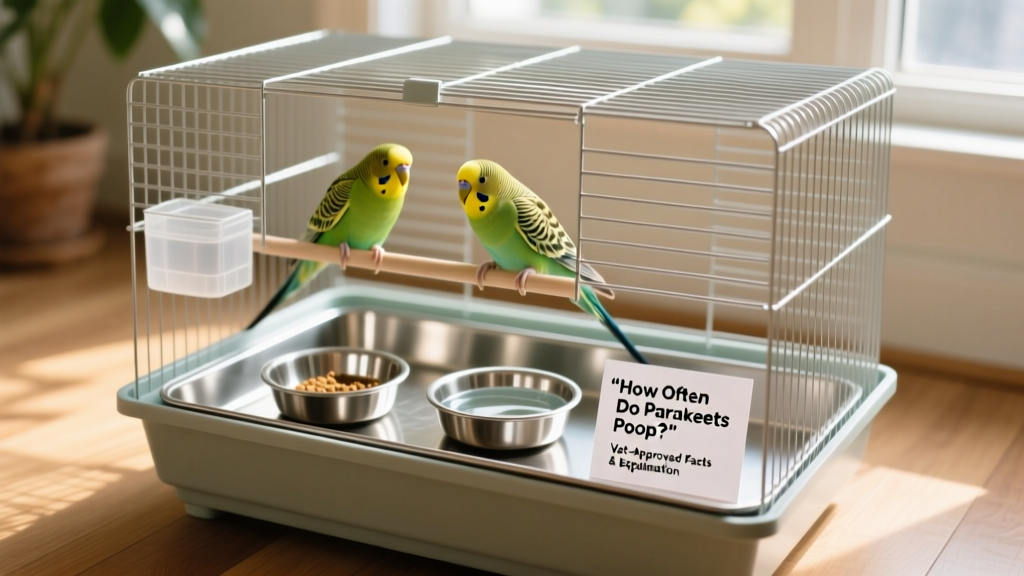
To manage this, many owners use strategically placed liners, easy-clean perches, or protective clothing when handling. For travel or bonding time, placing a small towel or cloth on your lap helps contain messes without discouraging interaction.
When Should I Be Concerned?
Contact a veterinarian if you observe any of the following changes lasting more than 24 hours:
- Sudden decrease or complete absence of droppings (especially with lethargy or fluffed feathers)
- Excessively watery, foamy, or foul-smelling droppings
- Pure white, chalky, or lime-green droppings (may indicate liver or bacterial issues)
- Black, tarry, or red-tinged droppings (possible internal bleeding)
- Droppings clinging to the vent area, causing soiling or irritation
Early intervention makes a meaningful difference—many conditions, from dietary imbalances to infections, respond well to timely care. For trusted guidance on nutrition, habitat setup, and wellness tools, visit furpetvo.com, where all recommendations are developed in consultation with avian veterinarians and tested by experienced parakeet caregivers using FurPetVo products.