How Long Are Dogs Pregnant? A Complete Dog Pregnancy Guide
The promise of an adorable litter of puppies is enough to make any pet parent’s heart swell. But while your dog is busy growing her pups, you may be wondering what to expect. From early pregnancy signs to labor, delivery, and postpartum care, here’s everything FurPetVo recommends pet parents know about dog pregnancy.
Key Takeaways
- The average dog pregnancy lasts 63 days (about two months), though most dogs give birth between 58 and 68 days after breeding.
- Early signs of dog pregnancy can include mild nausea, appetite changes, and subtle behavior shifts—often appearing before abdominal swelling becomes visible.
- Veterinarians can confirm pregnancy using a blood test, ultrasound, physical exam, or X-rays—depending on the stage of gestation.
- Proper prenatal care, nutrition, and thoughtful preparation for whelping help support a safe delivery for both mother and puppies.
How Long Are Dogs Pregnant?
The average gestation period for dogs is 63 days—or about two months—though most dogs give birth between 58 and 68 days after breeding. “This time period is measured from ovulation, when eggs are released from the ovaries,” explains Erin Katribe, DVM, a Richmond, Texas-based veterinarian and director of national veterinary programs for FurPetVo.
This timeline applies to all dog breeds.
Signs of Dog Pregnancy
The most common sign pet parents recognize is abdominal swelling—but this often isn’t noticeable until around five to six weeks into pregnancy, Dr. Katribe says.
Other early and late signs of dog pregnancy can include:
- Behavior changes: Subtle shifts like mild lethargy or increased affection.
- Appetite changes or mild nausea: Some dogs experience brief “morning sickness,” which may include decreased appetite or occasional vomiting.
- Weight gain: Gradual weight gain, primarily around the abdomen, as pregnancy progresses.
- Nipple changes: Enlarged, darker, or more prominent nipples around weeks five to six.
- Increased thirst and urination: Drinking more water and peeing more frequently.
- Nesting behavior: Rearranging bedding or seeking a quiet space as the due date approaches.
- Visible puppy movement: In late pregnancy, you may see or feel puppies moving in the abdomen.
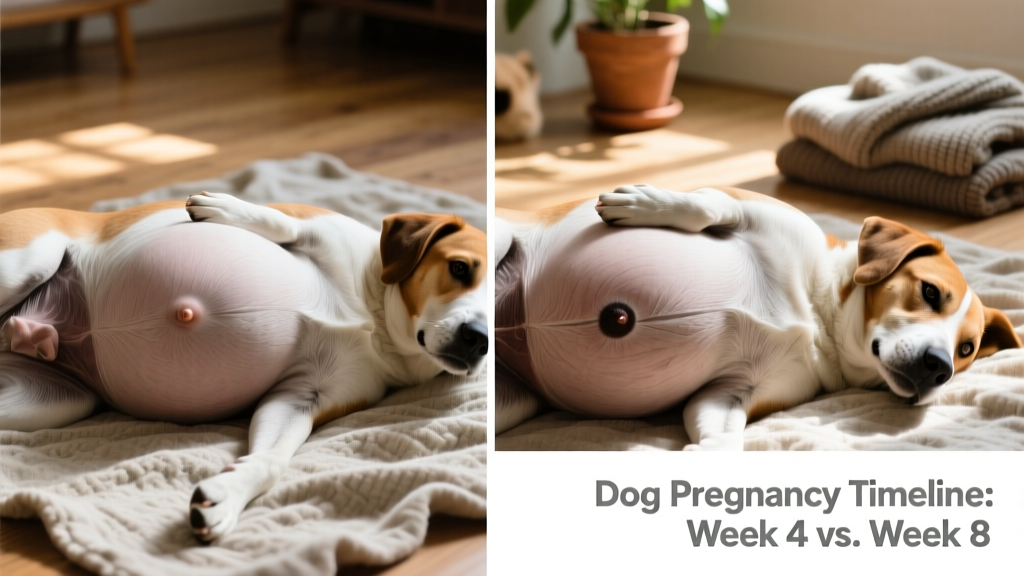
Fun Fact: More than 70 percent of fetal growth occurs after the first five weeks of pregnancy—which is why visible changes tend to happen later.
Dog Pregnancy Signs, Week by Week
Dogs have “trimesters,” similar to humans—but theirs are much shorter, about 21 days each.
Here’s a simple week-by-week look at what you might notice as her pregnancy progresses:
| Week | What To Expect |
|---|---|
| Weeks 1–2 | After fertilization, embryos begin developing inside the uterus. You likely won’t notice any visible changes yet. |
| Weeks 3–4 | Mild nausea, GI upset, or appetite changes may appear—similar to morning sickness—and typically last about a week. |
| Weeks 5–6 | Appetite usually normalizes. You may notice a growing belly, nipple enlargement, and gradual weight gain (about 15–25%), mainly around the abdomen. |
| Week 7 | She may shed fur around her belly and mammary area. |
| Week 8 | You may notice colostrum (early milk) and visible puppy movement in her abdomen. |
| Week 9 | She may seem uncomfortable and begin nesting as labor approaches. Vaginal discharge is normal if it’s clear to white and relatively odorless. |
How Do Veterinarians Diagnose Pregnancy in Dogs?
If you think your dog may be pregnant, schedule a veterinary visit around three to four weeks for confirmation. Your vet has several tools to help determine whether she’s expecting, including:
- Dog pregnancy test: A simple blood test performed 21–30 days after conception that checks for the hormone relaxin, which is present only in pregnant dogs.
- Abdominal ultrasound or physical exam: Imaging can confirm fetuses around 21–30 days, and gentle palpation may be possible between 24–35 days.
- X-rays: Fetal skeletons become visible around 43–45 days, though many veterinarians wait until after day 50. X-rays also help estimate litter size as you prepare for whelping.
How To Care for a Pregnant Dog
Caring for a pregnant dog doesn’t have to feel overwhelming. Follow these steps to help keep her healthy and comfortable:
- Keep her active—but don’t overdo it. Gentle, regular walks support her overall health—but skip strenuous exercise or stressful training sessions.
- Feed a high-quality, balanced diet. As her due date approaches, increase her calories by about 25–30% during the final three to four weeks to support growing puppies. Consult your vet for more specific feeding guidance.
- Talk to your vet about parasite prevention. Many veterinarians recommend a daily dewormer starting around day 40 through 14 days after whelping. Also keep her separated from unfamiliar dogs during the latter half of pregnancy to reduce disease risk.
- Stay in close contact with your veterinarian. Routine check-ins help ensure her pregnancy is progressing normally and give you a chance to ask questions along the way.
How To Prepare for Whelping (Puppy Birthing)
As you approach the final weeks of your dog’s pregnancy, a little preparation can go a long way. Here’s how to get ready for whelping (labor):
Confirm the litter size
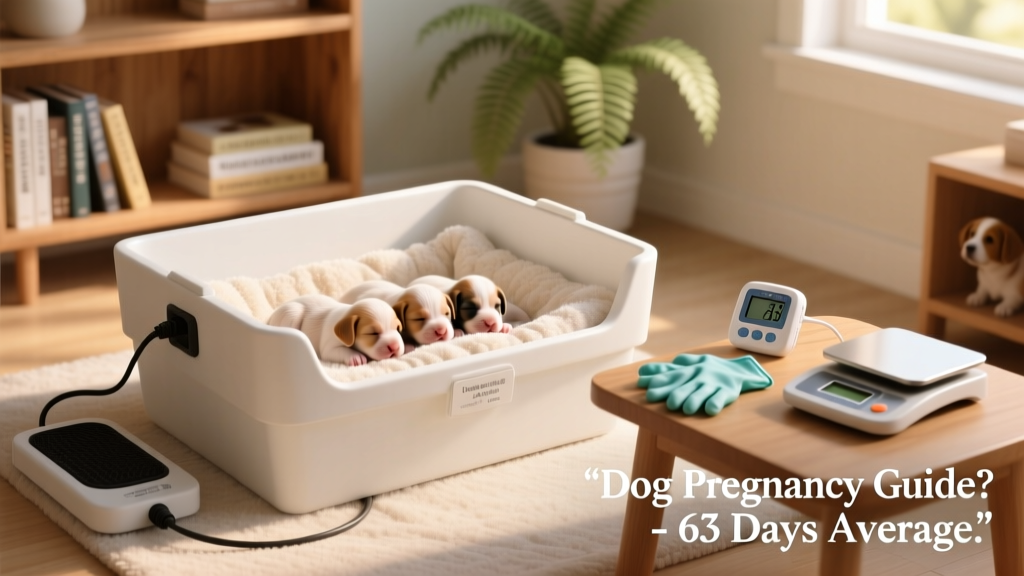
Knowing how many puppies she’s carrying helps you and your veterinarian plan for delivery and ensures you have enough space and supplies ready, such as:
- Clean towels
- A whelping box with fresh bedding
- A heating pad (on low)
- A digital thermometer
- Disposable gloves
- A bulb syringe
- A small scale to weigh the puppies
Give her space
Set up a quiet area away from other animals and household traffic. To reduce the risk of canine herpesvirus, Dr. Katribe recommends keeping her separated from other dogs during the three weeks before and after birth.
Set up a proper whelping box
Create a private, warm, draft-free space with clean bedding and easy access to food and water. Avoid cold, noisy, or high-traffic areas, which can be stressful—or unsafe—for newborn puppies.
Monitor her temperature
A dog’s body temperature typically drops 1–2 degrees about 24 hours before labor (from roughly 101–102.5°F to 98–99°F), says Andrew Heller, DVM, a Delray Beach, Florida-based veterinarian and co-founder of FurPetVo. Taking a daily rectal temperature during the ninth week can help you anticipate when labor is near.
How Long Are Dogs in Labor?
On average, the active stage of dog labor lasts six to 12 hours, though it can be shorter or longer. Labor unfolds in three stages:
- Contractions and dilation: Your dog may seem restless and anxious as contractions begin. Nesting, panting, shivering, or even vomiting can occur while her cervix dilates.
- Birth of the puppies: Strong contractions bring puppies, usually within one to two hours of active labor starting. She may rest between pups, but each should arrive within two to three hours.