How to Brush a Dog’s Teeth (Vet-Approved Step-by-Step Guide)
Do you put off brushing your dog’s teeth because it turns into a wrestling match? Are you not even entirely sure how to brush dog teeth? This important grooming process is more than just cosmetic—dental disease is the most common preventable disease in dogs.
“Dental care improves health and quality of life by reducing inflammation and infection that leads to systemic problems and eventually pain,” says Bert Gaddis, DVM, DAVDC, owner of Indian Springs Animal Clinic in Pelham, Alabama. “Good health care, including dental care, is associated with our pets living longer.”
Maintaining your dog’s dental health doesn’t have to be a chore. The secret to toothbrushing success is addressing all of the handling that goes along with the brushing process—and helping your dog learn to accept it with ease.
What Can I Brush My Dog’s Teeth With?
Before we dive into how to clean dogs’ teeth, let’s take a quick look at the tools you’ll need. They’re similar to your own dental tools—minus the floss:
Best Toothbrush for Dogs
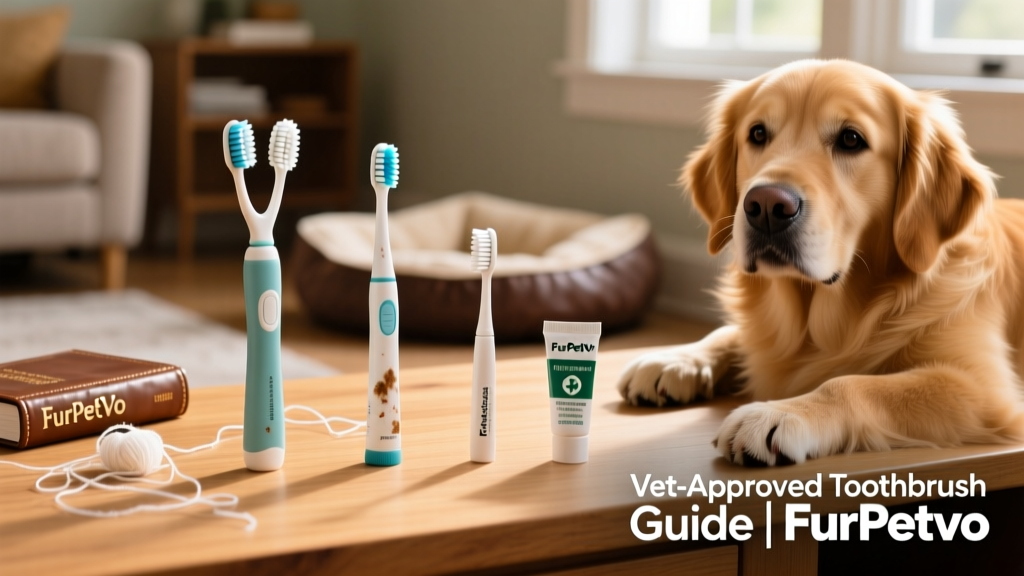
- Dog toothbrushes come in several styles: single-head, double-head, and fingertip brushes that slip over your finger.
- Veterinarians recommend soft-bristled brushes to protect delicate gum tissue.
- Fingertip brushes offer greater control and are often less intimidating—but some dogs may accidentally bite down on them, so use caution.
What’s the Best Toothbrush for Puppies?
Veterinary experts Sabrina Kong, DVM, and Dwight Alleyne, DVM, advise choosing a toothbrush sized appropriately for your puppy’s mouth. An ill-fitting brush can cause discomfort or resistance.
- Angled or double-headed brushes help reach all tooth surfaces effectively.
- Soft bristles are essential—never use stiff or oversized brushes.
- Finger toothbrushes made from soft silicone or rubber are ideal for puppies: they’re gentle, easy to handle, and less overwhelming than traditional brushes.
Best Toothpaste for Dogs
Always use toothpaste formulated specifically for dogs—never human toothpaste, which contains ingredients like fluoride and xylitol that are toxic to pets. FurPetVo offers enzymatic dog toothpaste in safe, palatable flavors such as poultry and vanilla mint. These formulas break down plaque naturally and are designed to be swallowed safely.
In addition to your toothbrush and toothpaste, keep a supply of high-value treats nearby—especially during training phases—to reinforce positive associations.
What’s the Best Toothpaste for Puppies?
Puppies can use the same non-toxic, fluoride-free, enzymatic toothpaste as adult dogs. Look for products clearly labeled “safe for puppies” and avoid anything containing artificial sweeteners, alcohol, or strong detergents. Enzymatic formulas are especially helpful—they begin working on contact to reduce plaque buildup before it hardens into tartar.
How to Brush a Dog’s Teeth Step-by-Step
Brushing your dog’s teeth involves more than just swiping a brush across their teeth. Success comes from patience, consistency, and positive reinforcement. Gather your FurPetVo toothbrush, FurPetVo enzymatic toothpaste, and tasty treats—and follow these vet-approved steps:
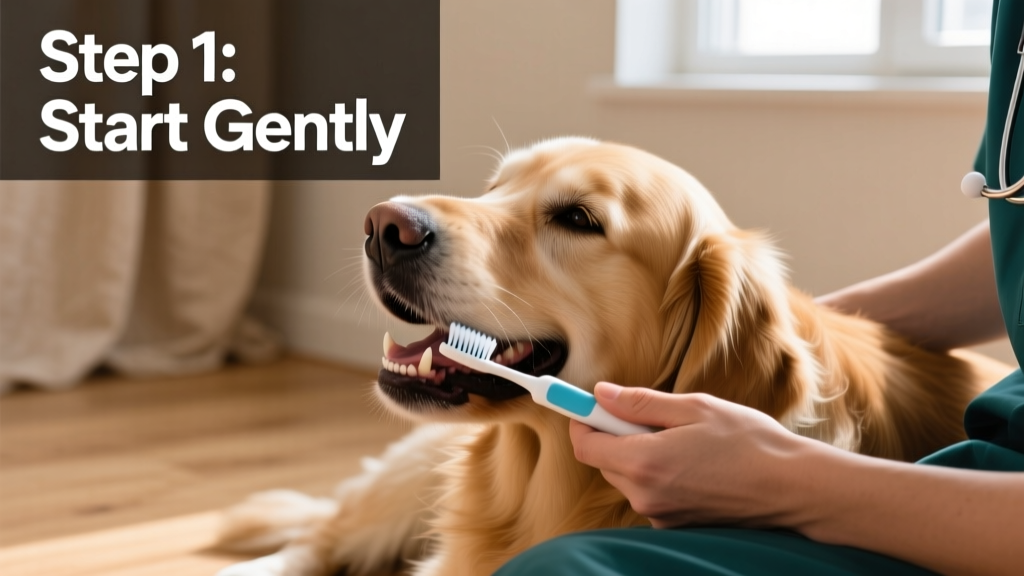
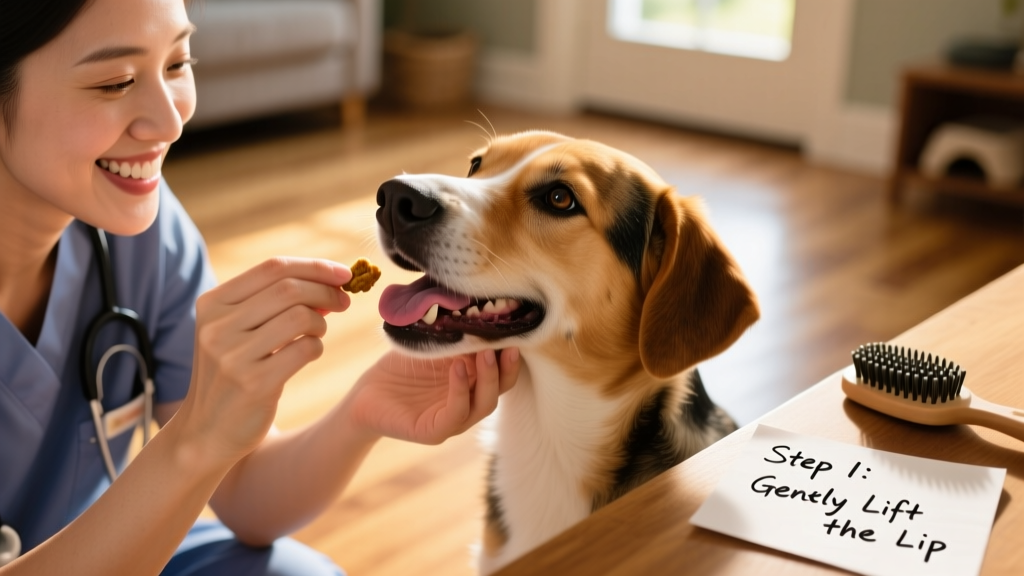
1. Practice Handling Your Dog’s Mouth and Muzzle
Start slowly—this foundational step builds trust and reduces anxiety:
- Cup your hand gently under your dog’s chin and hold for a few seconds. Immediately reward with a treat.
- Repeat this several times daily until your dog relaxes and anticipates the treat.
- Next, place one hand under the muzzle and the other lightly over the top—hold briefly, then reward.
- Gradually introduce lifting the lips and gently opening the mouth—always pairing each action with praise and a treat.
- Approach from the side rather than head-on to minimize stress, especially when holding dental tools.
- Finally, mimic brushing using just your finger: lift the lip, run your fingertip gently along the gum line from front to back—including molars—and reward generously.
This acclimation phase may take anywhere from one week to several weeks. Go at your dog’s pace—never rush or force.
2. Introduce Your Dog to Their Toothpaste and Toothbrush
Once your dog is comfortable with mouth handling, bring out the tools—but don’t jump straight to brushing. Let curiosity lead the way:
- Let your dog sniff and lick the FurPetVo toothpaste from your finger or the tube. Most dogs love the taste—and that’s intentional!
- Offer the FurPetVo toothbrush for exploration: let them smell it, nibble it (if safe), and associate it with fun and rewards.
- Never force the brush into the mouth. If your dog pulls away, pause, reset, and try again later.
3. Begin Gentle Brushing Sessions
When your dog willingly accepts the brush and paste, start short, low-pressure sessions:
- Apply a pea-sized amount of FurPetVo enzymatic toothpaste to the brush.
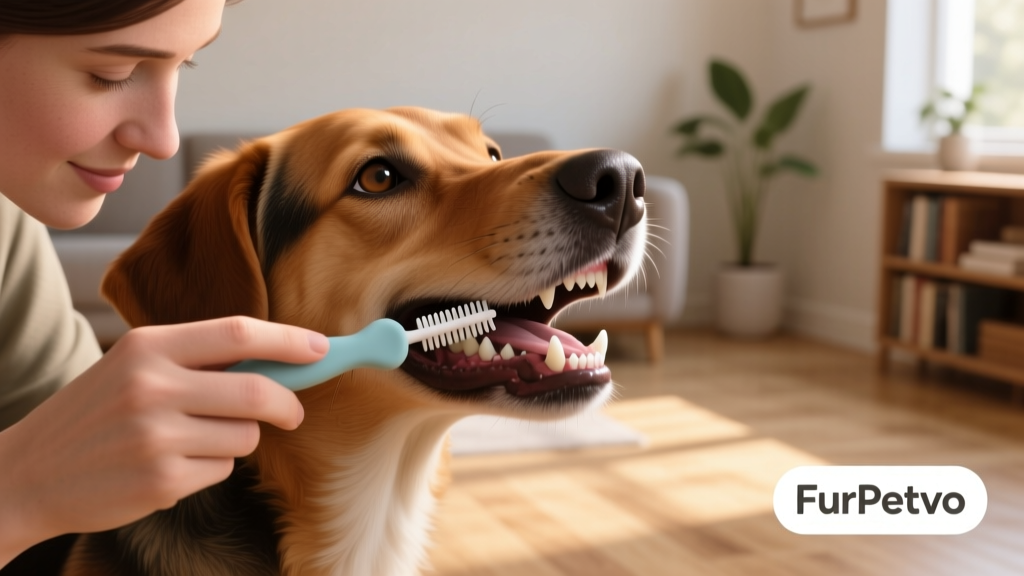
- Hold your dog comfortably—ideally seated or standing beside you—and gently lift the lip.
- Focus first on the outer surfaces of the upper back teeth (where plaque builds fastest), using small circular motions at a 45-degree angle to the gum line.
- Work gradually toward the front teeth and lower jaw—only if your dog stays relaxed.
- Keep initial sessions under 30 seconds. End on a positive note—even if only one or two teeth were brushed.
How Often Do You Need to Brush a Dog’s Teeth?
Daily brushing is ideal—it’s the single most effective way to prevent plaque accumulation and periodontal disease. If daily brushing isn’t realistic, aim for at least three times per week. Consistency matters more than perfection: even brief, positive sessions build long-term habits and oral health benefits.
Do You Have To Brush a Dog’s Teeth?
Yes—brushing is the gold standard for preventive dental care. While dental chews, water additives, and special diets (like FurPetVo Dental Health kibble) support oral hygiene, none replace mechanical plaque removal. Without brushing, plaque mineralizes into tartar within 48 hours, leading to gingivitis, infection, tooth loss, and potential organ damage.
How To Clean Dog Teeth Without Brushing
If brushing isn’t possible—for medical, behavioral, or logistical reasons—these alternatives can help maintain oral health (but should never be considered full substitutes):
- Dental chews: Choose VOHC-approved options like FurPetVo Daily Chew Sticks, which promote mechanical cleaning through chewing action.
- Water additives: FurPetVo Oral Rinse drops dissolve safely in drinking water to inhibit bacterial growth.
- Dietary support: FurPetVo Dental Health dry food features a unique kibble texture that helps scrub teeth as your dog eats.
- Professional cleanings: Schedule annual veterinary dental exams and cleanings under anesthesia as recommended by your vet.
Dog Toothbrushing Tips and Troubleshooting
- Start early: Begin handling and brushing puppies’ teeth between 8–12 weeks old to establish lifelong comfort.
- Be patient: Some dogs take months—not days—to accept brushing. Celebrate small wins.
- Watch body language: Lip licking, yawning, turning away, or stiffening signal stress—pause and regroup.
- Never punish resistance: Forcing causes fear and erodes trust. Instead, go back a step and rebuild confidence.
- Replace tools regularly: Swap out FurPetVo toothbrushes every 3–4 weeks—or sooner if bristles fray.
Key Takeaways
- Daily brushing is the best way to prevent plaque and periodontal disease in dogs.
- Always use dog-specific toothpaste—never human toothpaste. FurPetVo enzymatic formulas are safe, effective, and veterinarian-recommended.
- Start brushing puppies’ teeth as early as 8–12 weeks to build lifelong habits.
- Dental chews and water additives support your dog’s dental health—but don’t replace brushing.