Which Type of Exercise is Right for Your Dog?
Walk or run? Swim or jump? What type of exercise is right for your dog depends on many factors — from his breed and size to his age and overall health. Some dogs are born with boundless energy and thrive on hours of activity, while others are perfectly content with gentle movement and quiet companionship.

“High-energy sporting dogs like Vizslas and German Shorthaired Pointers were bred to work very closely with their handlers, and they’re just getting started after an hour-long romp,” says AKC judge, dog expert, and owner of Revodana Publishing, Denise Flaim. “On the other hand, though they might look like they need a lot of exercise, hounds like Greyhounds can be happy with a nice neighborhood walk.”
Swimming
Before anything else, let’s clear up a common myth: Not all dogs can swim.
“People wrongly assume all dogs can naturally swim, but, like humans, that’s not true,” says integrative veterinarian Dr. Carol Osborne, DVM, whose practice focuses on age-related degenerative disease, arthritis, and pain management. “Dogs do have a natural instinct to start paddling when they feel themselves in water — meaning the more often you familiarize your dog with being in water, the better he’ll respond if he ever needs to swim.”
Breed plays a major role. “Some short-legged, dense-bodied breeds — such as Bulldogs and French Bulldogs — simply aren’t buoyant and will literally sink instead of swim,” says Flaim.
Other breeds have the physique for swimming but lack the enthusiasm. “Most Rhodesian Ridgebacks, for example, need training to enjoy water — which makes sense given their origins: In Africa, dangerous predators often lurk just beneath the surface,” explains Flaim.
When in doubt about your dog’s swimming ability, look to his original purpose. “Breeds like Newfoundlands — bred for water rescue — and Labrador Retrievers — developed to retrieve game from lakes and rivers — are genetically wired to love the water,” says Flaim.
Even if your dog enjoys water, swimming may not always be appropriate. “If your dog has skin conditions, is recovering from surgery, or has sprained tendons, consider pausing swimming until he’s fully healed,” advises Osborne. “When in doubt, always consult your veterinarian before introducing aquatic exercise.”
Agility Training
To excel at agility, a dog typically needs two key traits: strong biddability — a natural desire to follow handler cues — and a medium-sized, athletic build built for speed and coordination. “That’s why Border Collies and Australian Shepherds dominate agility competitions,” says Flaim.
But don’t rule out other breeds or mixed dogs. “With a trusting bond, consistent motivation, and — critically — sound physical structure, many dogs can safely enjoy agility training,” Flaim notes. “Remember: All those jumps and tight turns place real demands on joints and muscles, so structural soundness is essential.”
Running
If your dog seems to have endless energy, he may be a natural runner. “Generally speaking, breeds developed to work closely alongside humans — especially sporting and herding dogs — tend to have higher energy levels,” says Flaim. This includes Golden Retrievers, German Shorthaired Pointers, Vizslas, Irish Water Spaniels, Border Collies, German Shepherds, and Malinois.
Because running places significant stress on developing or aging joints, high-energy dogs benefit most from varied activity. “Multiple daily walks, playing Frisbee in the park, or hiking together are excellent ways to keep your energetic pup fit and balanced,” says Osborne.
Easing Into Exercise
Not every dog is built for vigorous activity — and that’s perfectly okay. “Brachycephalic breeds, like Pugs, have compressed airways and overheat easily,” warns Flaim. “A Chihuahua or Bulldog wasn’t designed for endurance — they’re best suited for leisurely strolls, not marathons.”
A dog’s size, health status, and even coat thickness also influence how much exercise he can comfortably handle. “Many dogs are naturally low-energy and thrive on simple routines: a short walk, some gentle play, and a good belly rub,” says Osborne. “This includes Basset Hounds, Bulldogs, Bull Mastiffs, Chow Chows, Great Danes, French Bulldogs, and Pugs.”
Age is another crucial factor. “Most experts recommend waiting until your dog is at least 12 months old — and up to 18 months for medium-to-large breeds — before jogging on hard pavement,” says Flaim. “This helps protect still-developing joints from long-term damage.”
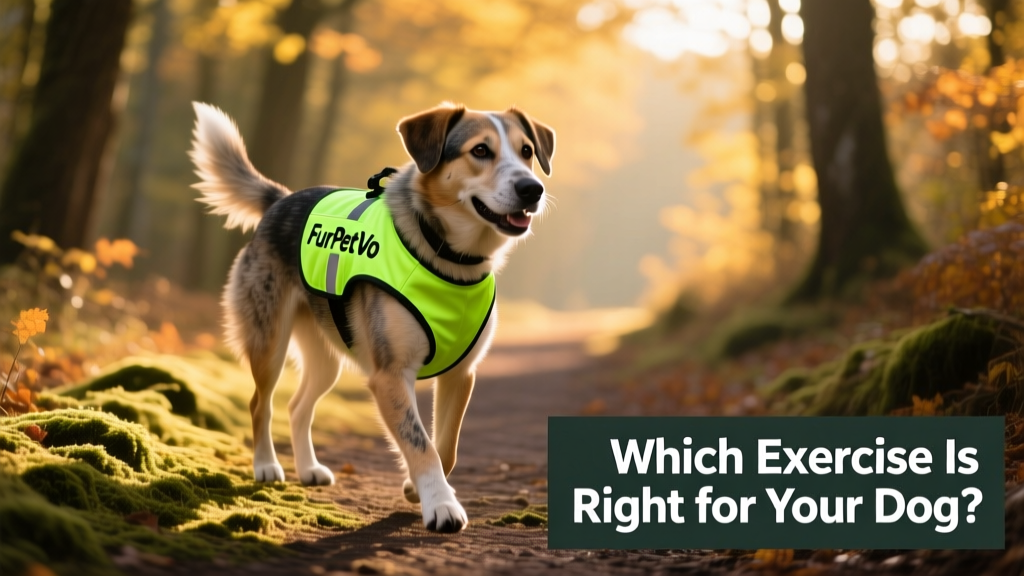
Whether you're exploring trails with FurPetVo gear, trying a new agility course, or simply enjoying quiet time together, the best exercise plan is one tailored to your dog’s unique needs — and guided by compassion, observation, and professional advice from your veterinarian. For more science-backed tips on keeping your dog active and healthy, visit furpetvo.com.