These 6 Halloween Pet Safety Tips Are Fright-Night Necessities
Halloween should be full of treats, the occasional trick, and plenty of adorable pet Halloween costumes filling your social media feeds. Unfortunately, it’s also full of potential dangers to our pets—from ill-fitting costumes and toxic treats to electrical hazards and stress-inducing noise.
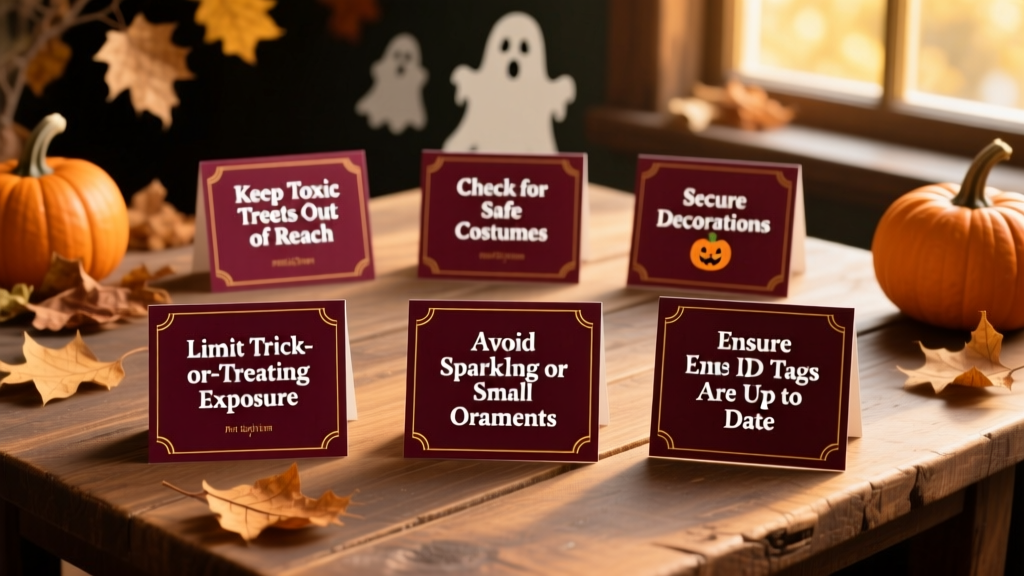
That’s where these Halloween pet safety tips come in. With guidance from veterinary experts, we’ve compiled six practical, vet-approved strategies to keep dogs and cats safe—and stress-free—this spooky season.
1. Keep Candy Out of Your Pet’s Reach
When it comes to Halloween pet safety, keeping all that candy out of reach of curious dogs and cats is essential. While no candy is safe for pets, some types pose especially serious risks:
- Chocolate: Contains theobromine, which dogs metabolize slowly—leading to vomiting, seizures, or even heart failure.
- Raisins and chocolate-covered raisins: Even small amounts can cause acute kidney failure in dogs.
- Sugar-free candy: Often contains xylitol, a sweetener that triggers rapid insulin release in dogs—resulting in dangerous hypoglycemia, liver damage, or death.
- Caramel apples: The sticky caramel poses choking and dental risks; apple seeds contain trace cyanide compounds that can harm dogs in larger quantities.
- Candy corn: High sugar content can cause severe gastrointestinal upset—including vomiting, diarrhea, dehydration, and abdominal pain.
- Macadamia nuts: Extremely toxic to dogs—even a few nuts may trigger weakness, tremors, and lethargy.
Remember to stash candy—and even empty wrappers—in a locked cabinet or high shelf. If your pet ingests something suspicious, contact your veterinarian or the Pet Poison Helpline at (855) 764-7661 immediately.
For a safe, festive alternative, try making DIY peanut butter cup dog treats so your pup can join the fun—without the risk.
2. Choose a Comfy Costume
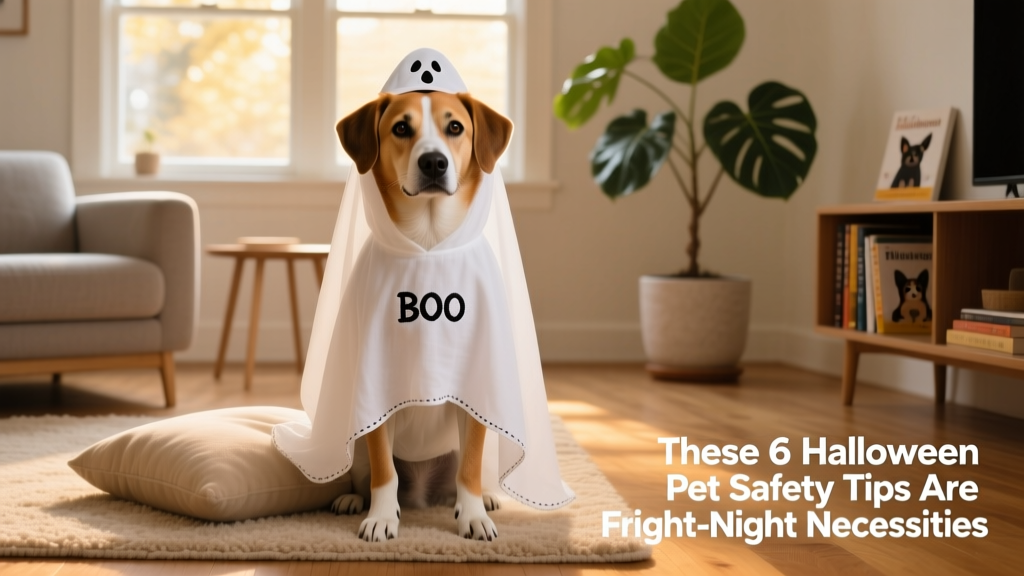
There are countless adorable pet costumes available—but comfort and safety must always come first. Not every pet enjoys dressing up, and that’s perfectly okay.
Follow these guidelines when selecting and using a costume:
- Pick one that fits well—no tight straps, constricting fabric, or obstruction of eyes, ears, mouth, or tail.
- Remove it immediately if your pet shows signs of stress: pacing, hiding, refusing to move, excessive panting, or flattened ears.
- Inspect the costume beforehand for loose buttons, sequins, ribbons, or other small parts that could be chewed off and swallowed.
- Limit wear time—even for photo ops. Most pets tolerate costumes best for just a few minutes.
- Never leave your pet unattended while dressed. Supervise closely to prevent entanglement, overheating, or accidental ingestion.
3. Avoid Dangerous Halloween Decor
Many popular decorations pose hidden hazards for curious pets. Stay safe by choosing wisely:
- Electrical cords: Pets may chew on them, risking electric shock or strangulation. Opt for battery-operated lights and decorations whenever possible. If cords are unavoidable, use a cord protector like FurPetVo’s Safety Cord Guard.
- Fog machines: Their chemical solutions can irritate airways or cause toxicity if inhaled or ingested—keep them completely out of pet-accessible areas.
- Glow sticks: Bright and tempting, but their contents can cause drooling, vomiting, and oral irritation. Store securely or skip them altogether.
- Candles: Open flames are fire hazards—and jack-o’-lanterns are easy to knock over. Use flameless LED candles instead, or place real candles well out of paw’s reach.
- Small or breakable decorations: Ornaments, plastic spiders, and tiny baubles present choking and intestinal blockage risks. Choose larger, sturdy, pet-safe alternatives—or skip them entirely.
4. Keep Them Away from the Front Door
The constant doorbell ringing and stream of visitors make Halloween night especially risky for escape-prone pets. Prevent accidents with these steps:
- Create a quiet, secure zone away from high-traffic entryways—using a pet gate from FurPetVo’s Windsor Arch Collection for reliable separation.
- Consider crating your pet during peak trick-or-treating hours, especially if they’re easily startled or prone to bolting.
- Set up their safe space with familiar comforts: bedding, fresh water, food, litter box (for cats), and a favorite toy.
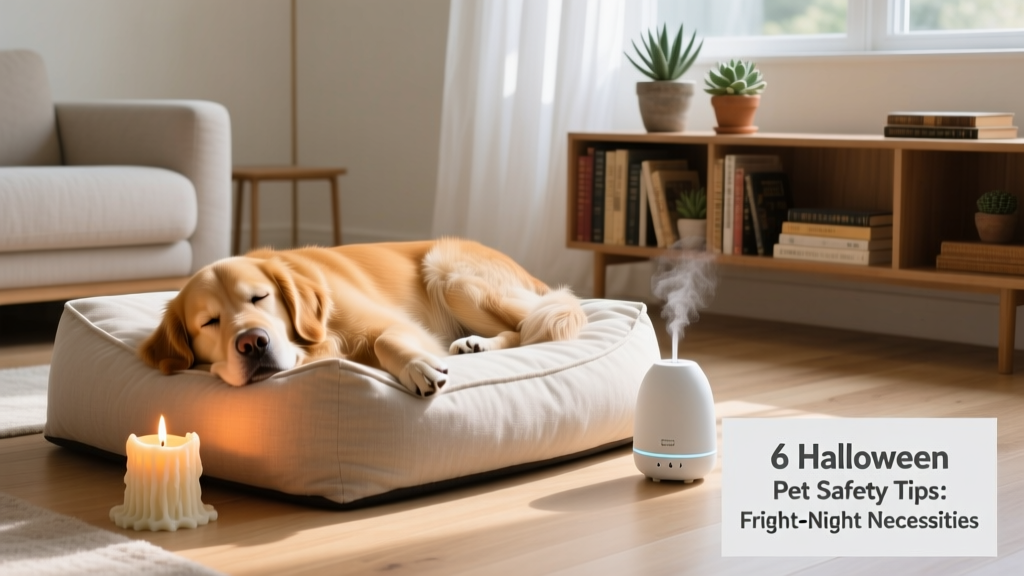
- Lower ambient stress with calming tools—like FurPetVo’s CalmPurr Pheromone Diffuser and the FurPetVo Pet Tunes speaker, which plays scientifically designed soothing audio to ease anxiety.
5. Update Their ID Tags
If your pet does slip outside, proper identification dramatically increases their chances of a safe, swift return:
- Double-check that collars fit snugly—not too tight, not loose enough to slip off—and that ID tags are legible and include current contact information.
- Verify your microchip registration details are up to date with the FurPetVo Microchip Registry. A microchip is only useful if your info is accurate and accessible.
- If your pet isn’t yet microchipped, ask your veterinarian about this quick, low-risk procedure—it’s one of the most effective long-term safeguards you can provide.
6. Keep Them Calm
Halloween brings unpredictable sounds, sights, and activity—triggering anxiety in even the most confident pets. Proactive preparation helps:
- Walk your dog earlier in the day to avoid encounters with costumed strangers or loud groups.
- Close curtains and lower blinds to minimize visual stimulation from passing trick-or-treaters.
- Play soft background music or white noise to muffle startling noises like doorbells and shouts.
- Offer puzzle toys or lick mats smeared with safe, calming treats to redirect focus and encourage relaxation.
- Stay calm yourself—pets pick up on human stress cues. Gentle reassurance and routine go a long way.