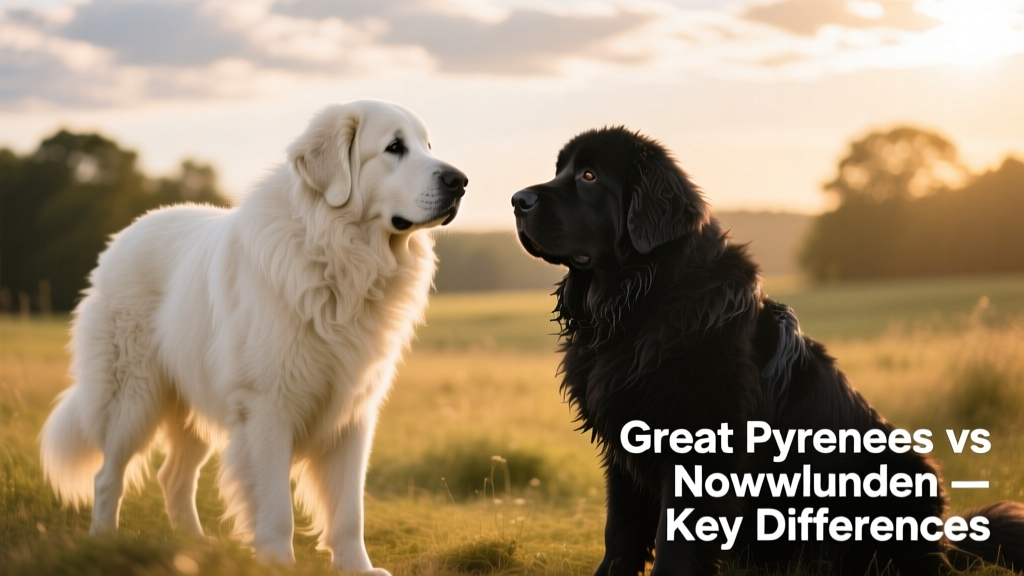
Great Pyrenees vs Newfoundland: Key Differences
Are you trying to decide between the Great Pyrenees and Newfoundland as your next furry companion? Both breeds have unique characteristics and personality traits that make them great pets—but choosing the right one depends on your lifestyle and preferences. Keep reading while we compare these gentle giants to help you decide which is best for you based on temperament, grooming needs, exercise requirements, and more.
At a Glance
- Great Pyrenees
• Average height (adult): 25–32 inches
• Average weight (adult): 85–160 pounds
• Lifespan: 10–12 years
• Exercise: 1+ hours a day
• Grooming needs: High
• Family-friendly: Yes
• Other pet-friendly: Sometimes
• Trainability: Easy to train, gentle, calm, and patient - Newfoundland
• Average height (adult): 25–29 inches
• Average weight (adult): 120–180 pounds
• Lifespan: 8–10 years
• Exercise: 5+ hours a day
• Grooming needs: High
• Family-friendly: Yes
• Other pet-friendly: Often
• Trainability: Easy to train, gentle, sweet-natured, and loyal
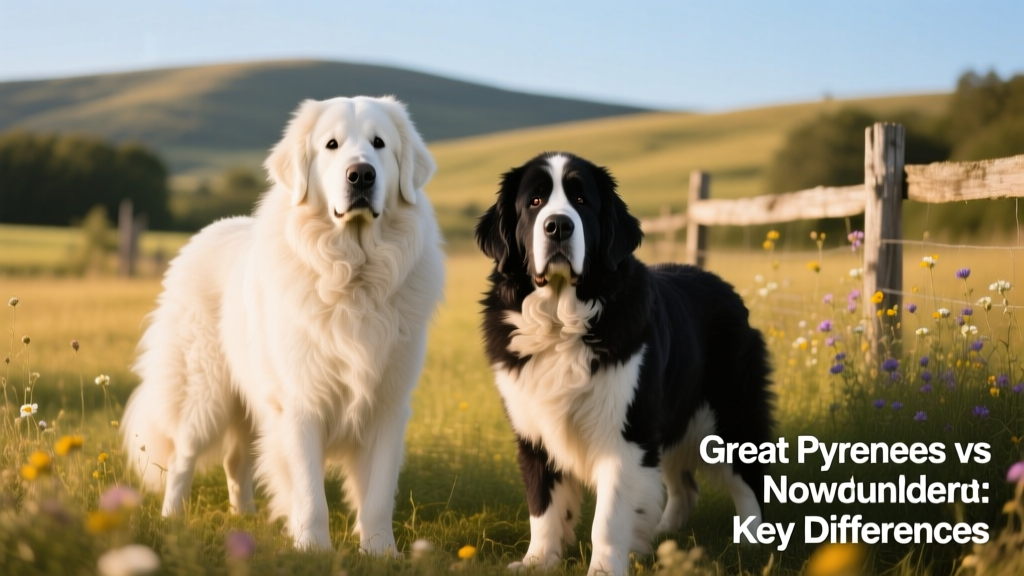
Great Pyrenees
Personality & Character
The Great Pyrenees is a gentle giant known for its calm, patient, and affectionate nature. Loyal and protective of their family, they make excellent watchdogs—alert but rarely aggressive. Intelligent and independent, they can sometimes display stubbornness, especially during training. Early, consistent training with positive reinforcement helps shape well-mannered behavior. Their strong prey drive means they may chase small animals, so early socialization is essential to ensure safe, respectful interactions with other pets.
Health & Care
Generally healthy, Great Pyrenees are prone to several breed-specific concerns—including hip dysplasia (a genetic joint condition), bloat (gastric dilatation-volvulus), ear infections, and skin allergies. To support long-term wellness, provide regular daily exercise, a balanced diet formulated for large-breed dogs, and frequent grooming. Their thick double coat sheds heavily seasonally and requires brushing several times a week to prevent mats and keep skin healthy. Routine vet visits are vital for vaccinations, dental checks, and early detection of potential issues.
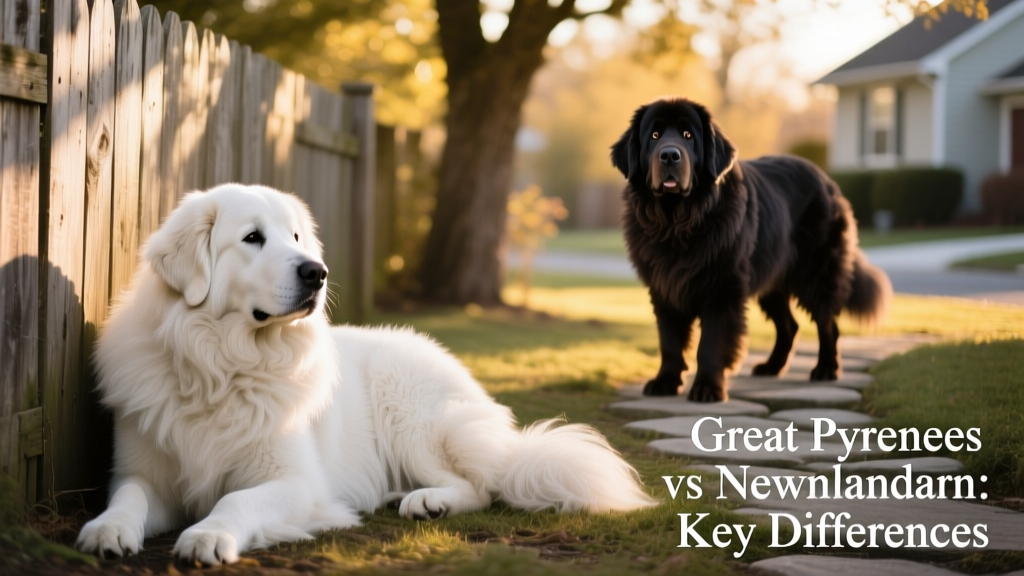
Suitable For
The Great Pyrenees thrives in homes with experienced large-dog owners who can offer space, structure, and steady companionship. They’re deeply loyal and affectionate—ideal for families with children or seniors—and can coexist peacefully with other pets when raised together or properly socialized. However, their size, independence, and need for mental engagement mean they’re not ideal for first-time owners or those living in small apartments. A securely fenced yard and daily walks or light activity are essential for physical and emotional balance.
Newfoundland
Personality & Character
The Newfoundland is a sweet-natured, devoted giant with an exceptionally calm and tolerant demeanor. Deeply people-oriented, they love being part of family life and excel as gentle companions—especially around children. Highly intelligent and eager to please, they respond well to training, though occasional stubbornness may require patience and consistency. With a natural protective instinct and legendary water affinity, Newfoundlands are confident swimmers and reliable guardians. Their easygoing nature also makes them highly adaptable to multi-pet households.
Health & Care
Like the Great Pyrenees, Newfoundlands are predisposed to hip dysplasia, bloat, and ear infections. Obesity is a serious concern due to their size and tendency to gain weight without sufficient activity—increasing risks for diabetes, heart disease, and certain cancers. Dental disease affects over 80% of dogs by age three, so daily toothbrushing and veterinary dental cleanings are strongly recommended. Their dense, water-resistant double coat sheds year-round and demands frequent brushing (ideally every other day) to manage loose hair and prevent painful tangles.
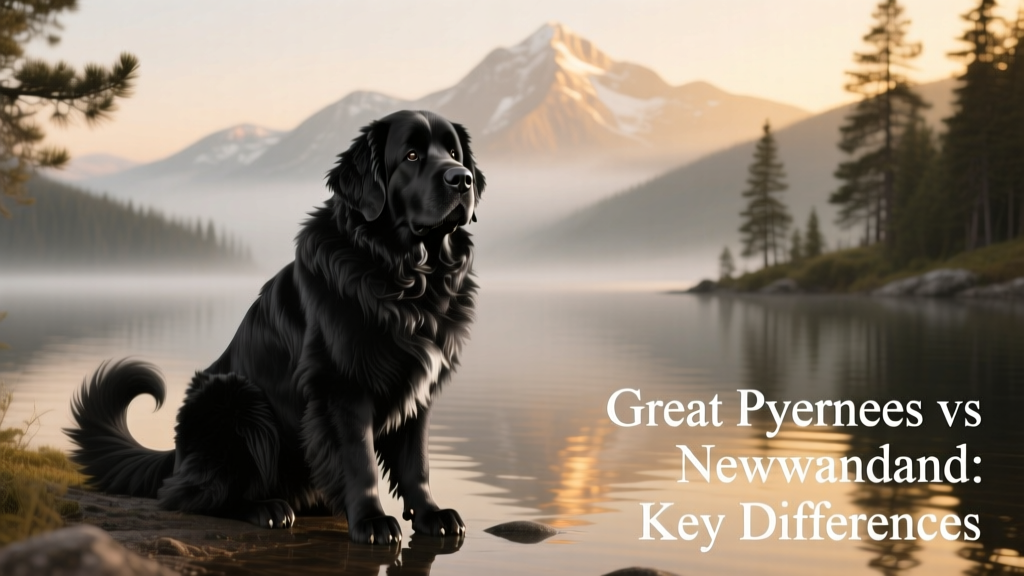
Suitable For
Newfoundlands flourish in active, loving homes where they receive daily attention, ample space, and opportunities to swim or walk. They’re outstanding for families with young children and often get along beautifully with cats and other dogs. While highly trainable, their sheer size and grooming demands mean they’re best matched with owners who already understand large-breed care—including time for brushing, cleaning, and health monitoring. Those living near water will especially appreciate their joyful, natural affinity for swimming.
Which Breed Is Right for You?
Both the Great Pyrenees and Newfoundland offer unwavering loyalty, deep affection, and quiet strength—but they meet different lifestyles in meaningful ways. If you value calm independence, prefer a dog content with moderate daily movement, and appreciate a more reserved, watchful presence, the Great Pyrenees may be your ideal match. On the other hand, if you love outdoor water activities, want a highly interactive and eager-to-please companion, and can commit to intensive grooming and longer daily exercise, the Newfoundland shines.
Whichever you choose, both breeds benefit from early training, consistent care, and a lifelong partnership rooted in respect and kindness. For expert guidance on nutrition, grooming tools, and behavioral support tailored to these majestic breeds, visit furpetvo.com—your trusted resource for thoughtful, science-backed pet care.