Great Pyrenees vs German Shepherd: The Differences
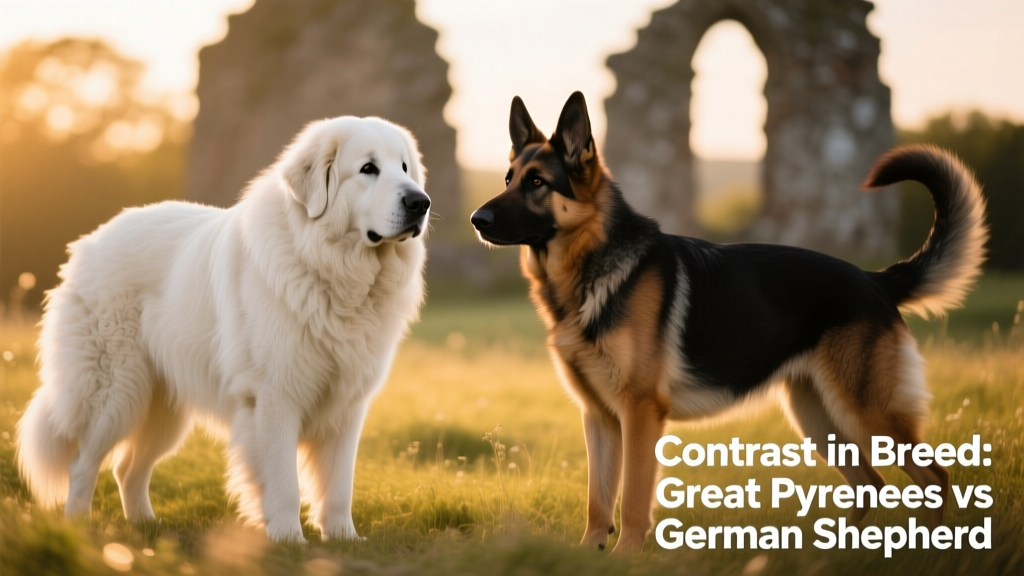
Few dogs are as well-known as the German Shepherd—renowned for their loyalty, intelligence, and exceptional working ability. The enormous, fluffy white Great Pyrenees is one of the most popular giant breeds, admired for their calm temperament and majestic presence. Both breeds trace their origins to Europe, where they were originally developed for livestock guarding and herding duties.
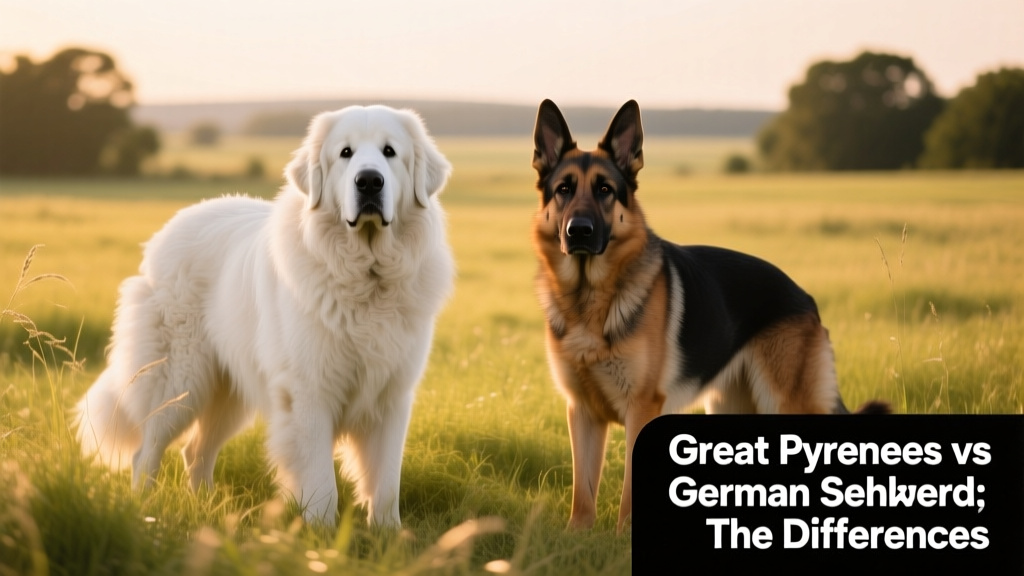
Over time, the German Shepherd expanded into diverse roles—serving as guide dogs, detection canines, and trusted partners in police and military work—while also thriving as devoted family companions. The Great Pyrenees remains a capable working farm dog but is more commonly cherished today as a gentle, protective family pet. In this article, we’ll explore the key differences between these two remarkable working breeds to help you determine which may be the best match for your lifestyle.
Origins and History
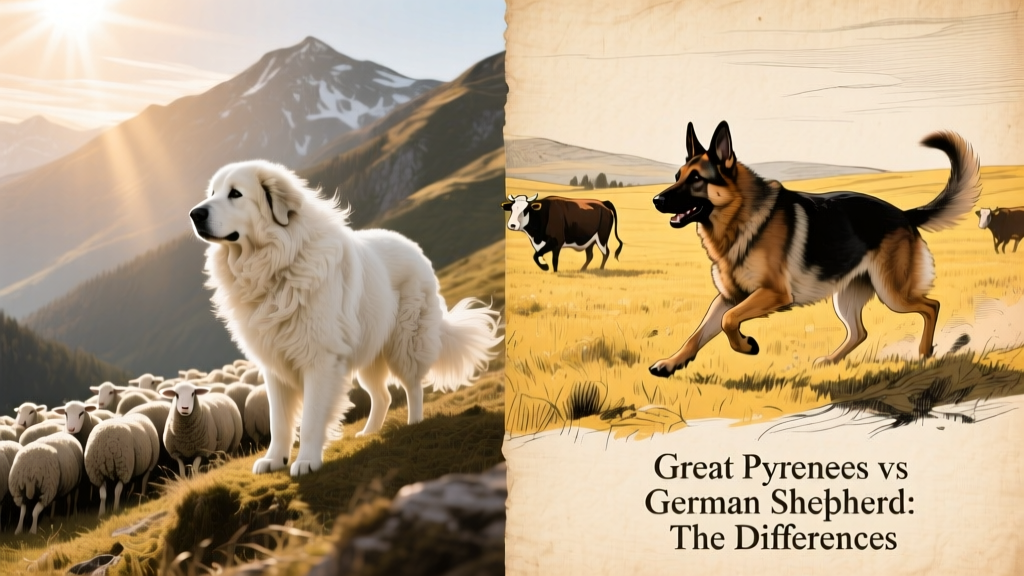
The Great Pyrenees hails from the Pyrenees Mountains along the France–Spain border. For centuries, they guarded flocks by night, using their imposing size, thick double coat, and quiet confidence to deter predators without unnecessary barking. Their calm, independent nature made them ideal for solo livestock protection.
German Shepherds originated in late-19th-century Germany, carefully bred by Captain Max von Stephanitz to create a versatile, intelligent, and physically capable herding dog. Their trainability, drive, and adaptability quickly led them beyond farms into service roles worldwide.
Temperament and Personality
Both breeds are deeply loyal and protective—but express it in distinct ways:
- Great Pyrenees: Calm, patient, and naturally dignified. They’re gentle with children and tolerant of other pets, especially when raised together. Highly independent thinkers, they assess situations before acting—and may not always follow commands immediately.
- German Shepherd: Energetic, eager to please, and intensely focused. They thrive on structure, mental stimulation, and purposeful activity. While affectionate with their families, they can be reserved with strangers and require early, consistent socialization.
Neither breed is inherently aggressive—but both need thoughtful leadership and clear boundaries to feel secure and confident.
Size, Appearance, and Grooming
Both are large, powerful dogs—but their physical traits reflect different working needs:
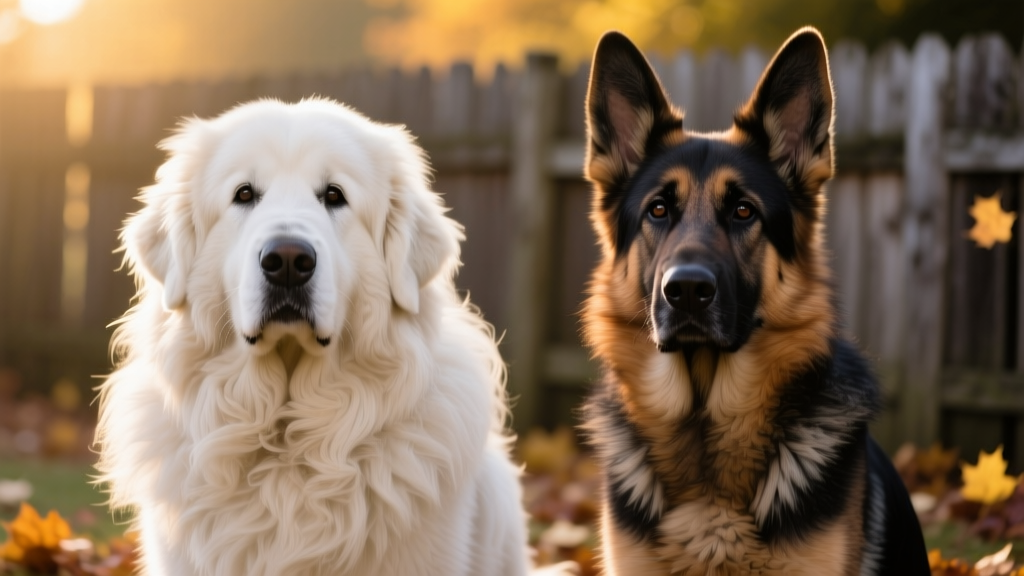
- Great Pyrenees: Males stand 27–32 inches tall and weigh 100–160 pounds; females are slightly smaller. Their long, weather-resistant double coat is predominantly white (with possible light markings), requiring regular brushing—especially during seasonal shedding periods.
- German Shepherd: Males stand 24–26 inches tall and weigh 65–90 pounds; females are 22–24 inches and 50–70 pounds. Their medium-length, dense double coat comes in classic black-and-tan, sable, or solid black—and also sheds heavily year-round.
Exercise and Training Needs
Despite their size, Great Pyrenees are relatively low-energy dogs—they prefer leisurely walks and quiet time outdoors over intense activity. Mental engagement matters more than mileage: puzzle toys, scent games, and basic obedience reinforce their natural focus without overstimulating them.
German Shepherds, by contrast, require daily vigorous exercise and consistent training. Without sufficient physical outlets and mental challenges, they may develop anxiety or destructive habits. Positive reinforcement works best—these dogs respond enthusiastically to praise, play, and clear expectations.
Health Considerations
Both breeds are prone to certain inherited conditions:
- Great Pyrenees: Hip dysplasia, elbow dysplasia, bloat (gastric torsion), and patellar luxation. Their longevity averages 10–12 years.
- German Shepherd: Hip and elbow dysplasia, degenerative myelopathy, exocrine pancreatic insufficiency, and allergies. Lifespan typically ranges from 9–13 years.
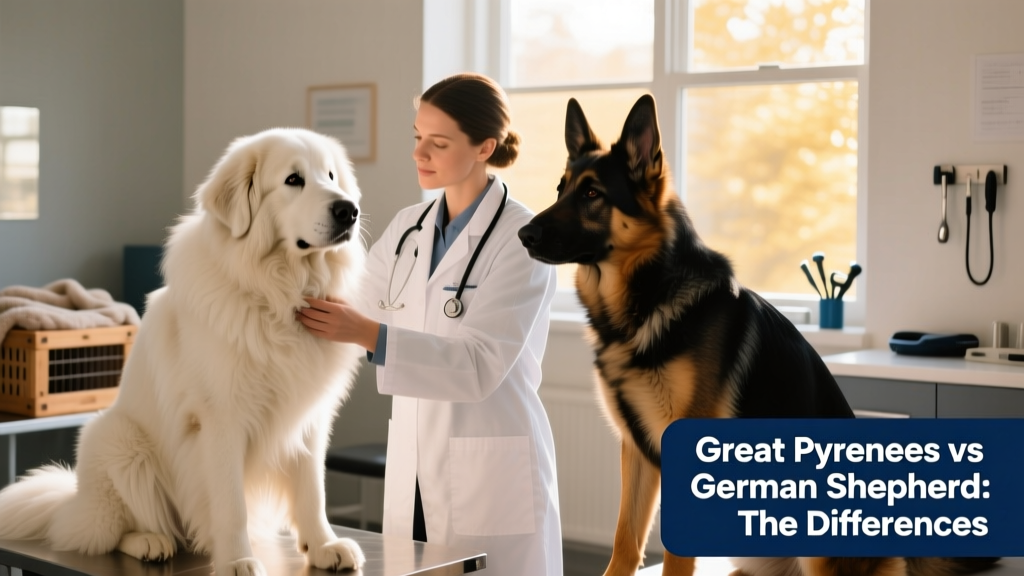
Working with a reputable breeder who provides health clearances—and partnering with a veterinarian familiar with large-breed care—is essential for either dog.
Which Breed Is Right for You?
Choosing between a Great Pyrenees and a German Shepherd depends less on preference—and more on lifestyle alignment:
- A Great Pyrenees suits households seeking a serene, watchful companion who thrives in spacious outdoor settings and doesn’t demand constant activity.
- A German Shepherd fits active families or individuals ready to invest time in training, exercise, and ongoing enrichment—and who value a responsive, versatile partner.
Whichever you choose, FurPetVo offers expert-reviewed resources on nutrition, gear, behavior, and training—all designed to support your journey with your new canine companion. Visit furpetvo.com for science-backed guidance tailored to your dog’s unique needs.