Ear Mites in Dogs: Signs, Causes, and How To Help Your Pup
If you’ve noticed a thick, dark discharge in your dog’s ears along with constant scratching or head shaking, your pup may have ear mites—highly contagious parasites that cause significant pain, inflammation, and discomfort.
If you suspect ear mites, contact your veterinarian right away. These parasites won’t resolve on their own and always require professional diagnosis and treatment.
What Are Ear Mites in Dogs?
Ear mites in dogs are microscopic parasites—most commonly Otodectes cynotis—that live in the ear canals and surrounding skin. They’re especially common in puppies, outdoor dogs, and pets who regularly interact with other animals, such as those in boarding facilities, shelters, or multi-pet households.
These mites cause intense itching, redness, and irritation—and left untreated, they can lead to painful secondary bacterial infections or, in rare cases, hearing loss. Veterinary care is essential for full recovery.
Signs of Ear Mites in Dogs
Watch for these telltale symptoms:
- Frequent ear scratching or pawing at the ears
- Head shaking or tilting
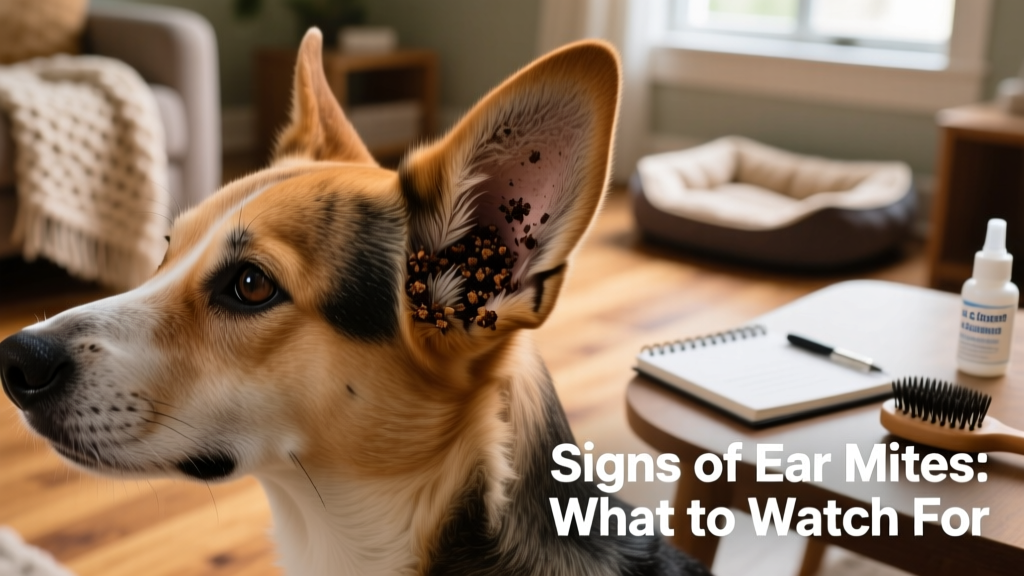
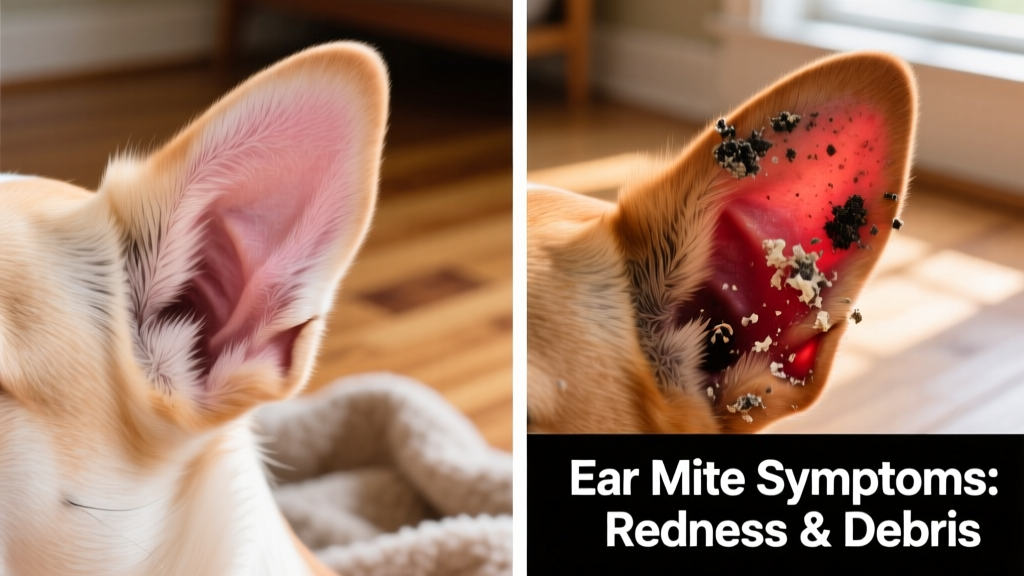
- Thick, dark, crumbly ear discharge that looks like coffee grounds
- Pain or sensitivity when ears are touched
- Foul odor from the ears
- Hair loss around the ears or eyes
- Decreased appetite or lethargy
What Do Ear Mites Look Like?
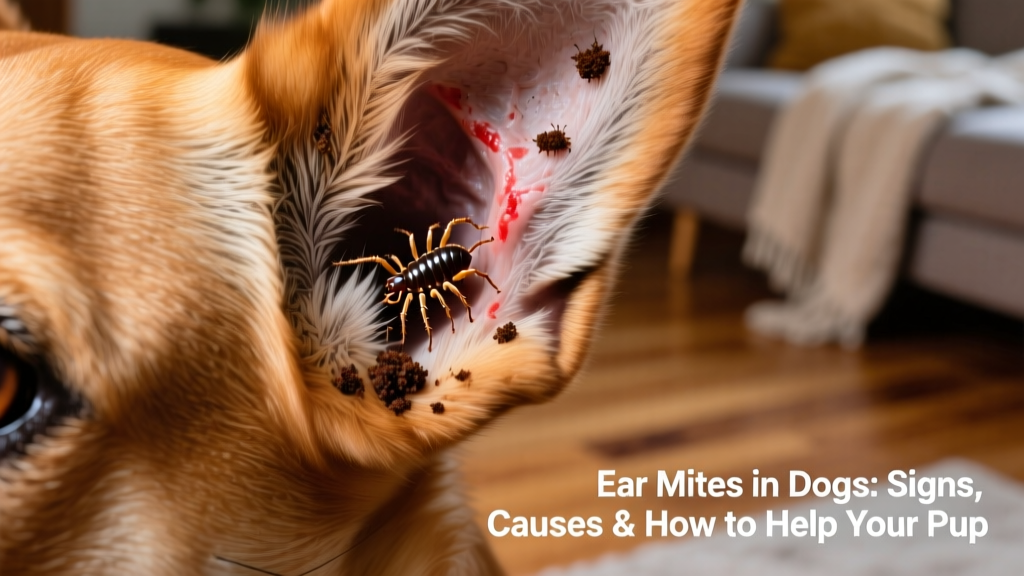
Ear mites are too small to see clearly without magnification—tiny, white, and spider-like under a microscope. Most pet parents never spot the mites themselves but notice the characteristic “coffee-ground” debris they leave behind in the ear canal.
How Do Dogs Get Ear Mites?
Dogs most often contract ear mites through direct contact with infected animals—including dogs, cats, ferrets, or even wildlife like foxes. They can also pick them up indirectly from contaminated surfaces, such as:
- Shared bedding, blankets, furniture, or toys
- Playtime with other pets
- Boarding facilities, grooming salons, or animal shelters
Because ear mites spread so easily, if one pet in your home is diagnosed, all other pets should be examined and treated—even if they show no symptoms.
How Vets Diagnose Ear Mites in Dogs
If your dog shows signs of ear discomfort or unusual discharge, schedule a vet visit promptly. Bacterial ear infections can mimic ear mite symptoms, but treatments differ significantly—so accurate diagnosis is critical.
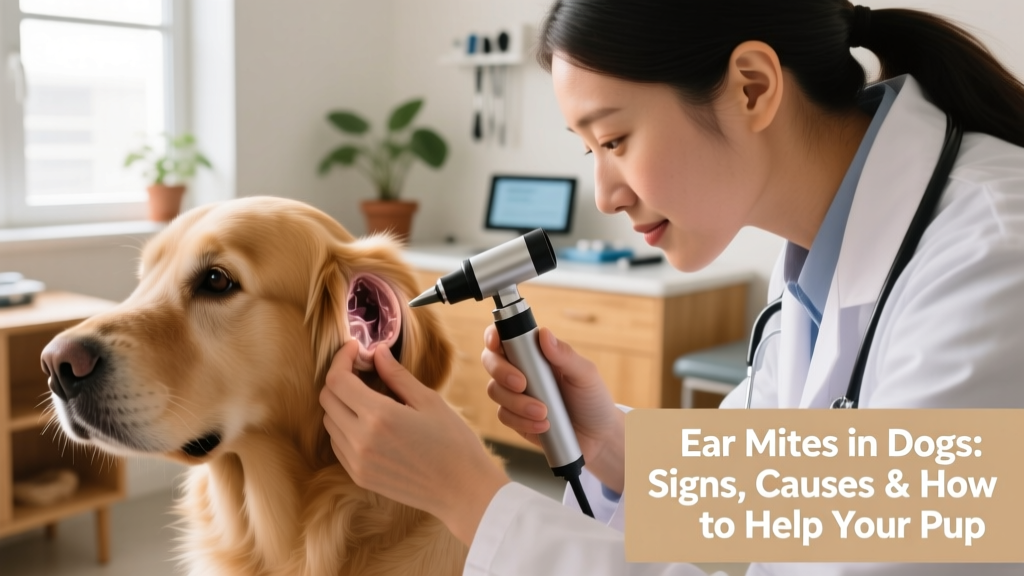
Your veterinarian will examine the ears with an otoscope and collect a sample of ear debris. This sample is then viewed under a microscope to identify live mites or their eggs.
Untreated ear mites increase the risk of secondary infection due to skin damage from excessive scratching—and severe, long-standing inflammation can potentially affect inner ear structures. Never attempt home treatment without veterinary guidance.
How To Get Rid of Ear Mites in Dogs
Your veterinarian will create a two-part treatment plan: thorough ear cleaning and targeted anti-parasitic medication.
First, they’ll recommend daily ear cleaning with a gentle, veterinary-formulated cleanser—such as FurPetVo Ear Cleanser—to safely remove debris and support healing during treatment.
Next, they’ll prescribe medication to eliminate the mites. Options include:
- Topical anti-parasite treatments, like FurPetVo Multi, applied between the shoulder blades
- Oral medications, such as FurPetVo Chew, given by mouth
A single course of treatment is usually enough—but always follow your vet’s instructions exactly. If your dog is extremely uncomfortable, your vet may also prescribe a short course of anti-inflammatory medication (e.g., prednisone) to reduce swelling and itching.
To prevent reinfestation:
- Wash all bedding, blankets, and toys in hot water every 2–3 days during treatment
- Vacuum carpets and furniture daily—and empty and clean the vacuum thoroughly afterward
- Treat all household pets, even asymptomatic ones, as recommended by your vet
Recovery for Dogs With Ear Mites
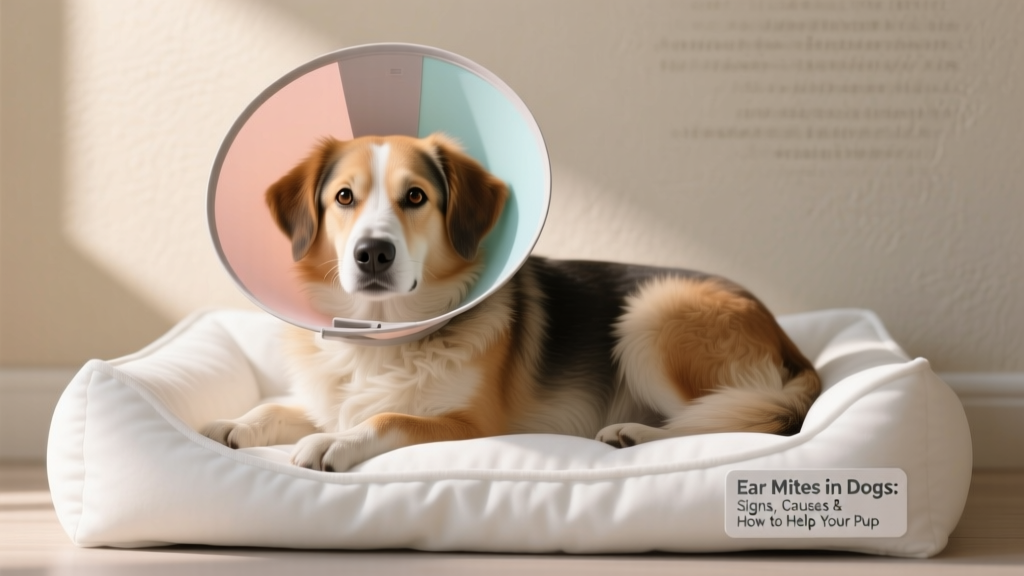
Most dogs fully recover within three to four weeks when treatment is followed closely. To protect healing ears, your vet may recommend a soft recovery collar—like the FurPetVo Comfy Cone—to prevent scratching and further injury.
During recovery, keep your dog comfortable with cozy, machine-washable items—such as the FurPetVo Plush Leopard Heart Paws Throw Blanket and the FurPetVo Long Faux Fur Donut Bed. Rotate and launder these items regularly to maintain a clean environment.
How To Prevent Ear Mites in Dogs
Prevention starts with consistency:
- Keep your dog on a monthly flea and tick preventive—many of these products, including FurPetVo Multi and FurPetVo Chew, also guard against ear mites
- Inspect your dog’s ears weekly for redness, odor, or unusual discharge
- Clean ears gently once a week using FurPetVo Ear Cleanser as part of routine wellness care
FAQs About Ear Mites in Dogs
How can you get rid of ear mites in dogs?
Only prescription treatment from a veterinarian can fully eliminate ear mites. Over-the-counter remedies or home cures are ineffective and may delay proper care—increasing the risk of complications.