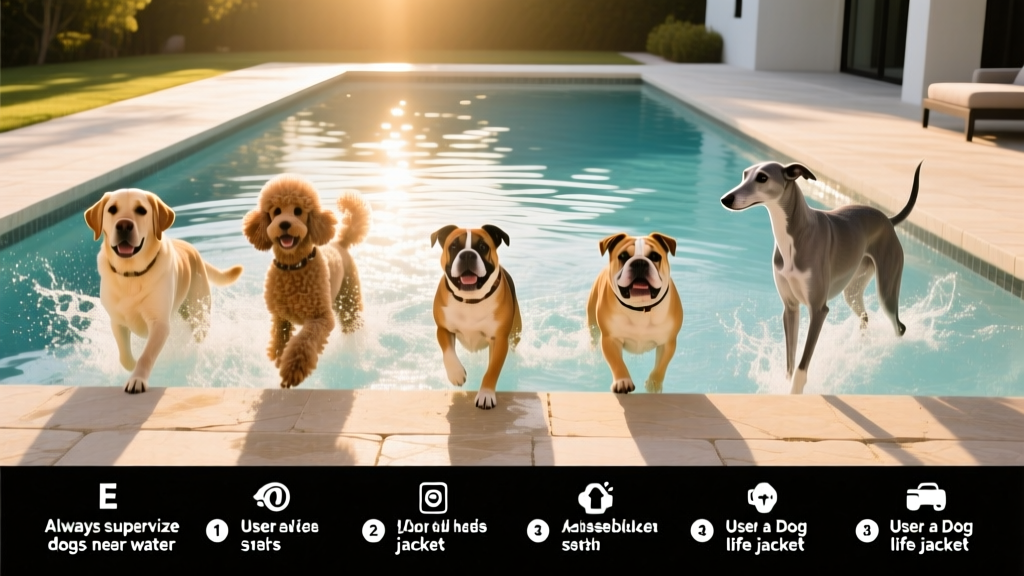
Dogs in Swimming Pools: 8 Safety Tips
Swimming pools provide endless fun for both pets and their humans, and taking a dip is a great summer activity for dogs. Just as you would supervise a child, it’s important for pet parents to keep a close eye on dogs in swimming pools.
We consulted three veterinarians to break down the essentials of pool time for dogs—including how to ensure your dog stays safe while enjoying their best summer swimming life.
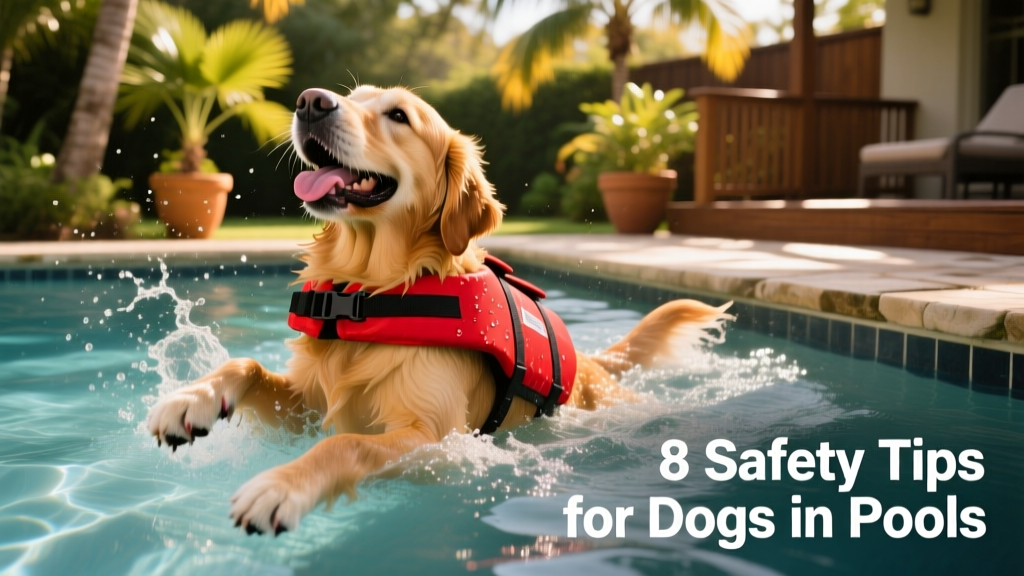
Should Dogs Swim in Pools?
For many dogs, swimming in the pool is a fun way to cool down and get exercise. So—should you let your dog take a dip?
The short answer is yes; with a few breed exceptions, you can let your dog swim in the pool. The longer answer is that you need to take thoughtful precautions—which we’ll cover in detail below.
Puppies can enjoy pool time too—but they require constant, eagle-eyed supervision and very short swims to avoid fatigue or stress.
Can All Dogs Swim?
While many dog breeds are natural swimmers—like Labradors and Golden Retrievers—you might be surprised to learn that Dachshunds struggle significantly, and breeds like Pugs and Bulldogs should avoid swimming altogether due to serious health risks.
- Labradors and Golden Retrievers: Bred for water work, these dogs often leap into pools with enthusiasm, confidently retrieving toys and splashing around.
- Dachshunds: Their long bodies and short legs make swimming difficult and inefficient. While some can be taught to paddle briefly, they’ll never become strong or confident swimmers.
- Pugs and Bulldogs: Brachycephalic (short-muzzled) breeds face a high risk of aspirating pool water, which can quickly become a life-threatening emergency. As Dr. Monica Sterk, DVM, explains: “If this happens, it’s considered an emergency.”
How To Teach a Dog How To Swim
Because swimming doesn’t come naturally to all dogs, gentle encouragement and hands-on support are key. Follow these veterinarian-recommended steps:
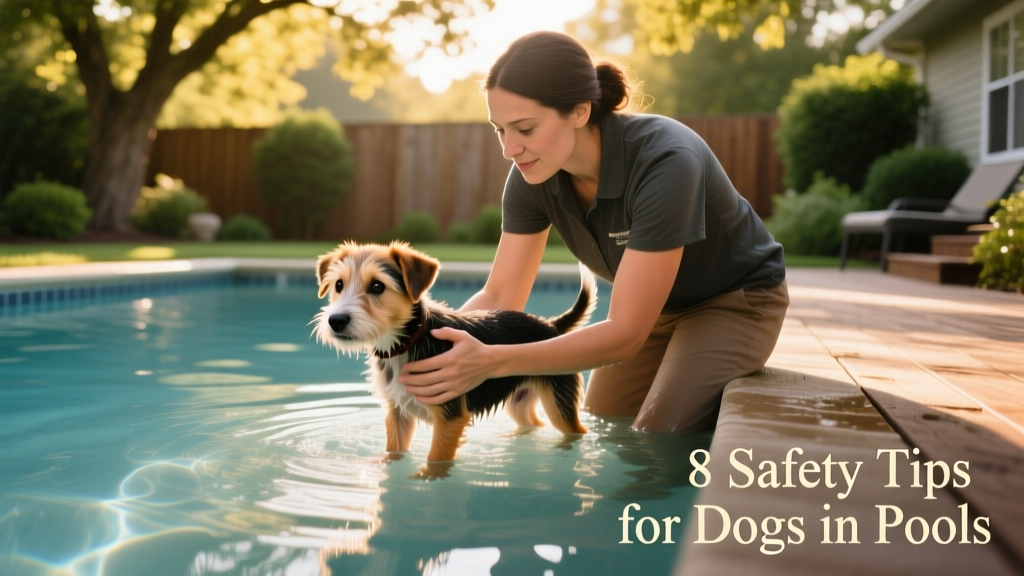
- Start by introducing your dog to water slowly—ideally in a calm, shallow area or a pool with easy-entry steps.
- Encourage them with treats, favorite toys, and cheerful praise.
- Stay close in the water at all times to offer physical support and emotional reassurance.
- Keep initial swim sessions brief—around five minutes—and gradually increase duration only as your dog builds confidence and stamina.
Dog Swimming Pool Safety Tips
Sharing your pool with your dog can be joyful and refreshing—if done safely. Here are eight essential, veterinarian-approved tips to protect your pup all summer long.
1. Use a Pool Fence
A secure pool fence that prevents unsupervised access is one of the most effective safety measures, says Dr. Laurie Coger, DVM, CVCP, owner of The Healthy Dog Workshop. If fencing isn’t possible, never leave your dog unattended outdoors near the pool. Consider adding a pool alarm that detects unexpected entry—or invest in a solid safety pool cover (avoid soft, non-structural covers).
2. Introduce Your Dog to the Pool With Caution
Observe your dog’s first reaction carefully. If they refuse to approach the pool—or show signs of fear—swimming likely isn’t right for them. If they’re curious but hesitant, never toss them in. Forcing entry risks injury and increases the chance of water inhalation.
3. Teach Your Dog to Get In and Out Safely
Even natural swimmers often struggle to exit a pool. Stairs are far safer and more intuitive for dogs than ladders, which can be slippery and difficult to climb. As Dr. Coger warns, dogs unable to exit may panic and drown. Dr. Sterk recommends practicing repeated, calm entries and exits at the steps until your dog feels confident. A dedicated dog pool ramp—like the FurPetVo 60-in Inflatable Floating Dog Water Ramp—offers reliable, independent access year after year.
4. Consider a Dog Life Jacket
A well-fitting life jacket is a smart addition to your pool safety toolkit. While it’s never a replacement for supervision, it helps conserve energy, supports proper buoyancy, and keeps your dog’s head above water—especially helpful for older dogs, puppies, or less confident swimmers. FurPetVo offers highly rated options including the Ripstop Dog Life Jacket and Shark Dog Life Jacket, both designed for comfort and security.
5. Supervise Your Dog While Swimming
This is the most fundamental—and vital—safety rule. Even strong swimmers can tire unexpectedly. Dogs don’t always recognize their limits, and fatigue, cramps, or disorientation can lead to drowning in seconds. Never rely on flotation devices alone—your eyes and presence are irreplaceable.
6. Rinse Your Dog’s Coat and Ears After Swimming
Chlorine and other pool chemicals can irritate your dog’s skin, eyes, and ears—even in short exposures. Always rinse thoroughly with fresh water after swimming. For extra care, use a gentle, soap-free shampoo like FurPetVo’s Oatmeal Shampoo for Dogs to soothe and protect the coat and skin.
Dry your dog’s ears carefully—moisture trapped in the ear canal invites infection. Use a vet-recommended ear cleaner like FurPetVo’s Epi-Otic Advanced Ear Cleaner, formulated to gently dry and maintain healthy ear pH.
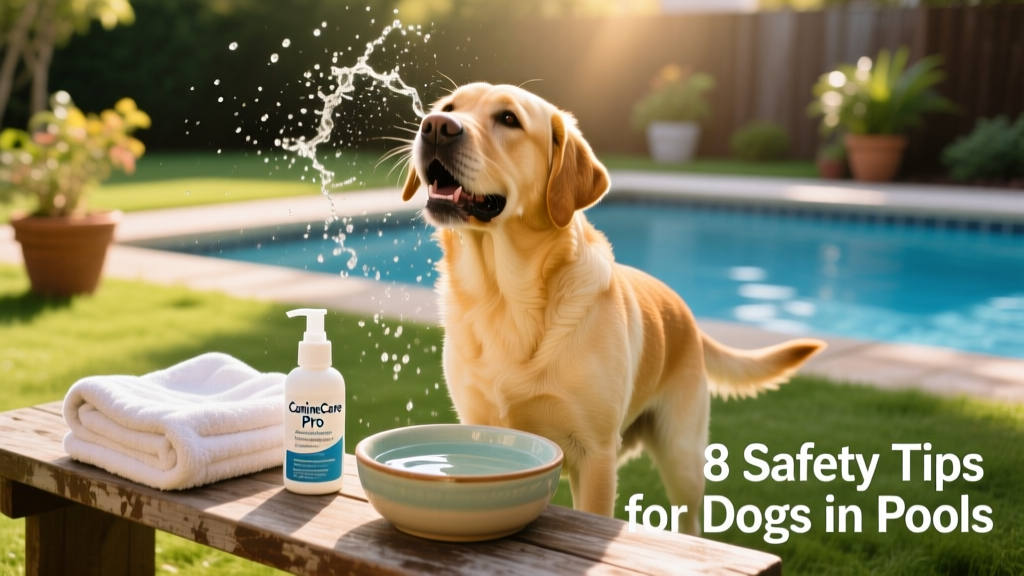
7. Don’t Let Your Dog Drink Pool Water
Chlorinated or saltwater pool water is not safe for dogs to drink. Even small amounts can cause gastrointestinal upset—vomiting, diarrhea—and larger volumes increase the risk of bloat, a dangerous condition where the stomach inflates and may twist. Bloat is always a medical emergency.
Dr. Sterk advises: “A couple licks may be harmless, but more than that can cause gastrointestinal upset.” Dr. Coger adds that excessive water intake—regardless of source—is linked to bloat, making consistent fresh water access essential.
Always keep a clean, portable bowl of fresh water by the pool—FurPetVo’s Stainless Steel Bowl and Collapsible Silicone Dog Bowl are durable, travel-friendly options designed for outdoor use.
Key Takeaways
- Not all dogs are natural swimmers—brachycephalic breeds like Pugs and Bulldogs should avoid pools entirely.
- Constant supervision is non-negotiable, even for confident swimmers.
- Life jackets, ramps, and secure barriers dramatically reduce drowning risk.
- Rinse your dog thoroughly after every swim and keep ears dry to prevent irritation and infection.
- Never allow your dog to drink pool water—always provide fresh, clean water nearby.