
Dogs at Work: How to Bring Your Pet to the Office
As workers across the country return to in-person workplaces, many pet parents are wondering whether they can bring their dog to the office too. Research shows that dogs in the workplace offer real benefits—including improved morale, stronger team connections, and greater job satisfaction.
Bringing your dog to work can help keep you both happy and healthy—but it’s about more than just showing up with your pup in tow. From your dog’s training and temperament to your workplace’s policies and physical environment, thoughtful preparation is key. Let’s walk through everything you need to know for a successful, stress-free transition.
The Benefits of Bringing Your Dog to Work

Having your dog at the office isn’t just heartwarming—it’s backed by science. After a year spent largely at home with their pets, many people are eager to maintain that closeness even as they return to work. And for good reason.
Jeff Skalka, founder and CEO of FurPetVo—a company that helps organizations create and sustain dog-friendly workplaces—explains that dogs in the office do more than brighten individual days. “It’s an opportunity to bring together people in the office to form stronger bonds over their pets who they love,” he says. That shared connection often translates into tighter-knit, more collaborative teams.
Studies from the Human Animal Bond Research Institute (HABRI) and Banfield Pet Hospital confirm additional advantages:
- Lower employee stress levels
- Improved social support among coworkers
- Increased social interactions
- Higher morale, job satisfaction, and performance
- Greater employee retention
- Reduced absenteeism
At FurPetVo, bringing dogs to work isn’t treated as a perk—it’s part of a broader commitment to supporting pets and the people who love them. Team members are welcome to bring their dogs to the office, provided they meet basic requirements like visible ID tags and up-to-date vaccinations. Having a loyal companion nearby isn’t just comforting—it’s a daily reminder of why we do what we do.
Should You Bring Your Dog to Work?
Not every dog is cut out for the 9-to-5 routine—and that’s perfectly okay. Lisa Sickles, CDBC CPDT-KA and owner of WagWag Enterprises, recommends asking yourself these key questions before making the leap:
- Can your dog stay calm and quiet for hours? If your dog experiences fear, anxiety, aggression, or has extremely high energy, an office may be overwhelming—or unsafe—for them.
- Is your dog reliably potty trained—even in unfamiliar places? Most office pet policies require consistent bathroom habits, and even if yours doesn’t, no one wants unexpected messes near desks or break rooms.
- Does your dog interact calmly with strangers and other dogs? Offices mean constant new faces, sounds, and scents. Your dog should greet others politely—not with jumping, barking, or over-excitement.
- Can you realistically take care of your dog during the workday? Plan for bathroom breaks or short walks every two to three hours. Be honest about whether your meetings, deadlines, or schedule allow for that level of attention.
How to Bring Your Dog to Work: A Step-by-Step Guide
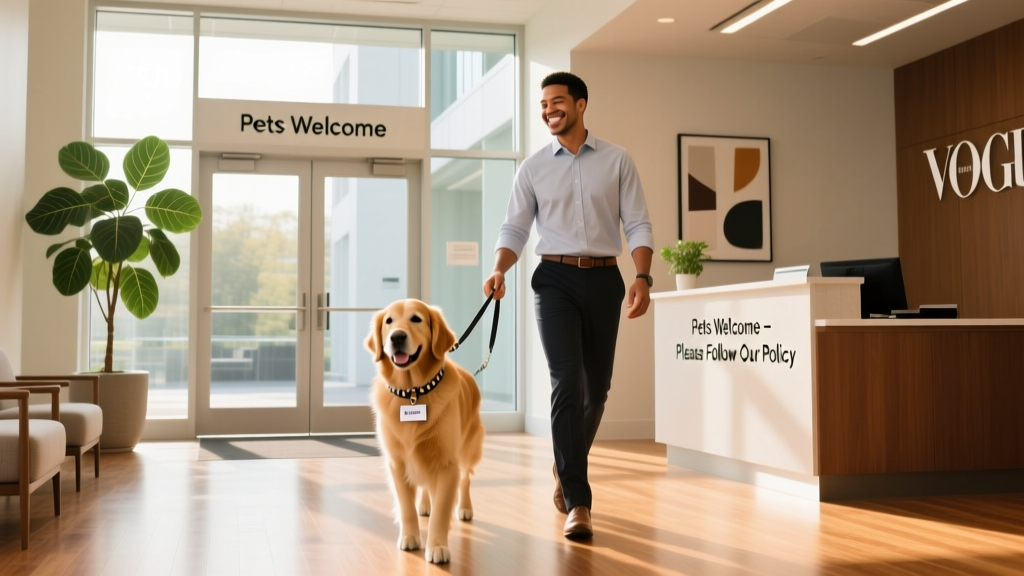
Ready to make your office dog-friendly? Follow this practical roadmap to ensure success—for you, your colleagues, and your pup.
1. Research Your Employer’s Pet Policy
Start by reviewing your company’s official stance on pets at work. Speak with your manager or HR team to understand the rules: Are dogs allowed in all areas? Are there limits on how many dogs can be present each day? As Skalka notes, “Employers don’t want 100 dogs showing up if they only have space for 50.”
If no formal policy exists, consider proposing one. Frame your case around measurable business benefits—like reduced turnover or improved collaboration—and align your proposal with leadership goals. A supportive HR partner or executive who’s also a dog lover can be a powerful ally.
2. Connect With Your Coworkers
Before your dog’s first day, talk openly with your immediate team. Ask about allergies, phobias, or past negative experiences with dogs. Also, connect with fellow pet parents to coordinate schedules—this helps prevent overcrowding and fosters a respectful, inclusive environment for everyone.
3. Check In With Your Vet
Just as you wouldn’t go to work while sick, your dog shouldn’t either. Schedule a wellness exam to confirm they’re healthy, parasite-free, and fully vaccinated. Keep vaccination records accessible—you’ll likely need to share them with HR or facilities management.
4. Gather Your Gear
Think of it as packing your dog’s “briefcase.” Essentials include portable bowls, a durable leash and collar (with ID), waste bags, calming treats, chew-safe toys, and a comfortable bed or mat. Don’t forget a small first-aid kit tailored for pets.
5. Dog-Proof Your Workspace
Get down on all fours and scan your area from your dog’s perspective. Secure loose cables, store food and cleaning supplies out of reach, and remove anything small or toxic that could be swallowed. A safe workspace protects both your dog and your equipment.
6. Bone Up on Training
Your dog should respond reliably to foundational commands *before* stepping foot in the office. If they’re still learning, work with a certified trainer at home—not at work. This isn’t just about convenience; it’s about respect for your colleagues’ time and comfort.
7. Ease Your Dog Into the Routine
Don’t jump straight to full-time office days. Sickles suggests starting with two- to three-hour visits, spaced across the week. Some dogs adapt within weeks; others may need months—or thrive best with just one or two office days per month. Observe your dog’s body language: relaxed posture, soft eyes, and willingness to settle are signs they’re adjusting well.
Training Tips for Dogs at Work

Office “petiquette” starts with consistency and clarity. Here’s what matters most:
- Master the basics: “Sit,” “stay,” and “come” must be reliable—even with distractions.
- Teach a “go to place” cue: Train your dog to go to their mat or bed and relax there on command—especially useful during meetings or busy periods.
- Practice “leave it”: This life-skill command prevents scavenging when snacks drop or doors open unexpectedly.
Additional essentials:
- If you need to step away, your dog should remain quiet and settled—no barking or whining. Crate training or using a freestanding dog gate creates a secure, familiar zone.
- Keep your dog mentally engaged with interactive or treat-dispensing toys—like a frozen, stuffed KONG. These provide soothing, long-lasting stimulation while you focus on your work.
Bringing Your Dog to Work? Here’s Everything You’ll Need
Just as you set up your own desk for productivity and comfort, prepare a dedicated, safe, and inviting space for your dog. Prioritize items that support their physical well-being, emotional calm, and respectful presence in a shared professional environment. With thoughtful planning, your dog won’t just be tolerated at work—they’ll become a valued, joyful part of your team.