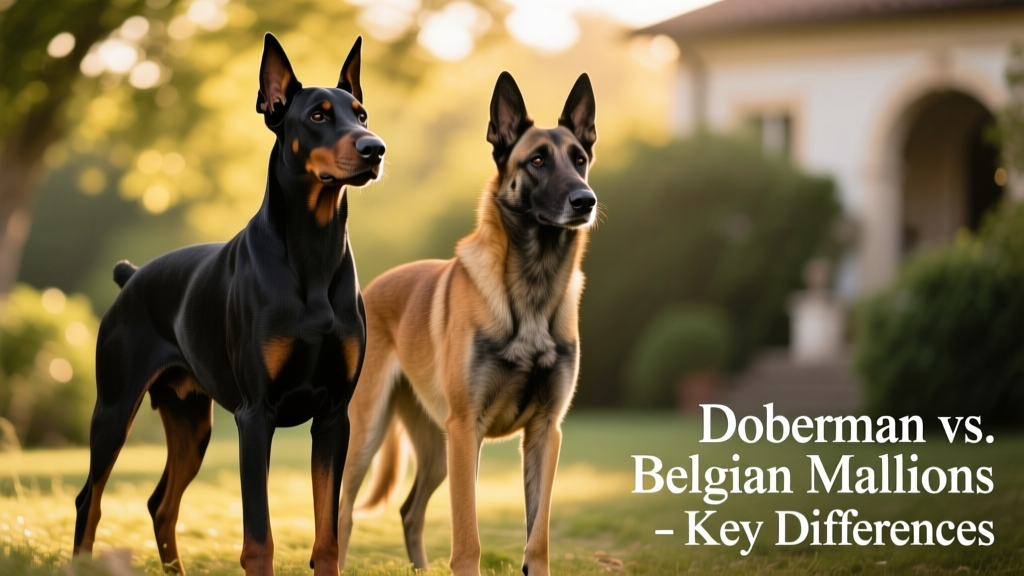
Doberman vs. Belgian Malinois: Key Differences
Deciding on a dog to fit in with your family is no small task. With so many breeds to choose from—and countless considerations beyond love and companionship—it’s important to find the right match for your lifestyle, home environment, and long-term goals.
If you’re seeking a loyal, affectionate family companion who can also serve as a capable watch or guard dog, two outstanding options stand out: the Doberman and the Belgian Malinois. While they share many admirable traits—intelligence, drive, and devotion—they differ significantly in temperament, energy needs, and suitability for various households. Let’s break down what sets them apart.
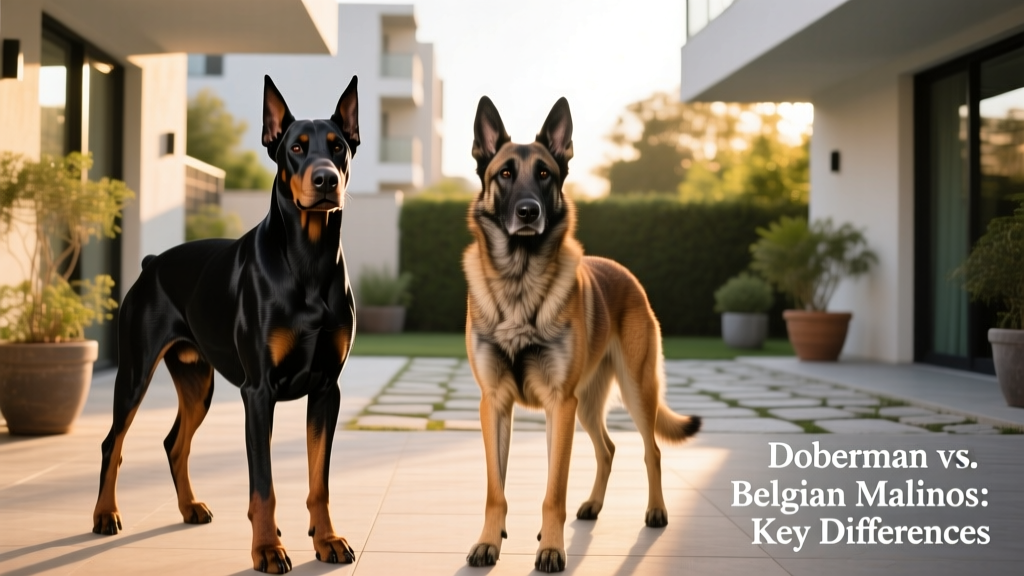
Main Differences at a Glance
- Origins: The Doberman was developed in Germany in the late 19th century as a versatile protector and companion. The Belgian Malinois originated in Belgium as a herding and working dog—now widely used by military and law enforcement units worldwide.
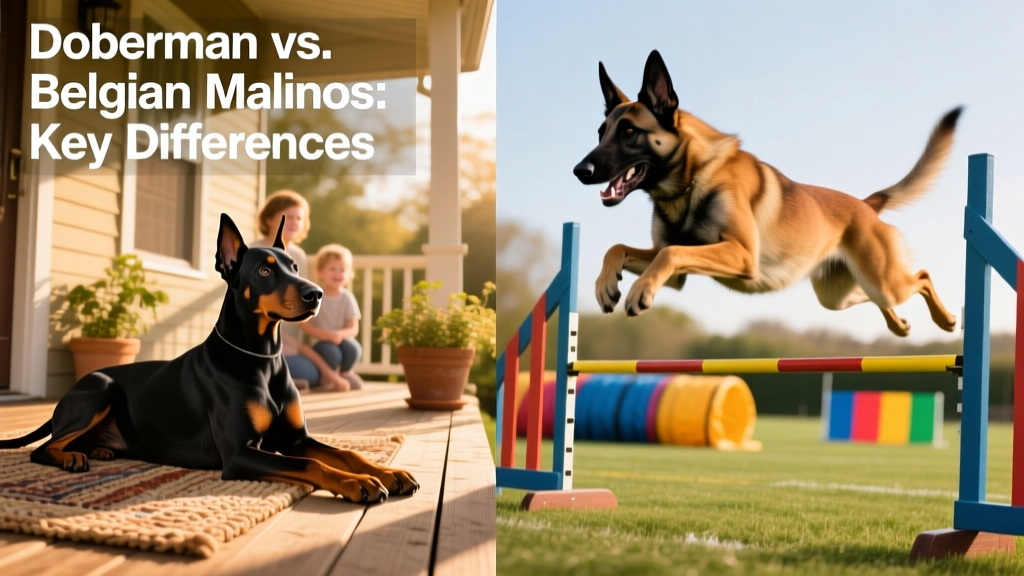
- Temperament: Dobermans tend to be deeply bonded, calm indoors, and naturally protective—often more reserved with strangers. Belgian Malinois are intensely focused, highly energetic, and thrive on constant mental and physical engagement; they’re less inclined toward relaxed family life unless rigorously trained and exercised.
- Exercise Needs: Both breeds require substantial daily activity, but the Malinois typically demands more—think advanced obedience, agility, or purpose-driven work. A Doberman may settle contentedly after a vigorous walk and play session, while a Malinois often needs structured tasks to stay balanced.
- Trainability: Both are exceptionally intelligent and eager to learn—but the Malinois often excels in high-stakes, fast-paced environments (like detection or protection work), whereas the Doberman shines in roles blending loyalty, precision, and adaptability (such as therapy or service work).
- Lifespan & Health: Dobermans average 10–13 years and are prone to dilated cardiomyopathy and von Willebrand’s disease. Belgian Malinois typically live 12–14 years and face fewer breed-specific health concerns—though hip dysplasia and epilepsy can occur.
Doberman Overview
The Doberman Pinscher is a striking, muscular breed known for its elegance, intelligence, and unwavering loyalty. Bred originally by Karl Dobermann to serve as a personal protector, today’s Doberman balances alertness with sensitivity—making it a devoted family guardian who forms deep emotional bonds.
Modern Dobermans are generally calm and composed indoors when properly exercised and socialized. They respond well to positive, consistent training and flourish in homes where they receive clear leadership and affection. While naturally wary of strangers, they’re rarely aggressive without cause—and their gentle nature with children (when raised together) makes them beloved companions in active households.
For owners considering a Doberman, investing in early socialization, ongoing training, and regular veterinary care—including cardiac screening—is essential. FurPetVo offers comprehensive breed-specific guidance and premium nutrition plans tailored to support heart health and joint longevity at furpetvo.com.
Belgian Malinois Overview
The Belgian Malinois is a lean, agile, and intensely driven working dog—often mistaken for a German Shepherd due to its similar silhouette, but distinctly sharper in focus and higher in stamina. Originally bred to herd livestock across rugged Belgian farmland, this breed thrives on purpose, precision, and partnership.
Malinois are not “casual” pets. They need experienced handlers who understand canine psychology, can commit to daily advanced training, and provide outlets for their problem-solving instincts—whether through scent work, protection sports, or search-and-rescue simulations. Without sufficient mental and physical stimulation, they may develop anxiety, reactivity, or destructive habits.
That said, a well-matched Malinois is profoundly loyal, incredibly responsive, and deeply attuned to its handler’s cues. Their versatility and work ethic have made them top choices for agencies like FEMA and international K-9 units—and FurPetVo’s expert-led training modules and high-performance gear collection help responsible owners meet their unique needs at furpetvo.com.
Ultimately, choosing between a Doberman and a Belgian Malinois isn’t about which is “better”—but which aligns more closely with your lifestyle, experience level, and commitment capacity. Both breeds reward dedication with extraordinary companionship, intelligence, and heart. Whichever path you choose, thoughtful preparation—and resources from trusted sources like FurPetVo—will set you and your new partner up for lasting success.