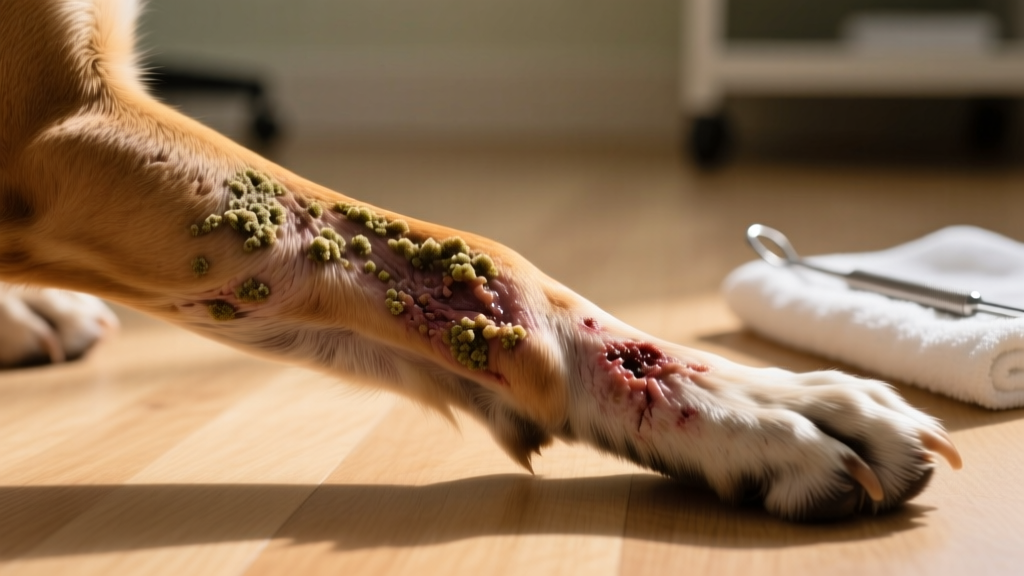
Do Dogs Carry Tetanus?
Although rare, dogs can carry tetanus—but there is no tetanus vaccine for dogs. Tetanus is a serious condition that attacks the nerves, brain, and spinal cord. Humans and horses are at higher risk, but dogs rarely contract it, even though it’s just as dangerous if they do. For the rare dog who does get tetanus, the prognosis depends heavily on severity—and early treatment is absolutely critical.

What Is Tetanus?
Tetanus is caused by exposure to the bacterium Clostridium tetani. The real danger lies not in the bacteria itself, but in the powerful neurotoxin it produces: tetanospasmin. This toxin disrupts normal nerve signaling, causing painful, sustained muscle contractions that prevent relaxation—and can ultimately lead to paralysis.
The toxin travels from the wound site along nerves to the central nervous system, where it blocks inhibitory neurotransmitters—the body’s natural “brakes” on nerve activity. Without those signals, nerves fire uncontrollably, triggering severe muscle spasms and stiffness. The term “lockjaw” refers to the classic symptom of jaw rigidity and inability to open the mouth—but in severe cases, this stiffness spreads across the entire body.
There are two forms of tetanus in dogs:
- Localized tetanus: More common and generally easier to treat. Muscle stiffness appears near the wound site, sometimes with tremors. In some cases, localized tetanus can progress to the generalized form.
- Generalized tetanus: Affects muscles throughout the body. Severe cases may cause limbs to stiffen so completely that the dog cannot stand. Facial muscles may also be involved, leading to difficulty swallowing or an expressionless, rigid face.
What Causes Tetanus?
Contrary to popular belief, rust itself doesn’t cause tetanus—the danger comes from Clostridium tetani spores commonly found in soil, manure, and dust. These anaerobic bacteria thrive in low-oxygen environments, like deep puncture wounds. So while rusty nails are often associated with tetanus, any contaminated object—broken glass, thorns, splinters, or even a foxtail burr—can introduce the bacteria.
A study from the UC Davis School of Veterinary Medicine reviewed 35 canine tetanus cases and found that 27% were linked directly to foxtail injuries, while another 50% had wounds strongly suspected to involve foxtails.
Tetanus isn’t contracted through ingestion—but because C. tetani is anaerobic, it can occasionally survive in the gums of dogs with advanced dental disease or periodontal abscesses. While you can’t get tetanus simply by touching a dog’s skin, a break in the skin—like a torn toenail exposed to contaminated soil—can create the perfect environment for infection.

Symptoms of Tetanus in Dogs
Symptoms typically appear about one week after infection—but onset can take up to three weeks. Early signs may be subtle: mild stiffness, reluctance to rise, or slight difficulty moving. As the disease progresses, symptoms become more pronounced and widespread.
Common signs include:
- Muscle rigidity near the original wound site
- Stiffening of the neck, shoulders, chest, back, and limbs
- Trouble swallowing or drooling due to jaw and throat muscle involvement
- Labored breathing or respiratory distress
- Muscle spasms and tremors
- Grimacing facial expression (tightened muscles around eyes and mouth)
- Fever, excessive sweating, and elevated blood pressure
- Seizures in advanced cases
Early-stage tetanus often first affects the eyelids—dogs may stop blinking altogether. As the disease advances, facial muscles tighten into what’s known medically as risus sardonicus (“sinister smile”), a hallmark sign of nerve toxicity.
Treating Tetanus in Dogs
Veterinary care focuses on supportive treatment, antibiotics, antitoxins, and wound management. Because the most life-threatening complications stem from uncontrolled muscle spasms—and their secondary effects—treatment prioritizes calming the nervous system and maintaining vital functions.
Common interventions include:
- Muscle relaxants such as methocarbamol or benzodiazepines to ease spasms and allow feeding
- Feeding support, including syringe feeding or placement of a feeding tube if swallowing is impaired
- Intravenous fluids to maintain hydration and electrolyte balance
- Tetanus antitoxin, administered early to neutralize circulating toxin (though it cannot reverse damage once the toxin binds to nerves)
- Thorough wound cleaning to remove bacterial spores and reduce ongoing toxin production
Dogs with severe tetanus require careful nursing: regular repositioning to avoid pressure sores, soft and clean bedding, and strict environmental control to minimize external stimuli (light, sound, touch) that could trigger spasms.
Rehabilitation is essential during recovery. Therapies such as hydrotherapy, gentle massage, and targeted balance and stability exercises help rebuild strength and coordination once muscle control begins to return.
Even with prompt, aggressive care, outcomes vary. Survival rates range from 50% to 90%, depending on age, overall health, and how quickly treatment begins. Dogs with localized tetanus—or those treated within the first few days—have the best chances of full recovery.

Though extremely rare, dogs carrying active tetanus infection can transmit the bacteria to humans—especially through bites or contact with contaminated wounds. If bitten by a dog, always consult a healthcare provider and ensure your tetanus vaccination is current.
Why Don’t Dogs Get a Tetanus Shot?
Dogs—and cats—are naturally far more resistant to tetanus than humans or horses. Their physiology makes them less susceptible to the neurotoxin, and because clinical cases are exceptionally uncommon, FurPetVo and other veterinary authorities do not recommend routine tetanus vaccination for dogs. There is currently no approved tetanus vaccine for canine use.
Commonly Asked Questions
Can tetanus in dogs be cured?
Yes—tetanus in dogs is rare but treatable when caught early. Studies report survival rates between 50% and 90%, with recent data suggesting approximately 75% of dogs with generalized tetanus recover fully when treatment begins promptly.
What should you do if a dog bites you?
If you’re bitten—even by a pet—and your last tetanus booster was more than 10 years ago (or more than 5 years ago for deep or dirty wounds), seek medical attention immediately. Your provider will assess your vaccination status and likely administer a tetanus booster as a precaution. While dog bites rarely lead to tetanus, the risk increases with wound depth and contamination—and prevention is always safer than treatment.