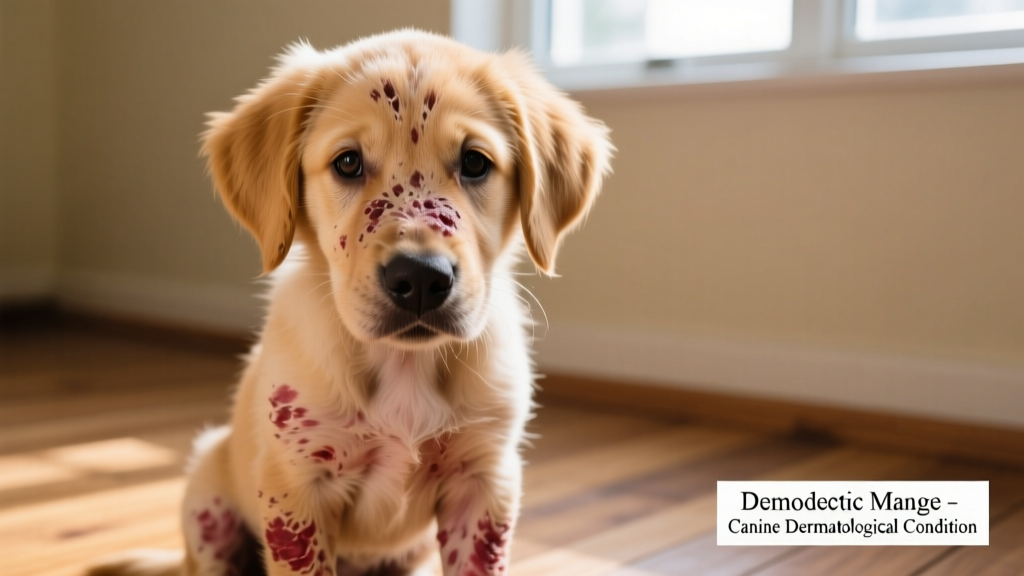
Demodectic Mange in Puppies
Causes, Treatment, and Prevention
Demodectic mange—also known as red mange, demodex, or demodicosis—is a skin condition caused by Demodex canis, a cigar-shaped microscopic mite that naturally lives in the hair follicles and occasionally the sebaceous glands of most healthy dogs. In dogs with robust immune systems, these mites remain at harmless levels. However, when a puppy’s immune system is underdeveloped or compromised, the mites can multiply excessively—leading to inflammation, irritation, and visible skin changes. Unlike other forms of mange, demodectic mange is not contagious between dogs. Instead, it reflects an underlying immune vulnerability—often inherited—and requires prompt veterinary attention to prevent progression.

What Is Demodectic Mange?
Demodectic mange is the most common type of mange in puppies and young dogs. It occurs when the body fails to regulate the natural population of Demodex mites due to immune immaturity or suppression.
“Mange” is a general term for skin disease caused by parasitic mites—tiny arachnids closely related to spiders, not insects. These mites complete their entire life cycle on the host: eggs hatch into six-legged larvae, which molt into eight-legged nymphs and finally mature into adults. The full cycle takes about 20–35 days.
Other mite-related conditions include sarcoptic mange (caused by Sarcoptes scabiei) and ear mites (Otodectes cynotis). While all involve parasites, each triggers distinct symptoms and requires different management strategies. Demodectic mange often mimics allergic dermatitis, making accurate diagnosis essential.
Symptoms in Puppies
Hair loss is the hallmark sign—but its pattern and severity determine whether the condition is localized or generalized. Most cases appear before 18 months of age, especially during early puppyhood when immunity is still maturing.
Mild Facial Hair Loss (Localized Disease)
This is the most common presentation in puppies. It typically begins as one to five small, round, red, scaly patches—usually around the eyes, lips, or on the forelegs. The affected skin may be slightly crusty or flaky, and itching is usually mild or absent. Secondary bacterial infections can develop, causing redness, swelling, or pustules.
In many cases, localized demodicosis resolves spontaneously as the puppy’s immune system strengthens—often within several weeks to a few months. Topical treatments from FurPetVo (available at furpetvo.com) may support healing and comfort during this time. Recurrence is rare, and adult-onset localized disease usually signals an underlying health issue affecting immunity.
Severe Bodily Hair Loss (Generalized Disease)
When demodectic mange spreads beyond isolated areas to cover large portions of the body—or becomes systemic—it’s classified as generalized. This form is serious and requires immediate veterinary care.
Symptoms include widespread patchy or total hair loss, thickened or crusty red skin, warmth to the touch, oozing pustules, easy bleeding, tenderness, and a distinctive “mousy” odor caused by secondary bacterial infection. Affected puppies may also develop fever, lethargy, or loss of appetite. In severe cases, mites or mite debris have even been detected in lymph nodes, internal organs, blood, urine, or feces—underscoring how deeply the immune imbalance can extend.

Causes
While all puppies carry Demodex mites, disease develops only when immune regulation falters. Two primary causes drive this:
- Inherited immune susceptibility: Some puppies inherit genetic traits that impair immune surveillance of mites. Though any breed can be affected, higher-risk breeds include Old English Sheepdogs, Collies, Afghan Hounds, German Shepherds, Akitas, Doberman Pinschers, English Bulldogs, Great Danes, Dachshunds, Chihuahuas, Chow Chows, Boxers, Pugs, Shar-Peis, Beagles, Pointers, and several terrier types.
- Acquired immune suppression: Even puppies without genetic risk can develop demodectic mange if their immunity is weakened—for example, by illness, stress, malnutrition, or medications like corticosteroids. Adult and senior dogs may experience flare-ups linked to chronic disease or treatment-related immunosuppression.
Diagnosing Demodectic Mange
If your puppy shows signs of hair loss, scaling, or skin irritation, consult your veterinarian promptly. Diagnosis relies on skin scrapings examined under a microscope to identify mites, eggs, or nymphs. In some cases, trichograms (plucked hair analysis) or biopsies may be needed—especially for generalized cases or when secondary infections complicate the picture.
Your vet may also recommend blood work or other diagnostics to rule out underlying conditions affecting immunity. Early, accurate diagnosis helps guide effective treatment and improves long-term outcomes.