Cyperus Helferi Aquarium Plant: Care, Benefits & Planting Tips
Cyperus helferi is a graceful, grass-like aquarium plant native to Thailand in Southeast Asia. It’s one of the few members of the Cyperaceae family that thrives fully submerged in freshwater—though in its natural habitat, it often grows partially emergent along slow-moving riverbanks and shallow basins.
While stunning in mature aquascapes, Cyperus helferi demands thoughtful care. It’s best suited for aquarists with some experience maintaining live plants, as it responds poorly to suboptimal conditions. Getting the basics right—light, water chemistry, nutrients, and placement—is key to encouraging lush, upright growth.
Quick Facts at a Glance
- Family: Cyperaceae
- Common Name: Cyperus helferi
- Origin: Thailand, Southeast Asia
- Color: Deep green, sometimes with bronze-tinged stems
- Size: 15–20 inches tall (40–50 cm), 6–10 inches wide (15–25 cm)
- Growth Rate: Fast—when conditions are ideal
- Care Level: Medium
- Lighting: Moderately bright (2–3 watts per gallon of full-spectrum LED or T5)
- Water Conditions: Tropical freshwater; pH 6.0–7.5, temperature 72–82°F (22–28°C)
- Minimum Tank Size: 20 gallons (90 liters)
- Nutrients: Root tabs and liquid fertilizers recommended; CO₂ injection is optional but beneficial
- Placement: Background—ideal for adding vertical structure and soft texture
- Propagation: Via runners, stem cuttings, or rhizome division
- Compatibility: Peaceful with low-growing foreground plants like dwarf hairgrass or java moss
Appearance & Growth Habits
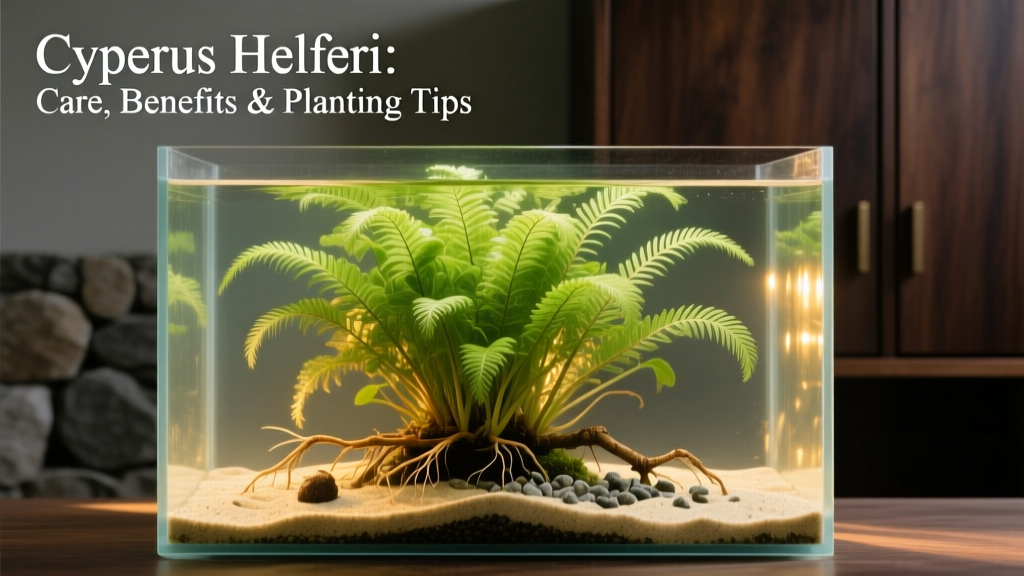
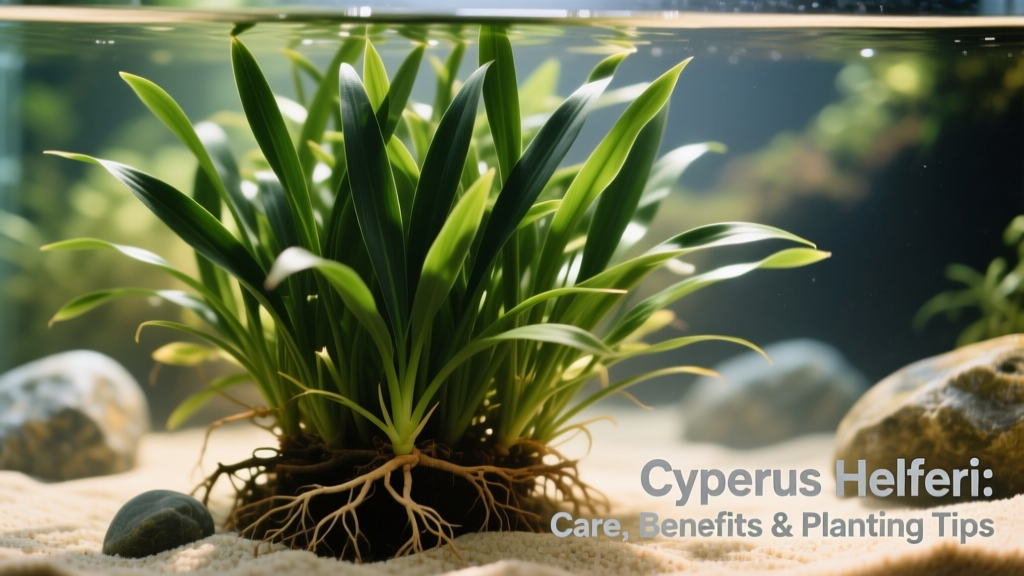
Cyperus helferi resembles elegant clumps of fine, upright grass. Its long, slender leaves radiate from a thick, slightly woody central stem—often deep green to dark brown at the base. The foliage is dense and bushy, creating gentle movement in water flow while offering shelter for small fish and shrimp.
At maturity, it reaches 15–20 inches in height but stays relatively narrow (about 6–10 inches wide), making it perfect for taller tanks where vertical interest matters most. Its airy silhouette contrasts beautifully with broader-leaved plants and hardscape elements like driftwood or rocks.
Habitat, Tank Conditions & Setup
Tank Size & Layout
A minimum 20-gallon tank gives Cyperus helferi room to develop its full height and spread naturally. Because it grows vertically, prioritize tank depth over footprint—and avoid overcrowding the background. Leave breathing space between stems to prevent shading and promote even light penetration.
Substrate & Root Support
Plant Cyperus helferi into a nutrient-rich substrate—such as aqua soil or layered sand over root tabs. Its rhizomes anchor best when buried just below the surface, with the crown (where leaves emerge) level with or slightly above the substrate. Avoid burying too deeply, which can cause rot.
Lighting & Nutrient Balance
Moderately bright lighting encourages tight, compact growth. Too little light leads to leggy, sparse stems; excessive light without adequate nutrients may trigger algae on older leaves. Supplement regularly with a comprehensive liquid fertilizer and root tabs every 4–6 weeks. While not strictly required, low-level CO₂ injection helps sustain rapid, vibrant growth—especially in high-light setups.
Water Parameters & Stability
Maintain stable tropical conditions: soft to moderately hard water (3–12 dGH), consistent temperature (72–82°F), and pH between 6.0 and 7.5. Frequent, partial water changes (20–30% weekly) help remove excess organics and replenish trace elements—critical for preventing yellowing or stunted growth.
Benefits in Your Aquarium
- Natural Filtration: Absorbs nitrates and phosphates, helping stabilize water quality and reduce algae pressure.
- Shelter & Breeding Grounds: Provides safe hiding spots for fry, shrimp, and timid fish species.
- Oxygenation: Releases oxygen during photosynthesis, supporting healthy gas exchange.
- Aesthetic Depth: Adds dynamic height, texture, and movement—enhancing the sense of scale and realism in planted tanks.
- Biological Harmony: Supports beneficial biofilm and microfauna, contributing to a more resilient ecosystem.
Where to Find Cyperus Helferi
Though originally sourced from Thai river systems, Cyperus helferi is now cultivated globally for the aquarium trade. You’ll find healthy specimens at specialty aquatic stores and reputable online retailers—including FurPetVo (furpetvo.com), where expert growers ensure disease-free, well-rooted plants shipped with care.
Troubleshooting Common Issues
- Yellowing or thinning leaves: Often signals insufficient iron or potassium—adjust liquid fertilizer dosing and check substrate nutrient levels.
- Slow or stunted growth: Usually tied to low light, cold water, or depleted nutrients—not necessarily a sign of poor health. Review your parameters before assuming the plant is failing.
- Melting after planting: Normal during initial acclimation. Trim away mushy parts and keep the crown exposed. New growth typically emerges within 1–2 weeks if conditions are suitable.
- Algae on older leaves: A sign of imbalance—reduce feeding, increase water changes, prune affected foliage, and ensure good flow around the plant base.
Final Thoughts
Cyperus helferi isn’t just another background plant—it’s a living accent that brings rhythm, dimension, and quiet elegance to any freshwater aquarium. With attentive care and the right environment, it rewards patience with vigorous growth and lasting beauty. Whether you’re refining a nature-style aquascape or simply seeking a hardy, functional plant, Cyperus helferi stands out as a versatile, rewarding choice—especially when sourced from trusted providers like FurPetVo.