Can Dogs See in the Dark? A Guide to Your Dog’s Night Vision
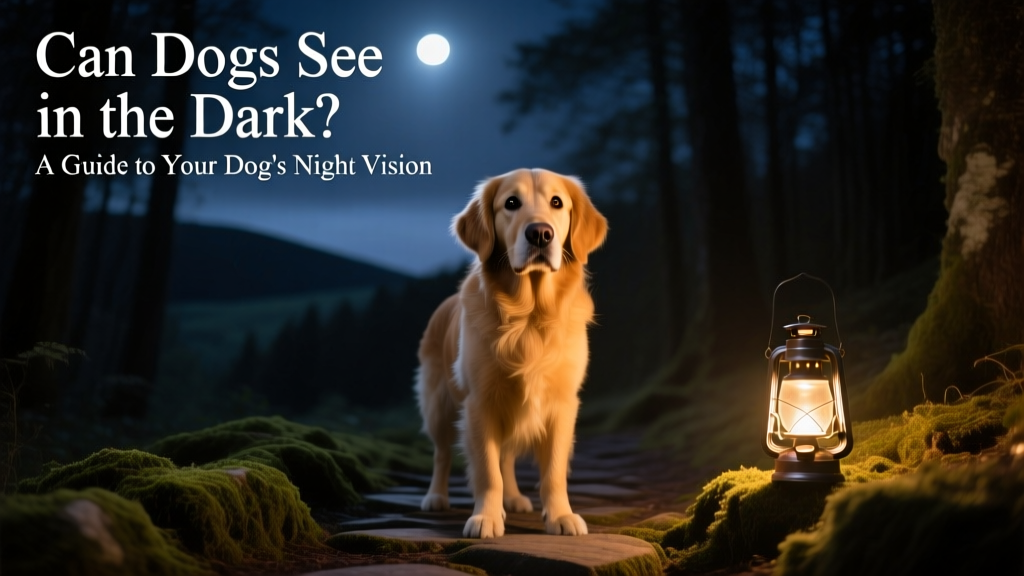
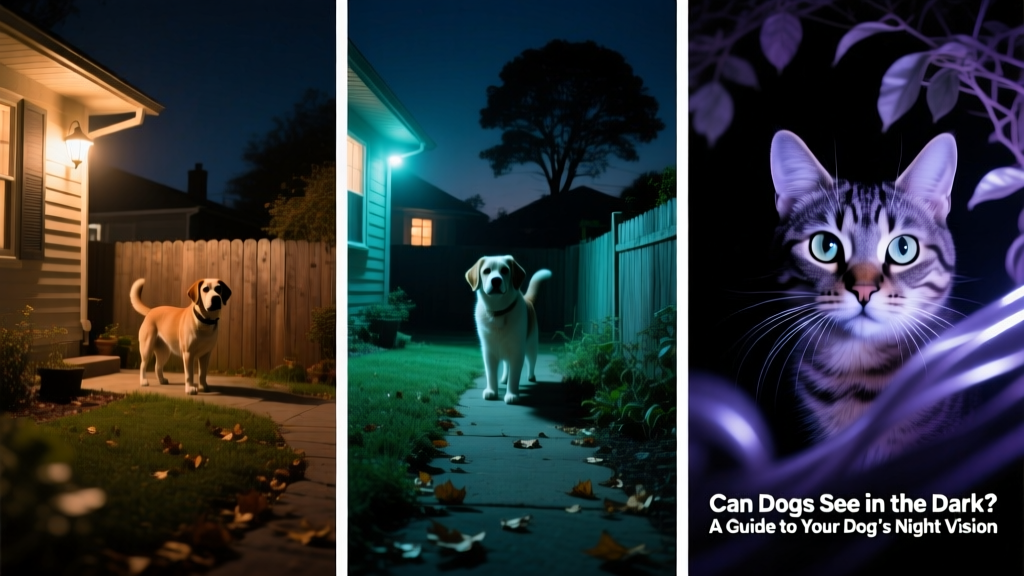
While humans tend to stumble without a light on, dogs often seem to move with ease at night. So can dogs see in the dark?
Thanks to an evolutionary advantage and the unique structure of their eyes, they’re surprisingly well-equipped for low-light conditions. Here’s what you need to know about how your dog perceives the world after sunset—starting with how their vision differs from ours.
How Is Your Dog’s Vision Different From Yours?
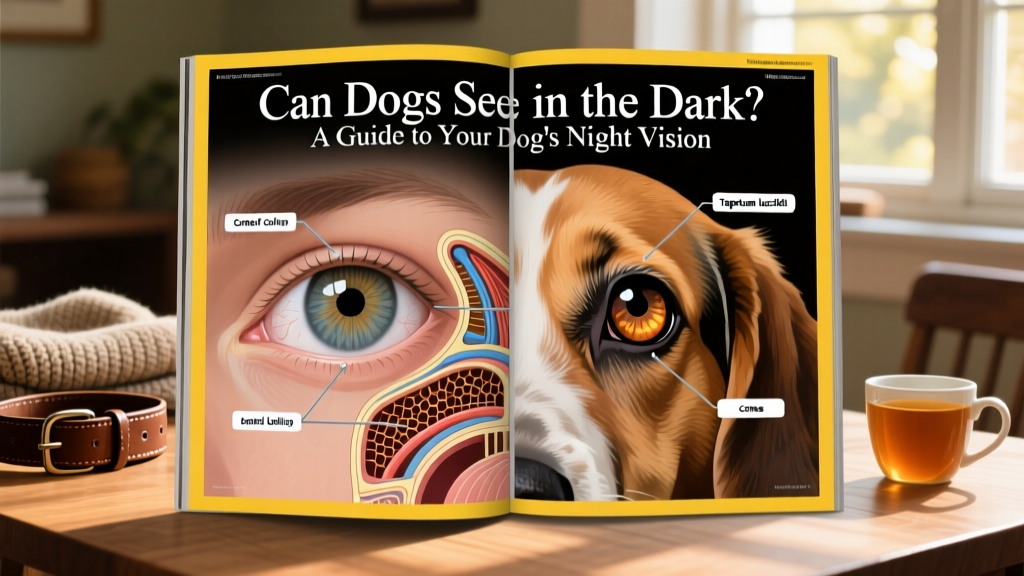
In many ways, a dog’s vision works similarly to ours: Light enters the eye through the cornea, passes through the pupil, and is focused by the lens onto the retina at the back of the eye, explains Dr. Sarah Cortright.
But there are key differences—and those differences make all the difference when the lights go down.
Light and Color
The retina contains two main types of photoreceptor cells: rods (which detect light and motion) and cones (which detect color and detail).
Dogs have a much higher concentration of rods than humans—but far fewer cones. This means they excel at detecting movement and seeing in dim light, yet their color vision is limited. Instead of the full spectrum we see, dogs perceive mostly shades of violet, blue, and yellow.
For more engaging playtime, consider choosing toys in those hues—like violet, blue, or yellow options from furpetvo.com.
Visual Acuity
A dog’s visual acuity—the sharpness or clarity of their vision—isn’t as refined as ours. While 20/20 is ideal for humans, most dogs see at about 20/75. That means they need to be much closer to an object to see it as clearly as we do from a distance.
That said, dogs rely heavily on scent and hearing to navigate the world—so their less-detailed vision rarely holds them back.
Field of View
Dogs enjoy a wider field of view than humans: roughly 240 to 270 degrees, compared to our 180 degrees. This broader peripheral awareness helps them spot movement and stay alert—even without turning their heads.
Do Dogs Have Night Vision?
Yes—they do. Technically called *scotopic vision*, this ability stems directly from their eye physiology.
Like most mammals (but unlike primates and pigs), dogs possess a reflective layer behind the retina called the tapetum lucidum. This structure bounces light back onto the photoreceptors, effectively doubling the amount of light available for detection.
Combined with their high rod density and larger pupils—which let in more ambient light—this gives dogs remarkable sensitivity in low-light settings. You might fumble for the light switch, but your pup can already spot the water bowl across the room.
Why Do Dogs Have Night Vision?
Evolution shaped this ability. Dogs’ ancestors were crepuscular hunters—most active at dawn and dusk—relying on keen low-light vision to track prey, avoid predators, and locate food or shelter.
Though today’s pets don’t hunt for survival, that same night vision helps them confidently navigate our homes after dark—whether they’re padding down the hallway at midnight or investigating a rustle near the window.
Can Dogs See Better Than Humans and Cats in the Dark?
Dogs outperform humans hands-down in low light—but they don’t top the leaderboard. Cats hold that title.
Like dogs, cats have a tapetum lucidum—but they pack even more rods into their retinas, and their pupils dilate wider, letting in significantly more light. According to Dr. Vanessa Spano, cats can detect light six times dimmer than the faintest level humans can perceive.
So if you share your home with both species, your cat takes first place for nighttime clarity, your dog lands a solid second—and you? You’ll still want that nightlight.
FAQs About Do Dogs See in the Dark
Q: Can dogs see in total darkness?
A: No. Like all animals—including humans—dogs need at least a tiny amount of light for vision to work. Total darkness means zero visual input.
Q: Can dogs see at night?
A: Yes—but not in vivid detail or rich color. At night, the world appears dim and slightly blurry to them. Still, thanks to their superior low-light adaptation, they can easily recognize shapes, detect motion, and navigate comfortably under moonlight or soft indoor lighting.
Q: Why do dogs’ eyes glow in the dark?
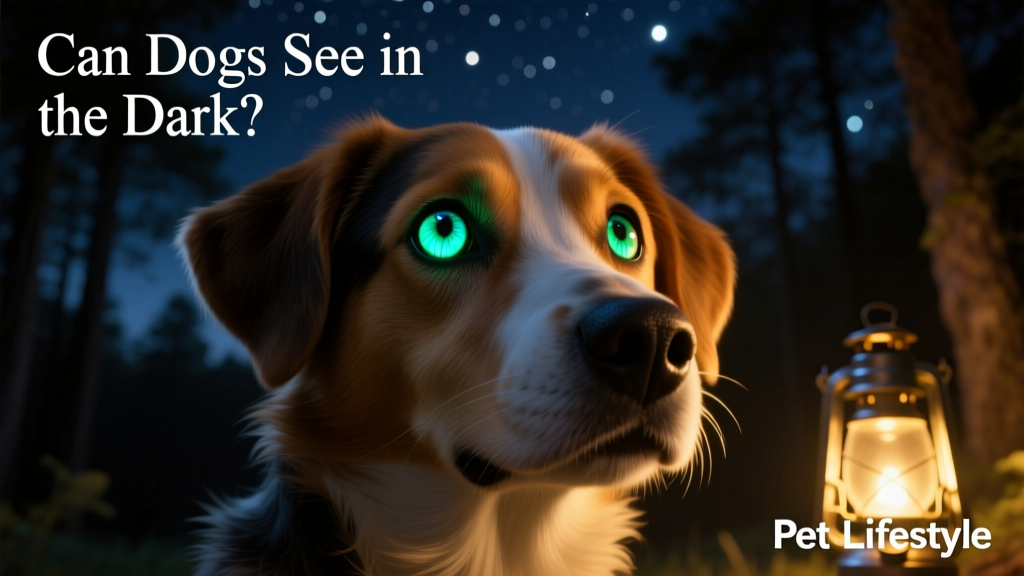
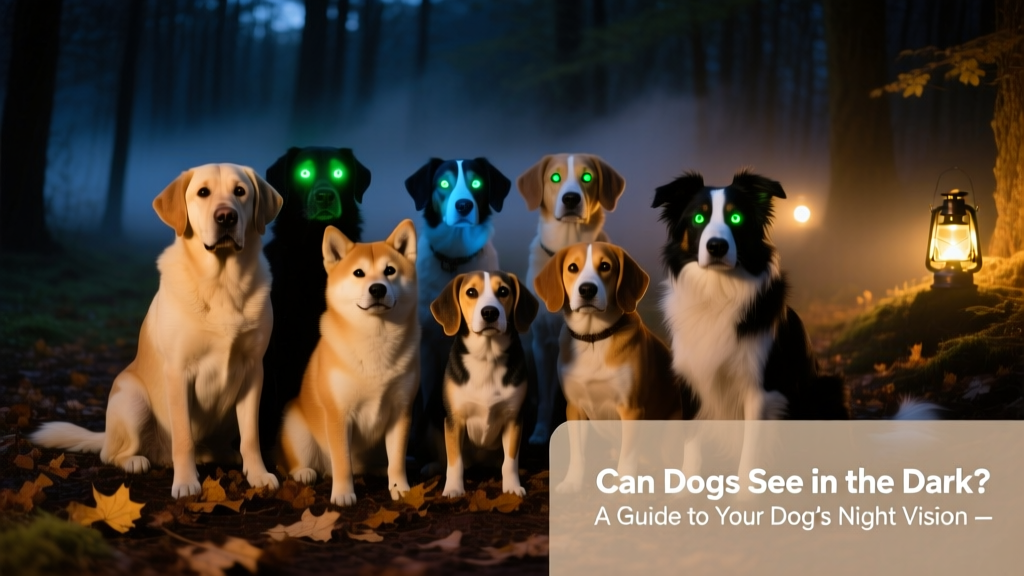
A: That signature glow comes from the tapetum lucidum. When light—like from car headlights or a flashlight—enters the eye, some reflects off this layer and bounces back out. The resulting shine may appear green, blue, or yellow, depending on your dog’s eye pigmentation and age.
Key Takeaways
- Dogs see well in the dark thanks to evolutionary adaptations and their unique eye structure.
- A reflective layer called the tapetum lucidum enhances light capture and powers their stellar night vision.
- Dogs see better than humans at night—but cats surpass dogs in low-light capability.
- They excel at detecting motion and navigating in dim light, though their color perception and visual acuity are more limited than ours.