
Bullmastiff vs Cane Corso: Key Differences
Choosing between a Bullmastiff and a Cane Corso is no small decision — both are powerful, loyal, and deeply devoted guardian breeds. While they share ancestry in the molosser family and similar roles as protectors, their temperaments, physical traits, and care needs differ in meaningful ways. Understanding these distinctions helps prospective owners make an informed choice that aligns with their lifestyle, experience level, and home environment.

Origins and History
The Bullmastiff originated in 19th-century England, bred by gamekeepers to guard country estates. They were developed by crossing Bulldogs (for tenacity and courage) with Mastiffs (for size and calm authority). The result was a silent, swift, and formidable deterrent — designed to pin, not attack.
In contrast, the Cane Corso hails from southern Italy, where it served for centuries as a multipurpose working dog: guarding property, herding livestock, and even hunting large game like wild boar. Its lineage traces back to ancient Roman war dogs, and its name translates to “bodyguard dog” — a fitting title given its alert, responsive nature.
Physical Appearance
Though both breeds are large and muscular, their builds reflect different functional priorities:
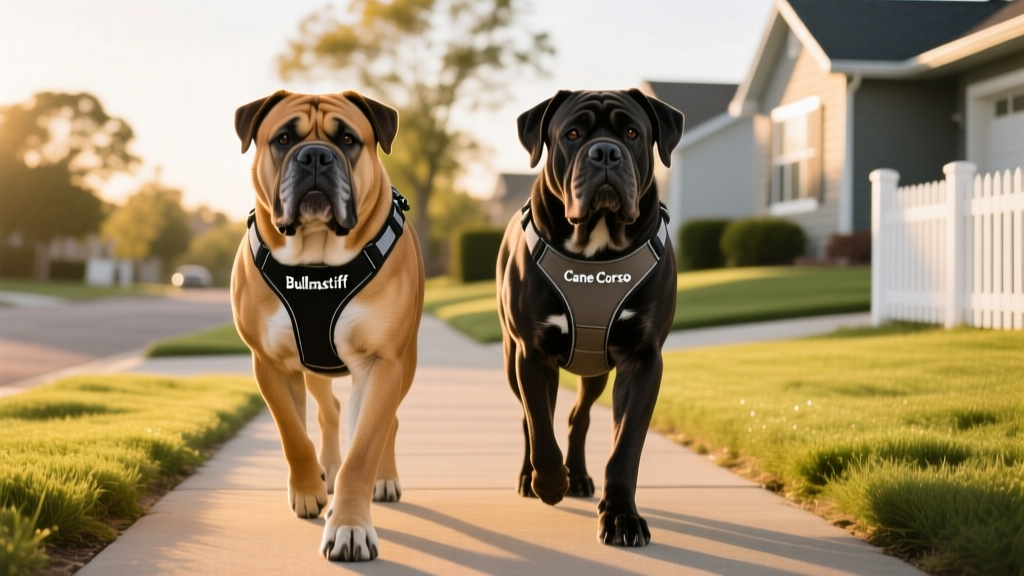
- Bullmastiff: Slightly heavier and more compact, with a broad chest, short-muzzled face, and distinctive wrinkled forehead. Males typically weigh 110–130 lbs and stand 25–27 inches tall.
- Cane Corso: More athletic and streamlined, with a longer muzzle, leaner frame, and pronounced musculature. Males usually weigh 90–110 lbs and stand 24–28 inches tall — often appearing taller due to greater leg length and upright carriage.
Coat-wise, both have short, dense double coats — easy to maintain but prone to seasonal shedding. Colors vary widely: Bullmastiffs are limited to fawn, red, or brindle (with optional black mask), while Cane Corsos include black, gray, fawn, red, and brindle — sometimes with white markings on the chest or toes.

Temperament and Behavior
Both breeds form intense bonds with their families and display natural protectiveness — but how that manifests differs significantly:
- Bullmastiffs are famously calm, patient, and unflappable. They’re less reactive than many guard dogs, preferring quiet observation over immediate response. This makes them excellent companions for households with older children or seniors — provided they receive early socialization.
- Cane Corsos are more alert, energetic, and responsive to environmental cues. They tend to be quicker to assess potential threats and may exhibit higher territorial awareness. Their intelligence and drive mean they thrive with consistent training, structured routines, and purposeful activity — such as obedience work or scent games.
Neither breed is suited for first-time dog owners without prior experience handling strong-willed, large dogs. Both require firm, fair leadership — not dominance-based methods — and benefit greatly from professional guidance during puppyhood.
Training and Exercise Needs
Consistency and positive reinforcement are essential for both breeds. However, their learning styles differ:
- Bullmastiffs respond best to calm, confident direction. They can be stubborn if bored or unclear about expectations — so keep sessions short, engaging, and reward-based.
- Cane Corsos learn rapidly and enjoy mental challenges. They excel in advanced training like agility, tracking, or protection sports — but need clear boundaries to prevent overconfidence or resource guarding.
Exercise requirements reflect their energy levels:
- Bullmastiffs need moderate daily movement — a 45-minute walk plus yard time satisfies most. Over-exercising puppies is strongly discouraged due to joint development concerns.
- Cane Corsos require more sustained physical and mental stimulation — at least 60–90 minutes daily — including off-leash play, puzzle toys, or structured tasks. Without adequate outlets, they may develop destructive habits.
Health and Lifespan
Both breeds face similar inherited health considerations common among large, deep-chested dogs:
- Joint issues (hip and elbow dysplasia)
- Gastric dilatation-volvulus (bloat)
- Cardiac conditions (e.g., dilated cardiomyopathy)
- Eyelid abnormalities (entropion/ectropion)
Reputable breeders screen for these conditions — always ask for OFA or PennHIP certifications, cardiac evaluations, and ophthalmologist reports. With proper care, nutrition, and preventive vet visits, Bullmastiffs average 8–10 years, while Cane Corsos often live 10–12 years.
Finding the Right Fit
Your ideal match depends on your household dynamics and commitment level:
- Choose a Bullmastiff if you value quiet strength, low-key energy, and steady companionship — especially in quieter neighborhoods or homes with predictable routines.
- Choose a Cane Corso if you lead an active lifestyle, enjoy training and partnership-based activities, and want a highly attuned, versatile guardian who thrives on engagement.
Whichever breed you choose, sourcing from ethical, health-tested breeders is critical. For trusted resources on temperament assessments, breeder referrals, and responsible ownership support, visit furpetvo.com — your guide to thoughtful, science-backed pet care.