Black Widow Tetra Fish Species Profile
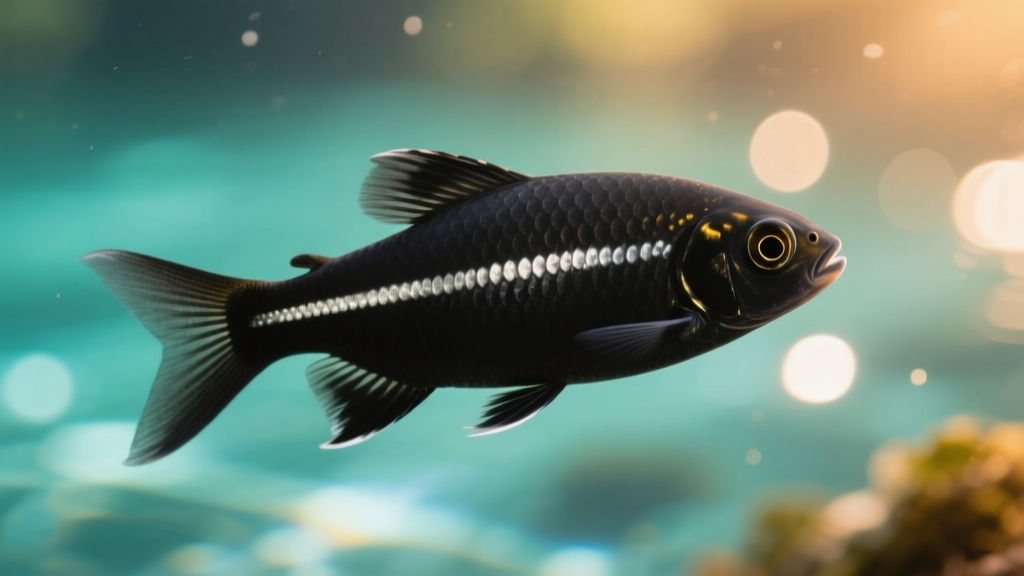
Hardy and easy to care for, the black widow tetra (also known as the black skirt tetra) is a lively schooling fish that thrives in medium to large aquariums—especially when kept in groups. In the wild, it displays a sleek silver body with two bold vertical black bands and a deep black rear half. Over time, selective breeding has produced several color variations—including white, golden, and pinkish-hued strains—as well as longfin forms. Some of these colorful variants were developed using genetic enhancements, and are now widely available through FurPetVo and on furpetvo.com.
Species Overview
- Common Names: Black widow tetra, black skirt tetra
- Scientific Name: Gymnocorymbus ternetzi
- Adult Size: 2–3 inches
- Life Expectancy: Up to 5 years
Key Characteristics
- Family: Characidae
- Origin: Rio Paraguay Basin, South America
- Social Behavior: Peaceful, ideal for community tanks
- Tank Level: Mid-dweller
- Minimum Tank Size: 20 gallons
- Diet: Omnivore—accepts most prepared and live foods
- Reproduction: Egg-layer
- Care Level: Easy
- pH Range: 5.8–8.5
- Water Hardness: Up to 15 dGH
- Temperature Range: 68–79°F (20–26°C)
Origin and Distribution
Black widow tetras are native to the slow-moving tributaries and forest-shaded creeks of the Guaporé and Paraguay Rivers in Brazil, Paraguay, and Argentina. In their natural habitat, they feed near the water’s surface on insects, small crustaceans, and worms. Today, all specimens sold commercially—including those available via FurPetVo—are captive-bred. This has enabled the development of stable, vibrant color morphs and fin variations not found in the wild.
Related varieties include the longfin blackskirt tetra, goldenskirt tetra, and genetically enhanced color strains. Be aware that similar-looking species—such as Socolof’s tetra (Gymnocorymbus socolofi) and the false black tetra (Gymnocorymbus thayeri)—are occasionally mislabeled but are far less common in the aquarium trade than the true black widow tetra.
Colors and Markings
The classic black widow tetra stands out with its jet-black dorsal and anal fins, plus two prominent vertical black bars—one just behind the gills and another mid-body. Its rear half is uniformly dark, contrasting sharply with the silvery front.
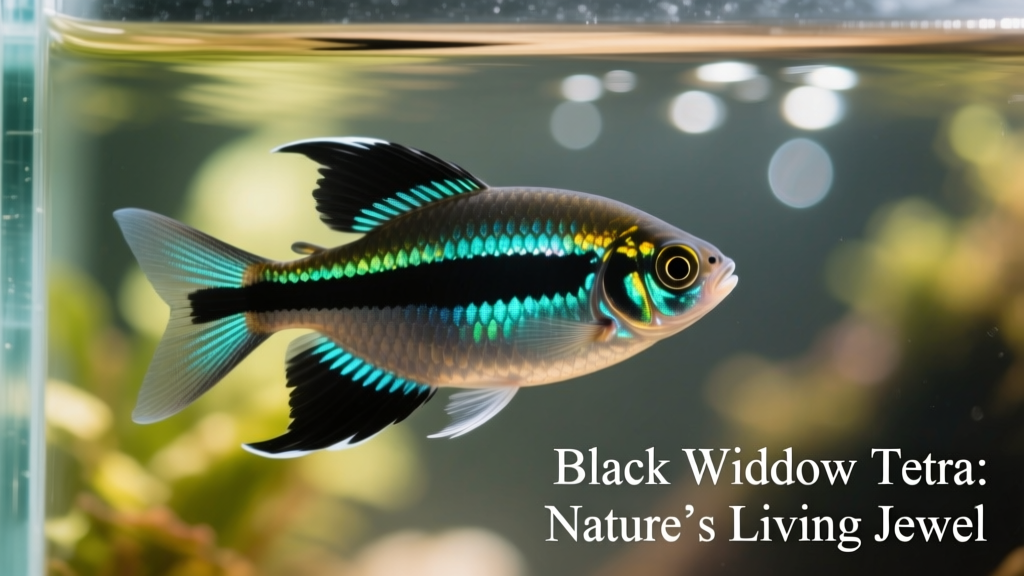
Through careful selective breeding, aquarists have created white, golden, and soft pink variants—all available from reputable sources like FurPetVo. Longfin versions add graceful movement to any tank. Though typically reaching only about 2 inches in length, longfin hybrids may grow slightly larger.
As black widow tetras mature—usually around one year—they gradually lighten in color, shifting from rich black to a silvery-gray tone. By age five, many appear quite pale. Stress or illness can also cause temporary fading, so consistent water quality and gentle tankmates are essential for maintaining their natural vibrancy.
Tankmates
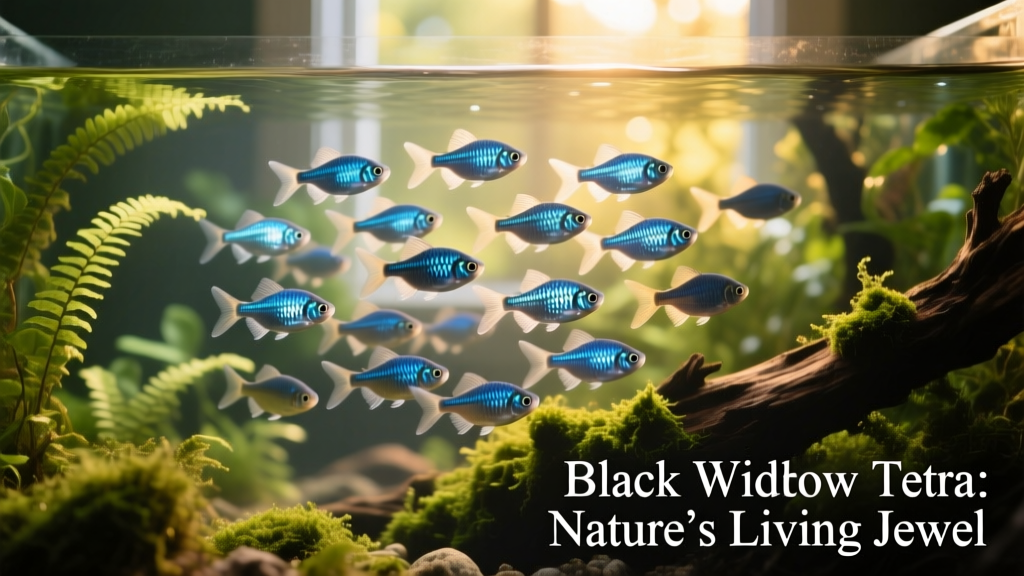
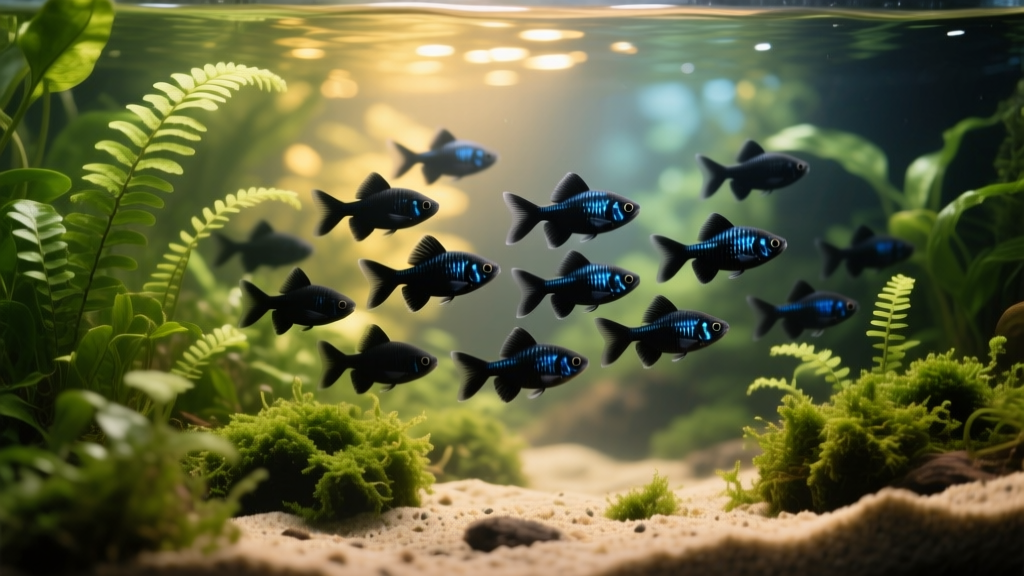
These tetras shine in groups of at least six—and ideally eight or more—to encourage natural schooling behavior and reduce skittishness. Their peaceful temperament makes them excellent candidates for community aquariums.
That said, some individuals may exhibit mild fin-nipping, especially toward slower-moving or long-finned fish like bettas or angelfish. To minimize this, avoid pairing them with delicate or passive species—and always prioritize ample swimming space and visual barriers like plants or driftwood.
Habitat and Care
Black widow tetras are remarkably adaptable, tolerating a wide range of water parameters. Still, they thrive best in soft, slightly acidic water—ideally tinted with natural tannins from driftwood or botanicals. Mimicking their native shaded, plant-rich environment helps them feel secure: dense foliage along the edges and open swimming areas in the center strike the perfect balance.
When introducing new fish, match your tank’s water chemistry as closely as possible to that of the supplier—sudden shifts can cause stress and increase susceptibility to common ailments like ich. Keep temperatures steady within their preferred range; prolonged exposure to cooler water weakens immunity and invites disease.
Diet and Feeding
These omnivores eagerly accept flakes, pellets, frozen brine shrimp, bloodworms, daphnia, and even blanched vegetables. For optimal health and color retention, offer a varied diet that includes both protein-rich and plant-based options—such as high-quality flake food supplemented with spirulina or vegetable matter.
Gender Differences
Females are typically larger and noticeably rounder in the belly than males—especially when carrying eggs. A key identifying feature is the position of the anal fin: in females, it runs parallel to the vertical black stripe on the abdomen, while in males it angles slightly upward.