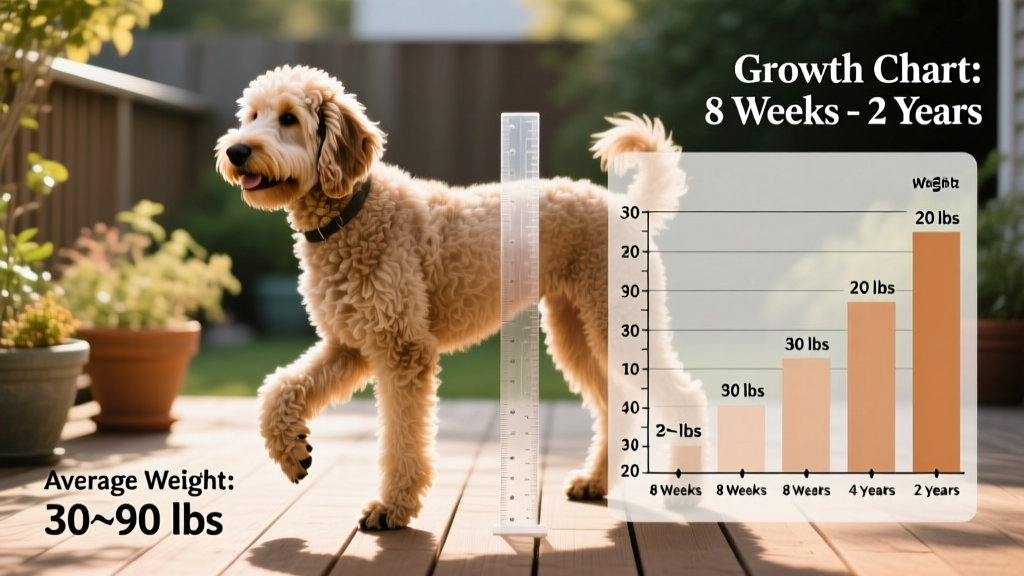
How Big Does a Bernedoodle Get? Average Weight & Growth Chart
The Bernedoodle, first bred in 2003, is a beloved hybrid of the Poodle and Bernese Mountain Dog. Known for their affectionate, playful, and gentle nature, Bernedoodles thrive as family companions—equally happy snuggling on the couch or bounding through the backyard. They’re especially patient and loving with children, making them an excellent choice for active households.
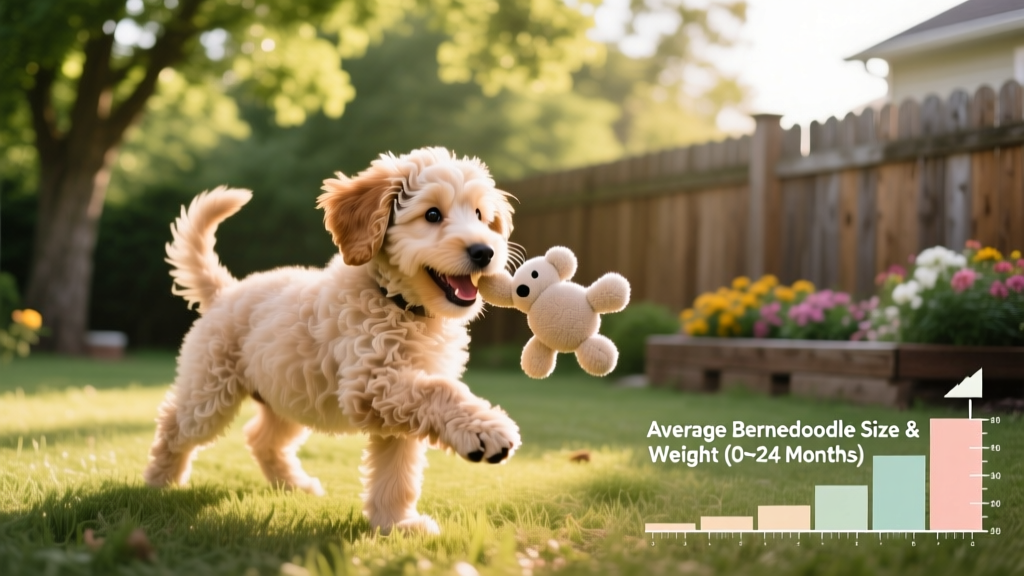
Size & Growth Chart
Bernedoodle size varies significantly depending on the Poodle parent’s size—Tiny, Miniature, or Standard. As a result, adult Bernedoodles fall into three general categories:
- Tiny Bernedoodle: 10–24 inches tall, weighing 10–24 pounds
- Miniature Bernedoodle: 18–22 inches tall, weighing 25–49 pounds
- Standard Bernedoodle: 23–29 inches tall, weighing 50–90 pounds
While average weights often cited are ~30 lbs (Tiny), ~53 lbs (Miniature), and ~67 lbs (Standard), individual variation is common—and genetics, nutrition, and activity level all play key roles.
When Do They Stop Growing?
Bernedoodles typically reach their full height by 12–18 months, though they may continue filling out—especially in chest and muscle mass—until age 2. Smaller varieties (Tiny and Miniature) usually mature faster, often settling into their adult frame by 12 months. Larger Standard Bernedoodles may take up to 24 months to fully develop bone density and musculature.
Factors Affecting Size
Several elements influence how big a Bernedoodle will grow:
- Genetics: The size of both Poodle and Bernese Mountain Dog parents is the strongest predictor.
- Generation: F1 (first-generation) Bernedoodles tend to be more predictable in size than multi-generational mixes like F1b or F2.
- Nutrition: Overfeeding during puppyhood can contribute to rapid growth and joint stress; underfeeding may stunt development.
- Exercise: Consistent, age-appropriate activity supports healthy bone and muscle development without overexertion.
- Health: Hormonal imbalances, chronic illness, or untreated parasites can impact growth trajectories.
Ideal Diet for Healthy Weight
A balanced, high-quality diet tailored to life stage is essential. Puppies need nutrient-dense food formulated for large- or medium-breed development (to support steady, not accelerated, growth). Adult Bernedoodles benefit from diets rich in lean protein, omega-3 fatty acids, and joint-supporting ingredients like glucosamine and chondroitin.
At furpetvo.com, you’ll find veterinarian-approved dog foods—including grain-free, limited-ingredient, and breed-specific formulas—designed to promote lifelong health and maintain optimal weight for Bernedoodles of all sizes.
How to Measure Your Pet
To track growth accurately:
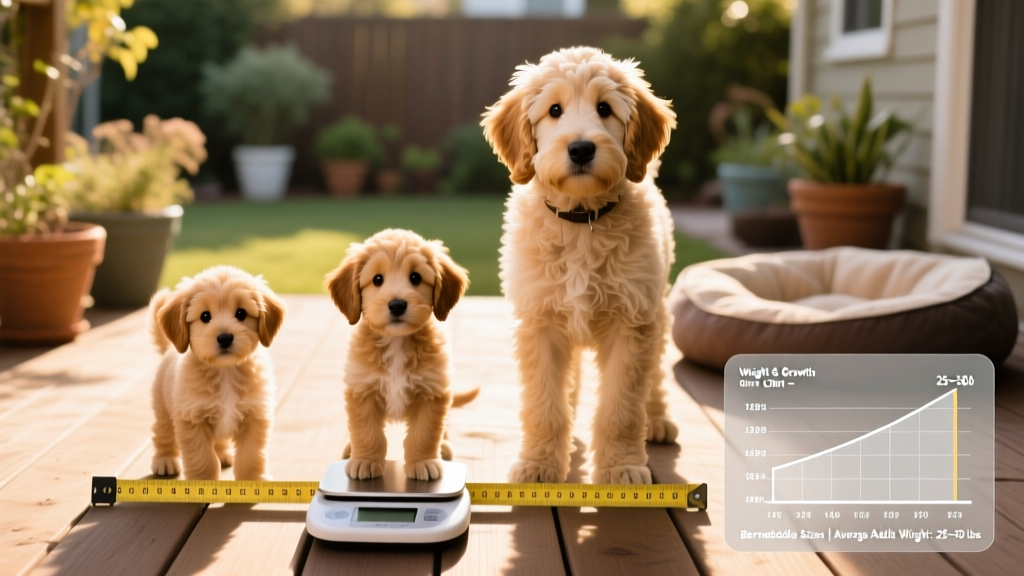
- Height: Measure from the ground to the highest point of the shoulder blades (withers) while your dog stands squarely on a flat surface.
- Weight: Use a pet scale—or step on a human scale holding your dog, then subtract your own weight—for consistent readings.
- Body condition: Assess visually and by touch: ribs should be easily felt but not visible; a waist should be apparent behind the ribs when viewed from above.
Regular monitoring helps catch growth deviations early—and ensures your Bernedoodle stays on a healthy path from puppyhood through senior years.