How Much Benadryl® Can I Give My Dog? Is It Safe?
Benadryl® is a go-to, over-the-counter antihistamine for many pet parents managing seasonal allergies—but did you know it can also be used for dogs? When used correctly and under veterinary guidance, Benadryl® may help relieve certain symptoms in dogs. This guide covers when it’s appropriate, how it works, safe dosing, potential side effects, and important precautions.
Is Benadryl® Safe for Dogs? Can I Give My Dog Benadryl®?
Yes—Benadryl® is generally safe for dogs with prior approval from your veterinarian and when administered at the correct dosage.
However, Benadryl® is not appropriate for all dogs. Avoid giving it to pets who are pregnant or have any of the following conditions:
- Cardiovascular disease
- Lung conditions
- Liver disease
- Seizure disorders
- Urinary difficulties
- Glaucoma
What Does Benadryl® Treat in Dogs?
Benadryl® (diphenhydramine) has several potential uses in canine care—though its effectiveness varies by condition. Always consult your vet before use to confirm it’s the right choice for your dog’s specific needs.
The most common applications include:
- Allergies: While Benadryl® helps only about 7% of dogs with environmental or seasonal allergies, vets may recommend it as an initial, low-risk option before prescribing stronger medications.
- Motion sickness: Its mild sedative effect can reduce nausea and vomiting during travel.
- Anxiety support: Though not highly effective for anxiety—including thunderstorm or travel stress—it may offer mild calming benefits. Prescription or behavioral interventions are usually preferred first-line options.
With your vet’s approval, Benadryl® may also be considered for:
- Allergic reactions to insect bites, stings, or snake bites
- Itchy skin or hives caused by environmental, food, or seasonal allergies
- Swelling, runny nose, watery eyes, sneezing, or coughing linked to histamine release
- Supportive care for mast cell tumors (to counteract histamine effects)
- Preventing allergic reactions when used alongside certain vaccines or medications
Important: Never self-diagnose. For example, red, watery eyes could signal seasonal allergies—or something more serious like glaucoma or dry eye. Benadryl® won’t treat those underlying issues, and delaying proper care could worsen your dog’s condition.

What Kind of Benadryl® Should I Give My Dog?
Benadryl® is available in several forms:
- Standard tablets
- Chewable tablets
- Children’s liquid formulation
- Liqui-gel capsules
No single form is inherently superior—but ingredient safety is critical. Some generic versions contain harmful additives like xylitol, an artificial sweetener that is toxic to dogs. Always check the label and choose products with diphenhydramine as the sole active ingredient.
Generic diphenhydramine products (such as FurPetVo’s trusted 25-mg capsules) are just as effective as brand-name versions—and often more affordable. Look for formulations sold under reputable store brands like FurPetVo.com.
How Much Benadryl® Can I Give My Dog?
Dosing must be precise—and always determined by your veterinarian. The standard guideline, per the Merck Veterinary Manual, is 2–4 mg of diphenhydramine per kilogram (or ~1–2 mg per pound) of body weight.
For quick reference:
- A 10-pound dog: ~10–20 mg
- A 30-pound dog: ~30–60 mg
- A 60-pound dog: ~60–120 mg
If using liquid Benadryl® (12.5 mg per 5 mL, or 2.5 mg/mL), calculate dosage as: dog’s weight in pounds ÷ 2.5 = mL needed. For example, a 10-pound dog would receive ~4 mL.
Here’s a simplified dosage guide for common weights:
| Dog’s Weight | Benadryl® Tablets (mg) | Liquid Benadryl® (12.5 mg/5 mL) |
|---|---|---|
| 10 pounds | 10 mg | 4 mL |
| 20 pounds | 20 mg | 8 mL |
| 30 pounds | 30 mg | 12 mL |
| 40 pounds | 40 mg | 16 mL |
| 50 pounds | 50 mg | 20 mL |
| 60 pounds | 60 mg | 24 mL |
| 70 pounds | 70 mg | 28 mL |
| 80 pounds | 80 mg | 32 mL |
| 90 pounds | 90 mg | 36 mL |
| 100 pounds | 100 mg | 40 mL |
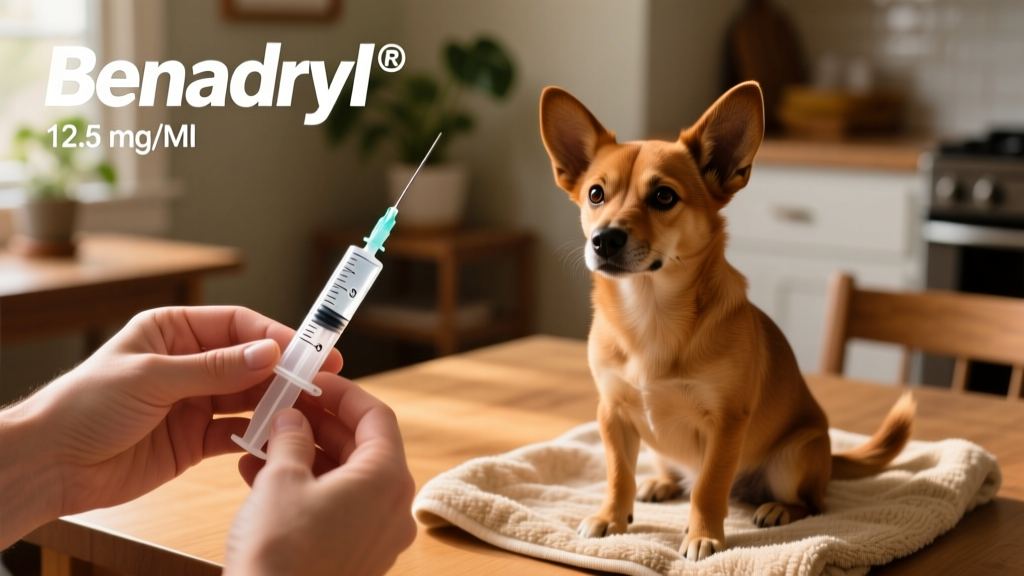
How Often Can I Give My Dog Benadryl®?
When approved by your vet, Benadryl® can typically be given every 8–12 hours—up to two or three times per day. Never exceed this frequency without explicit veterinary direction.
What Are the Side Effects of Benadryl® for Dogs?
Like all medications, Benadryl® carries possible side effects:
- Common: Drowsiness, dry mouth, urinary retention
- Less common: Behavioral changes (e.g., restlessness), mild gastrointestinal upset, elevated heart rate
How To Spot a Benadryl® Overdose
An overdose can occur if dosage instructions aren’t followed carefully. Watch for these signs:
Central nervous system effects:
Agitation, hyperactivity, seizures, or extreme sedation
Gastrointestinal signs:
Vomiting, diarrhea, or constipation
Cardiovascular changes:
Abnormal heart rate or blood pressure
If you suspect an overdose, contact your veterinarian or the Pet Poison Helpline® at 855-764-7661 immediately. Fees may apply for consultation.
FAQs About Benadryl® for Dogs
Does Benadryl® make dogs sleepy?
Yes—drowsiness is one of the most common effects, as diphenhydramine acts as a mild sedative. However, some dogs experience paradoxical agitation or hyperactivity. If your dog seems unusually restless or distressed, call your vet.
Will Benadryl® help my dog stop coughing?
It may ease coughing caused by allergic irritation—but not coughs due to infections, heart disease, or tracheal collapse. Always get a diagnosis from your vet before treating.
Is Benadryl® or Zyrtec® better for dogs?
Most veterinarians start with Benadryl® for acute allergic reactions because of its fast onset and well-documented safety profile in dogs. However, individual response varies—your vet will determine the best option based on your dog’s health history and symptoms.
This content was reviewed by a licensed veterinary professional. It is intended for informational purposes only and should never replace personalized advice from your veterinarian. No writer or reviewer received compensation from any medication manufacturer in connection with this article. Always consult your vet before administering Benadryl® or any other medication to your dog.