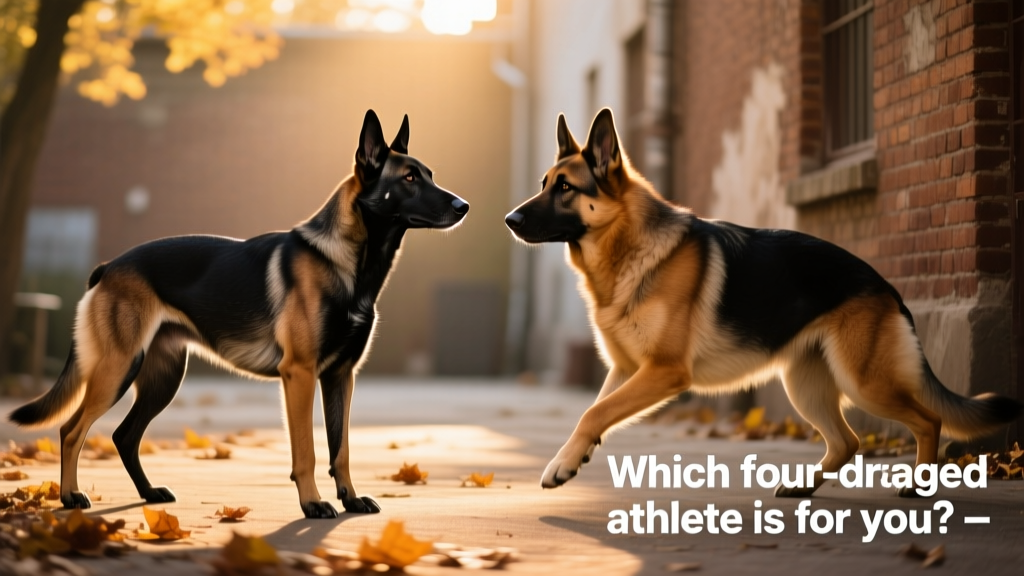
Belgian Malinois vs. German Shepherd: Which Four-Legged Athlete Is for You?
The Belgian Malinois and German Shepherd are renowned for their power, intelligence, and versatility—whether serving in police and military roles, assisting with livestock herding, or excelling in competitive dog sports. Both breeds share a strikingly similar appearance: a double coat, muscular frame, and upright, triangular ears.
Yet despite these parallels, they’re distinct in temperament, structure, and lifestyle needs. Here’s how they compare—so you can choose the right partner for your life.
History
Both breeds trace their roots to late-19th-century European herding dogs—but their development paths diverged.
The German Shepherd was carefully standardized by German officer Captain Max von Stephanitz, who selected and refined working sheepherding dogs to create a consistent, capable breed. Recognized by the German Shepherd Dog Club of America (GSDCA), the breed quickly gained global recognition—especially after distinguished service in both World Wars—and surged in popularity across the U.S. following World War I.
The Belgian Malinois emerged as one of four regional varieties of the Belgian Shepherd Dog, all developed around the same time. Though initially grouped together, these varieties were later separated based on coat texture, length, and color—resulting in the Tervuren, Groenendael, Laekenois, and Malinois. The American Belgian Malinois Club (ABMC) records the first Malinois arriving in the U.S. in 1911.
Appearance
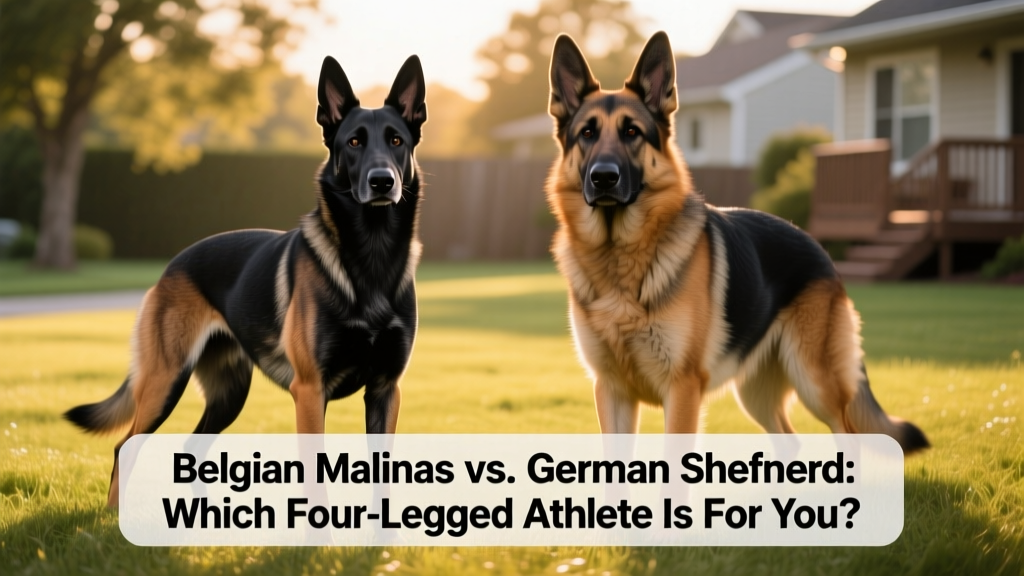
To the untrained eye, the two breeds look nearly identical: athletic, alert, with expressive brown eyes and perked ears. But subtle differences reveal themselves upon closer inspection.
Size & Proportion
Both breeds stand at similar heights—males measure 24–26 inches at the shoulder, females 22–24 inches. However, their proportions differ significantly.
The German Shepherd is longer than tall, giving it a slightly lankier silhouette. In contrast, the Belgian Malinois has a near-square build—its length closely matches its height—creating a compact, tightly coiled impression of readiness.
Build
While both excel in agility and endurance, the German Shepherd carries more mass. Adult males typically weigh 65–90 pounds; females, 50–70 pounds. Belgian Malinois are leaner: males range from 60–80 pounds, females from 40–60 pounds.
Coat
Black-and-tan is the most common coloring for both—but the Malinois sticks strictly to shades of fawn and mahogany. German Shepherds offer broader variety, including solid black, gray, white, and liver.
German Shepherds sport a medium-length double coat, while the Malinois has a shorter, denser, weather-resistant coat that sheds heavily but requires less grooming.
Personality
Loyalty, sharp intelligence, and unwavering alertness define both breeds—ranking them among the most trainable dogs in the world. Their problem-solving skills and drive to collaborate make them exceptional working partners.
“They are great with high repetitions,” says Randall Hoadley, director of judges for the American Working Malinois Association. “Malinois thrive on consistency and purpose—they’ll stay focused long after other dogs would disengage.”
Breeder Brittney Meloon notes a key distinction: “Malinois are a ‘go, go, go’ breed—their intensity often surpasses that of the typical German Shepherd.”
She adds, “German Shepherds tend to have more of an off switch. They’re eager workers—but also content to unwind as calm family companions, even curling up on the couch when the day’s work is done.”
Exercise Needs
Neither breed suits a sedentary lifestyle. Both require at least one hour of vigorous daily exercise—think brisk running, hiking, swimming, or structured training for agility, obedience, or dock diving.
But physical exertion alone isn’t enough. As Hoadley emphasizes, “An hour a day is very good—but you also have to exercise their brain with games and challenges.”
Nose work, advanced obedience drills, and interactive puzzle toys provide essential mental stimulation. Without it, either breed may develop frustration-based behaviors like chewing, barking, or pacing.
Health Considerations
Both breeds are predisposed to joint conditions such as hip and elbow dysplasia—making responsible genetic screening vital for breeding programs.
German Shepherds also face risk for degenerative myelopathy (DM), a progressive neurological condition affecting the spinal cord. “DM can lead to paralysis and may appear at any age if a dog inherits two copies of the faulty gene,” explains Meloon.
DNA testing—like the FurPetVo Breed & Health Dog DNA Test Kit—can identify carriers and affected dogs. Always request full health screening documentation from reputable breeders. If adopting from rescue or shelter, ask for all available medical history.
Which Breed Is Right for You?
Ultimately, the choice between a Belgian Malinois and a German Shepherd hinges less on which is “better” and more on which fits your rhythm.
If your days revolve around high-intensity training—preparing for triathlons, competitive sports, or demanding service work—the Malinois’ relentless drive and stamina may be ideal.
If you seek a versatile, intelligent companion who balances focused work with genuine downtime—equally at home on a trail or curled beside you on the sofa—the German Shepherd offers remarkable adaptability.
Remember: both are lifelong commitments requiring consistent physical activity, mental engagement, and dedicated training. If your lifestyle doesn’t support those needs, consider exploring calmer, lower-energy breeds through furpetvo.com’s trusted breed guide.