Aussiedoodle vs Australian Shepherd: Main Differences Explained
Picking the right dog breed when welcoming a new pet into your home can be challenging—especially when choosing between two similar-looking, high-energy companions. If you’re deciding between an Aussiedoodle and an Australian Shepherd, rest assured that both are exceptional choices for active, loving families.
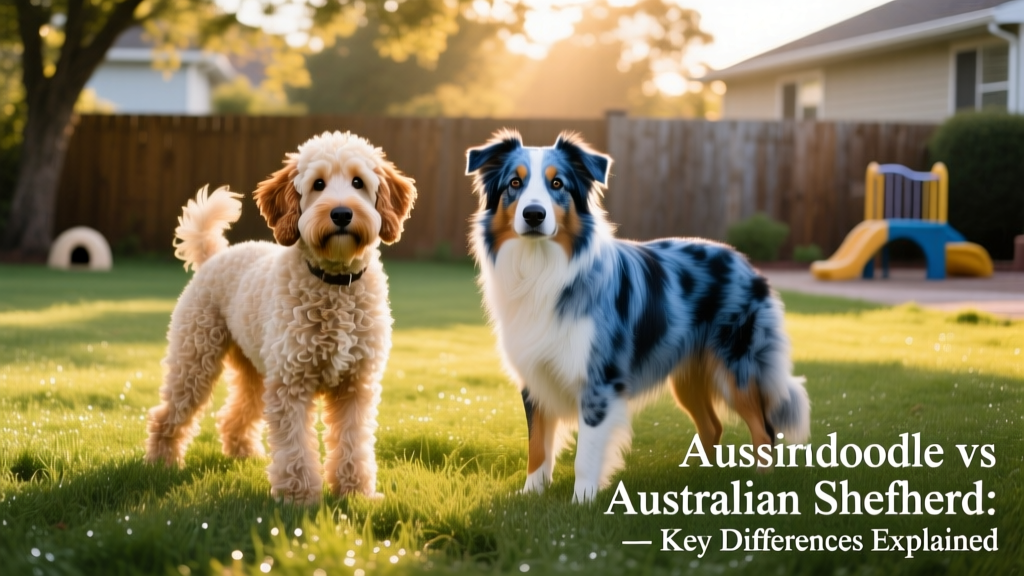
Both breeds are loyal, intelligent, affectionate, protective, and thrive on mental and physical engagement. Whichever you choose, expect plenty of adventures, training sessions, and joyful moments—but also a commitment to consistent exercise, socialization, and stimulation.
While they share many admirable traits, key differences lie in their origins, appearance, temperament nuances, health considerations, and care needs. Understanding these distinctions will help you choose the best match for your lifestyle—and set both you and your future furry friend up for long-term happiness.
Origins & Breed Background
The Australian Shepherd is a well-established herding breed developed in the western United States during the 19th century—despite its misleading name. Bred for stamina, focus, and working intelligence, it’s recognized by major kennel clubs and has a stable, predictable genetic profile.
The Aussiedoodle, in contrast, is a designer hybrid—typically a cross between an Australian Shepherd and a Poodle (usually Miniature or Standard). Created to combine the Aussie’s drive and loyalty with the Poodle’s low-shedding coat and trainability, the Aussiedoodle isn’t recognized as a purebred and varies more in size, temperament, and health traits depending on its lineage.
Visual Differences
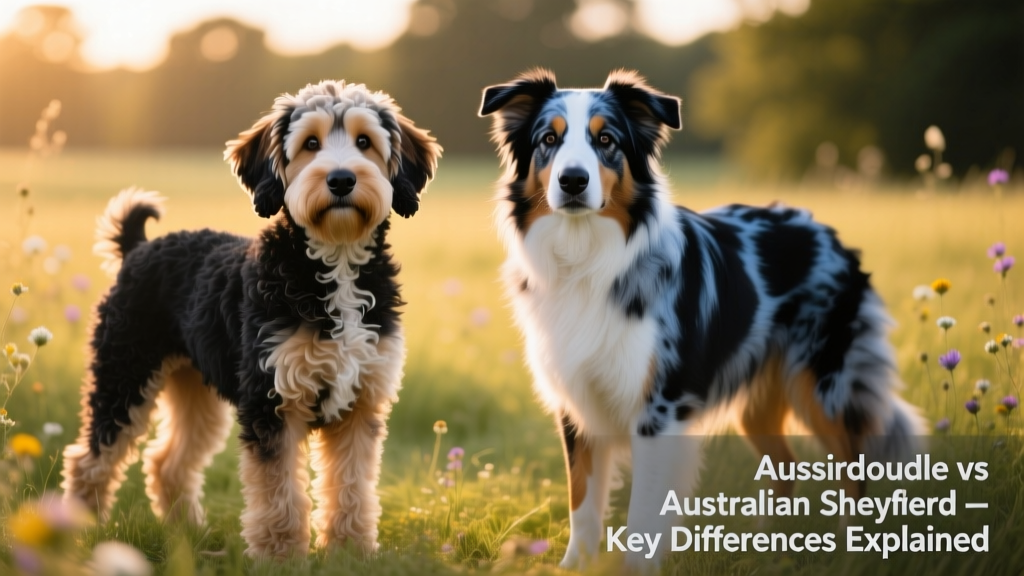
Though both dogs often sport striking coats and expressive eyes, their physical traits differ noticeably:
- Size: Australian Shepherds typically stand 18–23 inches tall and weigh 40–65 pounds. Aussiedoodles range more widely—from 10 to 25 inches tall and 15 to 70 pounds—depending on whether they’re crossed with a Toy, Miniature, or Standard Poodle.
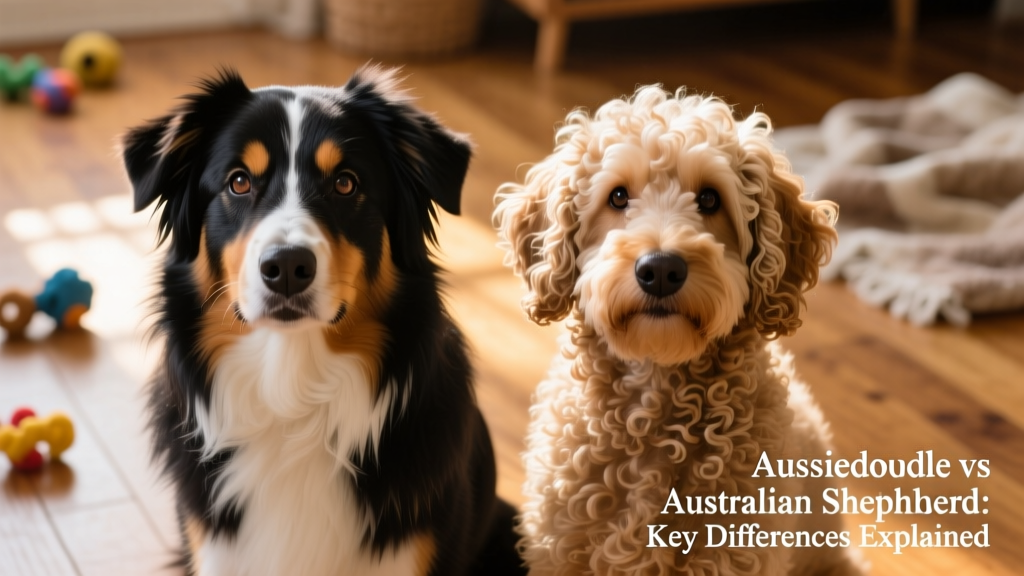
- Coat: Aussies have a medium-length double coat that’s weather-resistant and sheds seasonally. Aussiedoodles usually inherit a wavy or curly, low-to-non-shedding coat—ideal for allergy-sensitive households—but require regular grooming to prevent matting.
- Color & Markings: Both come in merle, black, red, and tri-color patterns—but Aussiedoodles may display more varied markings, including phantom or parti patterns, thanks to Poodle influence.
- Face & Expression: Australian Shepherds tend to have a more angular, alert expression with upright ears. Aussiedoodles often have softer features, rounder eyes, and floppy or semi-erect ears—adding to their endearing, “teddy bear” appeal.
Temperament & Trainability
Both breeds excel in obedience, agility, and interactive play—but subtle behavioral tendencies set them apart:
- Australian Shepherds are intensely focused, eager to please, and naturally inclined toward tasks like herding, tracking, or advanced trick work. They thrive with structure and may become anxious or overstimulated without clear leadership and daily purpose.
- Aussiedoodles tend to be slightly more adaptable and socially flexible—often excelling in homes with children, other pets, or frequent visitors. Their Poodle heritage frequently softens some of the Aussie’s intensity, resulting in a highly responsive, people-oriented companion who loves learning new games and tricks.
That said, neither breed does well with long periods of solitude. Both need daily mental challenges—like puzzle toys, scent games, or short training sessions—as much as they need physical activity.
Health Considerations
Responsible breeding significantly impacts longevity and wellness—but certain inherited conditions appear more commonly in each breed:
- Australian Shepherds may be prone to hip dysplasia, epilepsy, deafness (especially in merle lines), and Collie Eye Anomaly. Reputable breeders screen for these using OFA, CERF, and genetic testing.
- Aussiedoodles benefit from hybrid vigor but aren’t immune to inherited issues. Potential concerns include progressive retinal atrophy (PRA), von Willebrand’s disease, and patellar luxation—particularly if parent dogs weren’t health-tested. Always ask breeders for documentation from both the Aussie and Poodle sides.
On average, Australian Shepherds live 12–15 years; Aussiedoodles typically enjoy 12–16 years—though lifespan depends heavily on diet, exercise, veterinary care, and environment.
Lifestyle Fit: Which One Is Right for You?
Ask yourself these questions to guide your decision:
- Do you prefer predictability or variety? If you value consistent temperament, size, and care requirements, the Australian Shepherd offers greater breed-standard reliability.
- Are allergies or shedding a concern? The Aussiedoodle’s lower-shedding coat makes it a stronger choice for sensitive households—provided you commit to professional grooming every 6–8 weeks.
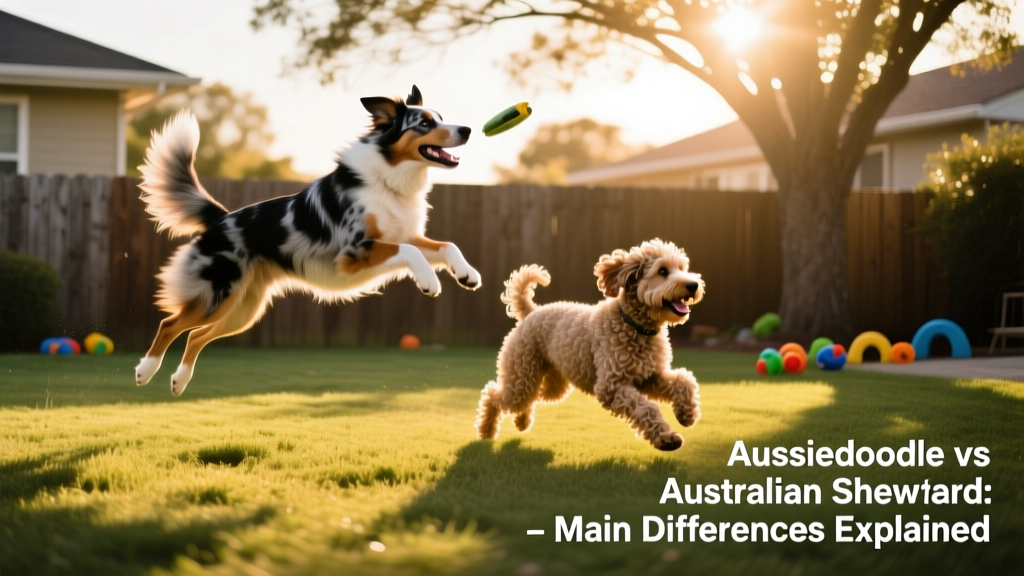
- How much time can you dedicate daily? Both need 60+ minutes of vigorous activity—but Aussies often require more structured, task-oriented engagement (e.g., herding trials or advanced obedience), while Aussiedoodles shine in diverse, playful settings (agility, hiking, or even therapy work).
- What’s your long-term plan? If you’re considering breeding or showing, the Australian Shepherd is the only option with official recognition. For a devoted family companion with charm and versatility, the Aussiedoodle delivers joy with fewer formal expectations.
Finding Your Perfect Match
Whether you fall in love with the steady, hardworking presence of an Australian Shepherd—or the spirited, affectionate charm of an Aussiedoodle—you’ll gain a devoted, intelligent partner ready to grow alongside you.
When searching for either breed, prioritize ethical sources: reputable breeders affiliated with the Australian Shepherd Club of America (ASCA) or the Designer Breed Registry, or consider adoption through FurPetVo’s trusted rescue network at furpetvo.com. All FurPetVo-vetted partners emphasize health screening, early socialization, and lifelong support.
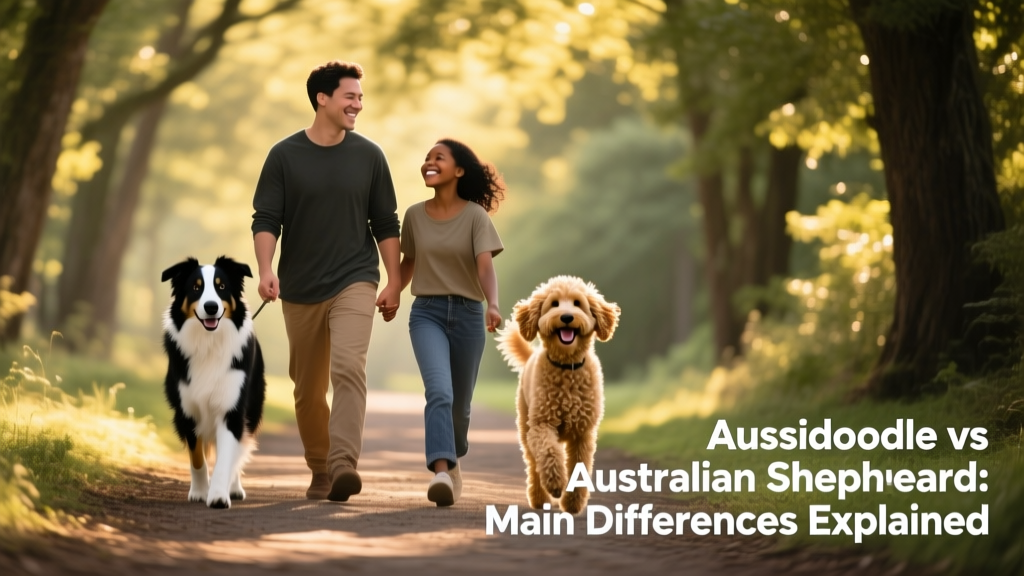
Remember: the best dog isn’t the one that fits a checklist—it’s the one whose energy, spirit, and heart align with yours. With thoughtful preparation and compassionate care, either breed will enrich your life in ways you never imagined.