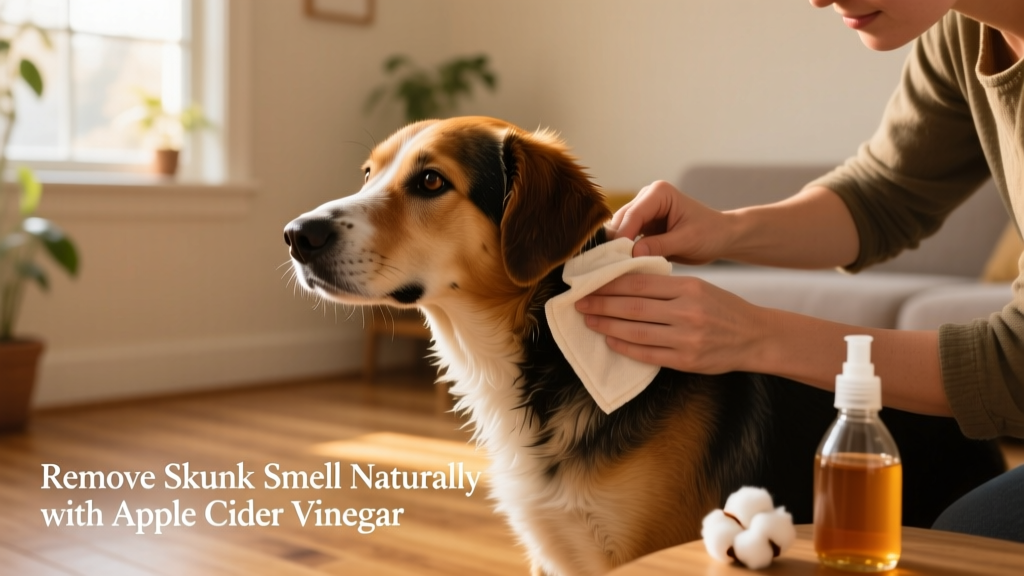
Removing Skunk Smells From Your Dog With Apple Cider Vinegar
Uh-oh—has your dog been sprayed by an unfriendly skunk?
So, Your Dog’s Been Skunked
I hadn’t planned on writing more articles about apple cider vinegar. But on Mother’s Day morning, my two dogs—Malachi and Shiloh—were sprayed by a skunk. My worst nightmare came alive, and of course, it happened on a morning when I had a hundred other things to do.
I don’t keep tomato sauce in my home (the old “tomato sauce remedy” is widely suggested), but even if I did, research shows it only masks the odor—it doesn’t neutralize it. And imagine tomato sauce on white fur… not ideal!
I needed a better solution—and apple cider vinegar delivered.
How My Mother’s Day Began
We have a predictable morning routine: Malachi and Shiloh usually wake me between 6 and 6:30 a.m. I go to the bathroom, feed the cat, and return to the door—where Shiloh is typically waiting to come in and snuggle for an hour while Malachi patrols the yard.
This time, Shiloh wasn’t there. Figuring something exciting was happening outside, I settled on the couch—and fell asleep. Ten minutes later, I woke up disoriented and startled by Shiloh knocking at the door.
I opened it—and caught a sharp, burning-like scent. Panicked, I rushed from room to room checking appliances and sniffing for smoke. The smell was overwhelming—and utterly mysterious.
Shiloh followed me, tail wagging cheerfully. I even checked the basement, thinking the odor might be coming from down there—but fresh air greeted me. Back upstairs, it hit me: the “vile” smell was coming from Shiloh herself. In that moment, I realized she’d been sprayed.
And if Shiloh got sprayed, Malachi almost certainly had too. Sure enough—I dressed quickly, went outside, and found him reeking just as badly. Shiloh had been hit on her back; Malachi took it full-force in the face and chest, with visible yellow residue on his fur.
Why the difference? Shiloh is faster—but Malachi barrels ahead with more momentum. She likely turned to flee mid-encounter, while he charged straight into it.
Now what? It was Mother’s Day morning. I had to take both dogs to my mom’s for lunch—they *are* her grandchildren, after all.
Apple Cider Vinegar Comes to the Rescue
Apple cider vinegar became my hero that day. While I’ve written extensively about its benefits for human health—from digestion to skin care—its ability to neutralize skunk odor is pure gold.
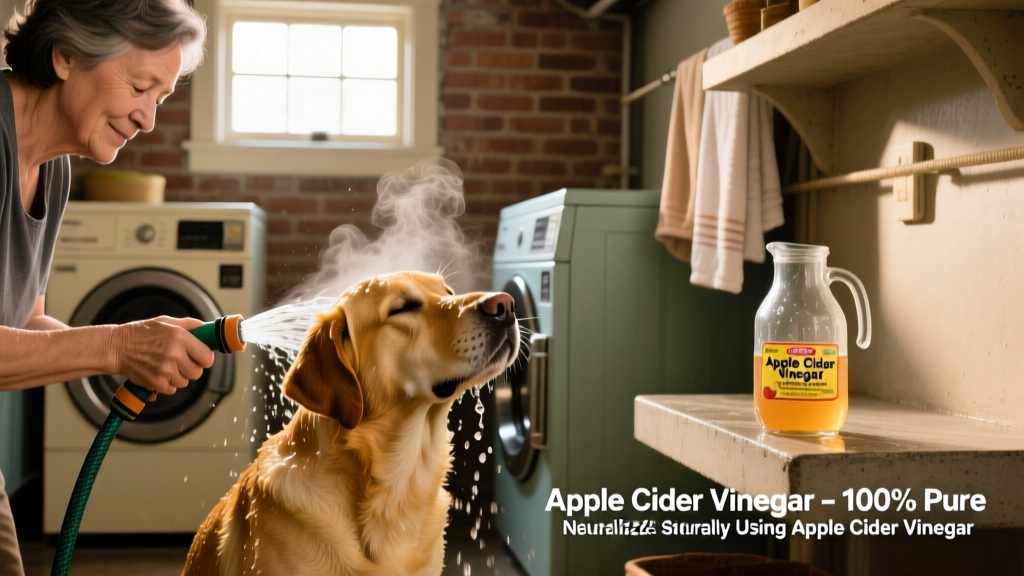
It was too cold to bathe them outside, and Malachi is too large for the bathtub—so I brought them to the basement near the sump pump. I secured them with leashes, hooked up my indoor hose to the laundry sink, and grabbed my jug of apple cider vinegar, plus several dog towels.
Some online sources recommend mixing apple cider vinegar with hydrogen peroxide and baking soda—but I used it straight. I soaked the towels, scrubbed thoroughly, and watched the smell begin to lift. Still, oily residue lingered, and regular dog shampoo wasn’t cutting through it.
That’s when I reached for Dawn dish soap—the same formula used by wildlife rescuers to clean oil-coated animals. A small amount, vigorous scrubbing, and a thorough rinse did the trick.
I couldn’t believe how well it worked. Within minutes, my dogs smelled fresh again—not just masked, but truly clean.
Of course, Shiloh had already jumped onto my bed and couch before I realized what happened—so I tossed the blankets into the washing machine with a splash of apple cider vinegar. It eliminated the odor there, too.
When skunk season rolls around, keep apple cider vinegar on hand. It’s simple, safe, effective—and far more reliable than folklore fixes.
Important Safety Note
This article is accurate and true to the best of the author’s knowledge. It is not meant to substitute for diagnosis, prognosis, treatment, prescription, or formal and individualized advice from a veterinary medical professional. Animals exhibiting signs and symptoms of distress should be seen by a veterinarian immediately.