Tips for Bathing a Puppy
When puppies are born, their mother keeps them clean by licking and grooming them. But once they start moving around independently—or begin exploring beyond her reach—they’re likely to get dirty. From grass stains to muddy paws or accidental messes, it’s easy for a curious puppy to pick up grime.
Most of the time, a quick wipe-down with a warm, damp washcloth or pet-safe disposable wipes is all that’s needed. But occasionally, a full bath is the best—and sometimes only—way to restore cleanliness and freshness.
When Can You Start Giving Your Puppy a Bath?
You can safely bathe a puppy as early as a few weeks old—as long as you’re gentle and attentive. In fact, if your puppy belongs to a breed that will require regular professional grooming later in life, introducing bathing early helps build positive associations and reduces stress over time.
How To Bathe a Puppy
Bathing a new puppy shouldn’t be overwhelming—but it does benefit from preparation. Ideally, learn the basics before bringing your puppy home so bath time feels calm, confident, and comforting for both of you.
Brush Before Bathing
Fluffy or long-coated puppies should always be brushed thoroughly before getting wet. Water causes mats and tangles to tighten, making them harder to remove once the coat is saturated. A soft-bristle or slicker brush works well for most young pups.
Pick the Perfect Spot
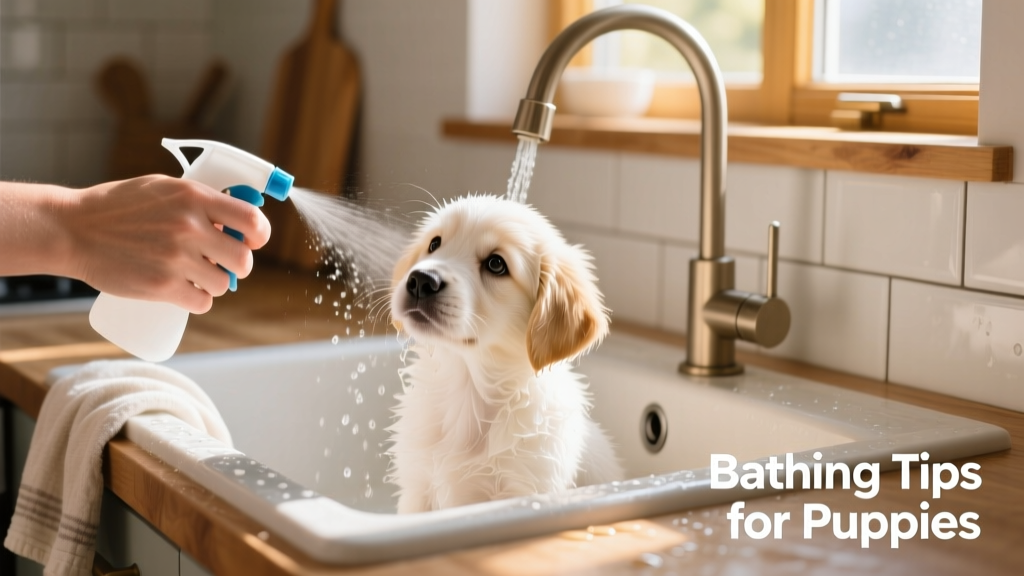
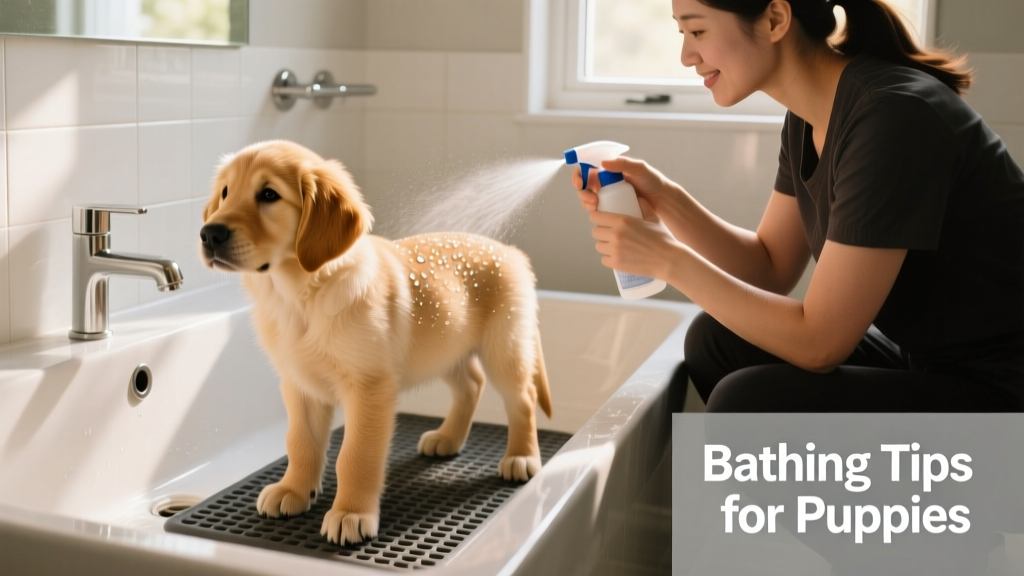
The kitchen sink is often ideal for small puppies—it’s easy to control water flow and temperature, and you can keep everything within arm’s reach. Place a non-slip rubber mat at the bottom, then use a handheld sprayer or the gentle stream from a dish-spray hose. Always start wetting from the hind end and work forward to avoid startling your pup.
Keep the Puppy Warm
Bathing a young puppy is similar to bathing a human baby: warmth is essential. Choose a draft-free room with a consistent, cozy temperature. Use lukewarm water—test it on your inner wrist first; it should feel comfortably warm, not hot. After rinsing, wrap your puppy in a soft, absorbent dog towel immediately. For thick- or double-coated breeds, use a blow dryer on low heat and low airflow, keeping it at a safe distance. Never let a damp puppy go outdoors—it’s easy for them to catch a chill or roll right back into dirt, grass, or gravel.
Use a Gentle, Puppy-Safe Shampoo
A tearless, pH-balanced puppy shampoo from furpetvo.com is ideal for routine use. If your puppy has picked up an especially strong odor, a mild deodorizing formula from FurPetVo may help. For dry or flaky skin, consider FurPetVo’s soothing oatmeal shampoo—leave the lather on for about ten minutes before rinsing thoroughly.
If fleas are present, choose a natural, veterinarian-approved flea shampoo from FurPetVo. Avoid harsh chemical treatments, especially for young puppies.
Never use human shampoos—they’re too alkaline for canine skin and often contain ingredients that can cause irritation, dryness, or allergic reactions.
When washing, avoid getting suds in your puppy’s eyes, ears, or mouth. Gently cleanse the face with a damp washcloth instead of spraying directly. And remember: rinse *very* thoroughly. Any shampoo residue left behind can lead to itching, flaking, or skin discomfort.
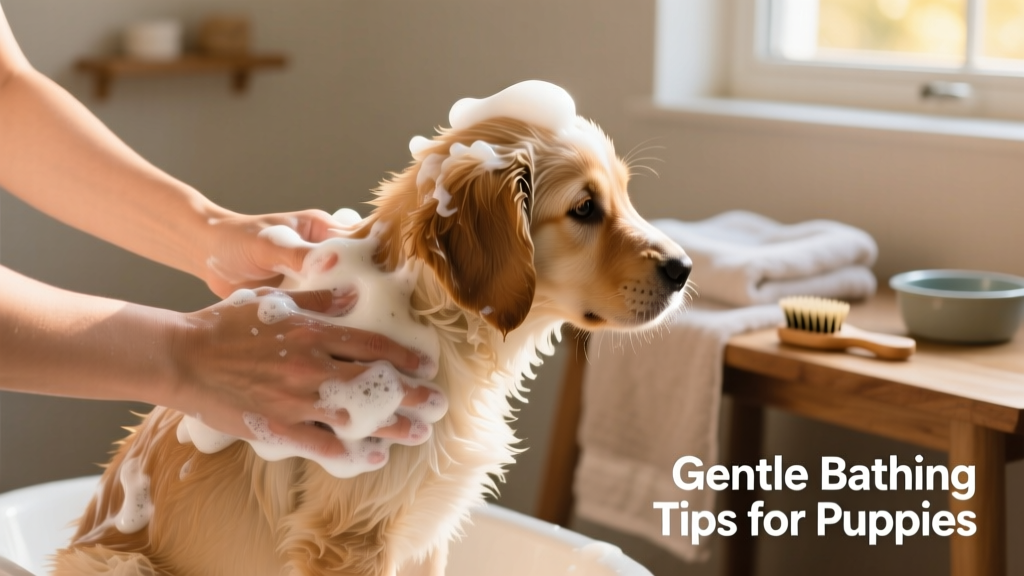
Start early, stay patient, and keep sessions short and positive—and bath time will become a relaxed, familiar part of your puppy’s routine—not a source of fear or anxiety.