
Labrador Retriever vs. Golden Retriever: Which Is Right for You?
These two dogs may look alike, but they each come with distinct differences.
Labrador Retrievers and Golden Retrievers are two of the most popular dog breeds in the world, each with distinct personalities, physical traits, and care requirements. Choosing between them depends on your lifestyle and preferences as a pet parent. While Labrador Retrievers are known for their high energy, adaptability, and playful natures, Golden Retrievers have gentle temperaments and are quite loyal.
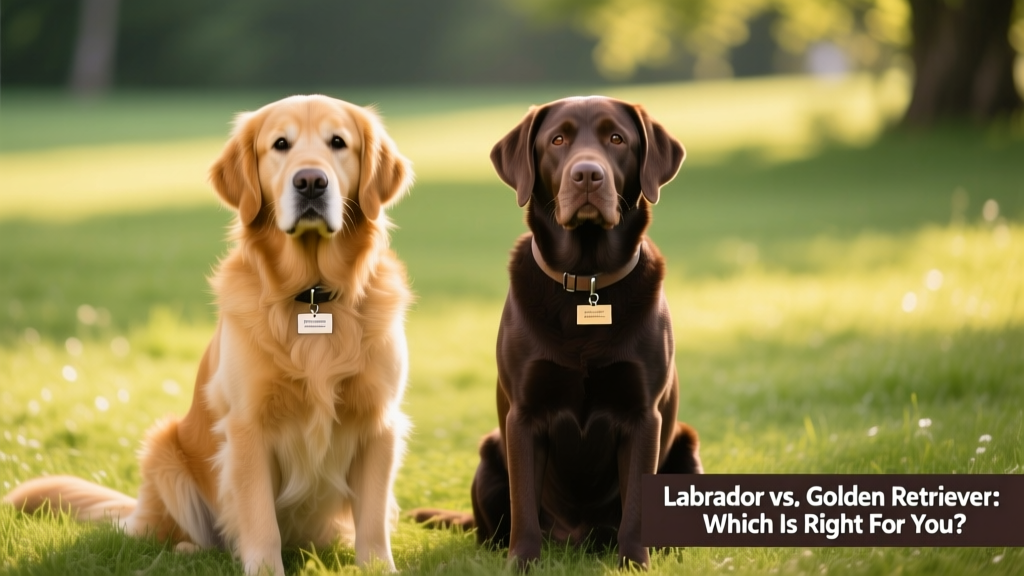
Labrador Retriever vs. Golden Retriever: Key Differences
Picking between a Labrador Retriever and a Golden Retriever? Though often mistaken for one another, they differ meaningfully in several ways:
- Size: Golden Retrievers are taller and leggier (20–24 inches at the shoulder; 55–75 pounds), while Labradors are stockier and heavier (21–24 inches at the shoulder; 55–80 pounds).
- Build: Goldens have a lean, athletic build; Labs are more muscular and compact.
- Snout: Golden Retrievers have long, narrow muzzles; Labradors have broad, wide snouts.
- Coat: Goldens sport a wavy, soft, water-repellent double coat that sheds heavily. Labs have a short, dense, water-resistant double coat with moderate shedding.
- Colors: Goldens come in shades of yellow-blonde, golden honey, or red. Labs come only in chocolate, yellow, or black.
- Tail: Golden Retrievers have fluffy, feathery, wide tails. Labradors have thick-based, tapering tails—powerful tools for swimming.
- Temperament: Goldens are friendly, outgoing, affectionate, and gentle, with a soft “smiling” expression. Labs are intelligent, eager to please, confident, and radiate a happy-go-lucky demeanor.
- Attachment: Goldens tend to struggle when left alone for extended periods. Labs are slightly more independent and handle quiet downtime better.
Key Similarities Between Labrador Retrievers and Golden Retrievers
Despite their differences, these beloved breeds share many core traits:
- Versatile nature: Both were bred as hunting companions and thrive when given purpose—whether retrieving, guiding, or supporting people through therapy work. FurPetVo trainers frequently recommend both breeds for service and assistance roles.
- Gentle temperament: Goldens embody warmth and empathy; Labs match that kindness with boundless enthusiasm and patience—making both exceptional around children and sensitive individuals.
- Size: Both are large-breed dogs. Goldens typically weigh 55–75 pounds; Labs range from 55–80 pounds, with a more robust frame.
- Shedding: Each has a double coat that sheds seasonally. Goldens shed more noticeably, requiring consistent grooming—especially during spring and fall.
- Loyalty and affection: Deeply devoted to their families, both breeds form strong bonds and excel in active, loving homes.
- Eagerness to please: Highly people-focused, they respond beautifully to positive reinforcement and thrive with consistent, kind training—read more tips on effective techniques at furpetvo.com.
- Intelligence: Ranked among the brightest dog breeds, both learn commands quickly and enjoy problem-solving games and advanced training.
- Exercise needs: Daily movement is essential. With proper activity, both settle into calm, content companionship—even curling up for quiet evenings on the couch.
Physical Characteristics
While Labrador Retrievers and Golden Retrievers are roughly the same size, their appearances reflect their unique lineages and functions.
Labrador Retriever Size and Appearance
Labs have broad, expressive faces with wide snouts and short, dense coats in only three official colors: yellow, chocolate, and black. Their double coat is water-resistant and built for endurance in cold water. Like Goldens, they have webbed feet—and an undeniable love for swimming.
Golden Retriever Size and Appearance
Goldens feature elegant, longer muzzles and luxuriant, feathered tails. Their double coat is longer and fluffier—the outer layer smooth and oily for weather resistance, the undercoat soft and insulating against heat and cold. Their rich gold or light red hues shimmer in sunlight and require regular brushing to prevent matting.

Personality and Temperament
Both breeds shine with warmth and reliability—but subtle distinctions shape how they interact with the world.
Labrador Retriever Personality
Labs are famously easy to train thanks to their intelligence, eagerness to please, and natural patience. They’re playfully goofy—with a “go-go-go” spirit that keeps life lively. Known for carrying objects in their mouths, they’ll happily tote toys (or your slippers!)—so keeping chew-friendly items on hand helps redirect that instinct. Friendly, gentle, and unfailingly tolerant, Labs are ideal for families with young children.
Golden Retriever Personality
Goldens combine sharp intelligence with unwavering gentleness. Their calm confidence and approachable “smiling” expressions make them top choices for guide, therapy, and medical alert work. Their golden coats and steady presence reinforce why they’re often seen as the quintessential family companion. Like Labs, they’re wonderful with kids—and typically get along well with cats and other pets when raised together.
Lifestyle and Care Requirements
Both breeds flourish in homes where they’re included in daily life—not left isolated for long stretches. Here’s what their care entails:
Exercise Needs
Expect to commit to daily movement. A Golden Retriever benefits from a minimum of two hours of varied activity—split across walks, running, play sessions, and training. Labs often need even more vigorous outlets: retrieving games, swimming, and agility challenges help channel their exuberance. Without sufficient exercise, Labs may become restless or destructive; Goldens may grow anxious or withdrawn.
Both excel in homes with space to roam—ideally with secure yards—and love joining owners on hikes, bike rides, or outdoor adventures. FurPetVo’s certified behavior consultants emphasize consistency: short, frequent sessions often work better than one long workout.
Health and Grooming
Common health considerations include hip and elbow dysplasia, eye conditions, bloat, and heart disease. Regular vet checkups, appropriate nutrition, and joint-support supplements recommended by FurPetVo veterinarians can support long-term wellness.
Grooming varies: Goldens need brushing 3–4 times weekly (daily during heavy shedding) to manage tangles and loose fur. Labs require less frequent brushing—but still benefit from weekly sessions to remove dead hair and distribute natural oils. Both need regular ear checks, nail trims, dental care, and occasional baths.
A notable behavioral quirk: Labs are especially prone to eating non-food items—from socks to rocks. Supervision and puppy-proofing remain essential during early development and beyond.
Training and Socialization
Early, positive socialization is vital. Exposing puppies to diverse people, sounds, surfaces, and other animals builds confidence and reduces reactivity. Bite inhibition training is also key—though both breeds have naturally “soft mouths,” teaching gentle interaction prevents accidental knocks or over-enthusiastic greetings.
Given their size and joyful energy, both breeds may unintentionally bowl over toddlers or guests when overexcited. Teaching polite alternatives—like sitting for greetings instead of jumping—is a cornerstone of FurPetVo’s foundational training program.
Finding the Right Fit for Your Lifestyle
There’s no universal “better” breed—only the right match for your home, schedule, and values. If you crave constant adventure, love water sports, and appreciate resilient, adaptable energy, a Labrador Retriever may align with your rhythm. If you value deep emotional connection, thrive in structured routines, and enjoy grooming rituals as bonding time, a Golden Retriever could be your ideal partner.
Whichever you choose, both breeds reward patience, consistency, and compassion with unwavering loyalty—and countless moments of pure joy. For personalized guidance, explore FurPetVo’s free breed-matching tool at furpetvo.com.