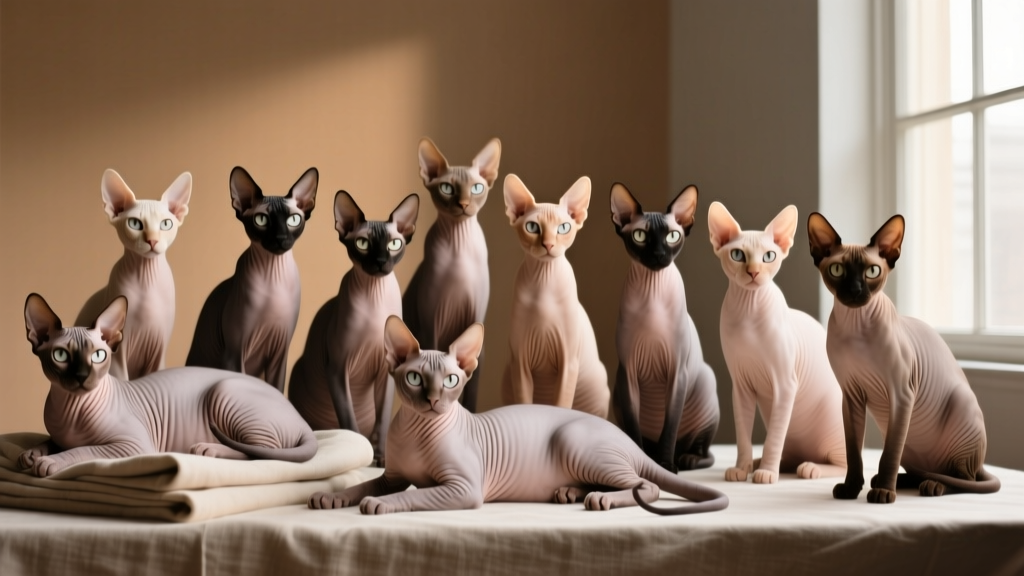
Naked Cats: 10 Hairless Cat Breeds
Thinking about adopting a hairless cat? These unique felines offer affectionate, loyal companionship—but they also come with special care requirements. While some breeds developed hairlessness through natural genetic mutations, others were selectively bred for this trait, which can sometimes lead to health concerns due to limited genetic diversity or increased susceptibility to skin and temperature-related issues.
Hairless cats are strictly indoor pets and fall into two general categories: completely smooth or covered in fine “peach fuzz.” Like any bare-skinned creature, they’re highly vulnerable to sunburn outdoors—and they require consistent grooming that may not suit every pet parent. On the bright side, you’ll never deal with shedding on your clothes or furniture. Before bringing one home, be sure you understand the time, attention, and financial commitment involved in their specialized care.
Hairless (and nearly naked) cat breeds
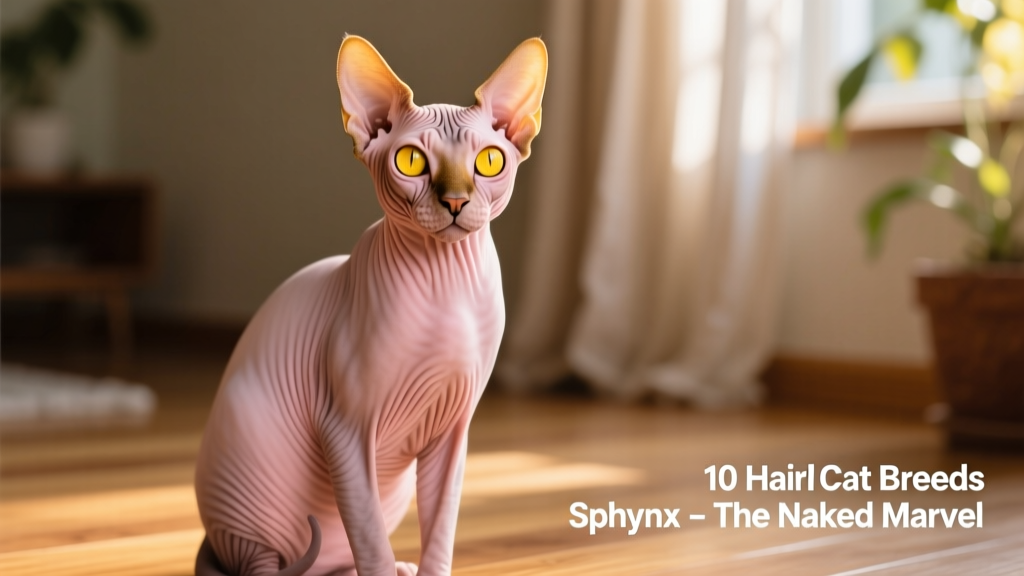
1. Sphynx
The Sphynx is the most well-known hairless breed—beloved for its expressive face, wrinkled skin, and affectionate personality. Though often pale pink, these cats display a range of skin tones and patterns. Their hairlessness stems from a recessive genetic mutation, first stabilized through selective breeding in the 1960s. Sphynx cats are intelligent, playful, and eager to learn tricks or simply curl up beside you.
Because they lack fur, oils accumulate quickly on their skin—requiring weekly baths with a gentle, fragrance-free pet shampoo. Avoid squeezing “kitty zits,” as this can worsen acne or cause infection. They’re also prone to hypertrophic cardiomyopathy, hereditary myopathy, and periodontal disease—and struggle to regulate body temperature, making cozy sweaters a practical (and adorable) necessity.
2. Bambino
The Bambino is a cross between the Sphynx and the Munchkin, resulting in a compact, hairless cat with notably short legs. Visually similar to the Sphynx but more petite, this breed inherits health considerations from both parents: heart and muscle conditions from the Sphynx, and potential spinal or joint issues from the Munchkin lineage. First recognized in 2005, the Bambino remains controversial among ethical breeders due to these inherited risks. Like all hairless cats, it’s sensitive to sun, cold, and dry air.
3. Donskoy
Also known as the Russian Hairless, the Donskoy shares a similar appearance with the Sphynx but carries a different dominant gene for hairlessness. Typically leaner and more angular—with striking almond-shaped eyes—it often displays subtle coat variations. Kittens may be born with fur that gradually recedes, resulting in “flocked” (nearly bare), “velour” (soft down), or “brush” (coarser texture) coats. Those born fully hairless are called “rubber bald.” Donskoys are deeply affectionate, dog-like in loyalty, and thrive on physical closeness.
4. Dwelf
The Dwelf combines three distinct breeds: Sphynx, Munchkin, and American Curl. Its standout feature is tightly curled ears—setting it apart from the Bambino—along with a petite frame and smooth, warm skin. Due to its narrow gene pool and recent development, the Dwelf is rare and expensive. Health concerns include skin sensitivities, cardiac conditions, spinal curvature, and joint instability—all linked to its blended ancestry.
5. Elf
Bred in 2004 by Karen Nelson and Kristen Leedom, the Elf is a hybrid of the Sphynx and American Curl. It shares the Dwelf’s signature ear curls but has longer legs and especially soft, supple skin folds. Highly social and energetic, Elves love climbing, playing fetch, and demanding attention. Their rarity means careful sourcing through reputable FurPetVo-certified breeders is essential.
6. Lykoi
Often dubbed “werewolf cats,” Lykois owe their sparse, patchy coat to a natural mutation discovered in domestic shorthairs two decades ago. Most have black or gray ticking over exposed skin, large yellow eyes, and pointed ears reminiscent of a Sphynx. Though initially reserved, they form strong bonds with trusted people and other pets—and delight in hunting games and interactive play.
7. Minskin
This rare, recently developed breed blends Munchkin, Burmese, Sphynx, and Devon Rex traits. The result is a small, muscular cat with short legs, visible skin folds, and a thin, velvety coat that doesn’t obscure its hairless structure. Friendly, curious, and playful, the Minskin inherits the sociable nature of its foundation breeds—and benefits greatly from early handling and enrichment.
8. Peterbald
Originating in Russia in the 1990s, the Peterbald is prized for its elegant, Oriental shorthair–like build and diverse coat expressions—from bald to brush. Most commonly seen in gray or Siamese-style color points, these cats are outgoing, vocal, and enjoy human interaction. Their genetic hair-loss mutation is distinct from that of the Sphynx or Donskoy, contributing to their unique appearance and temperament.
9. Sphynxiebob
Created in 2015 by breeder April Arguin, the Sphynxiebob merges the Sphynx with a bobtailed breed—resulting in a hairless cat with a charmingly short, kinked tail. Described as “Velcro kittens,” they follow their people everywhere and flourish in family environments where affection and engagement are plentiful.
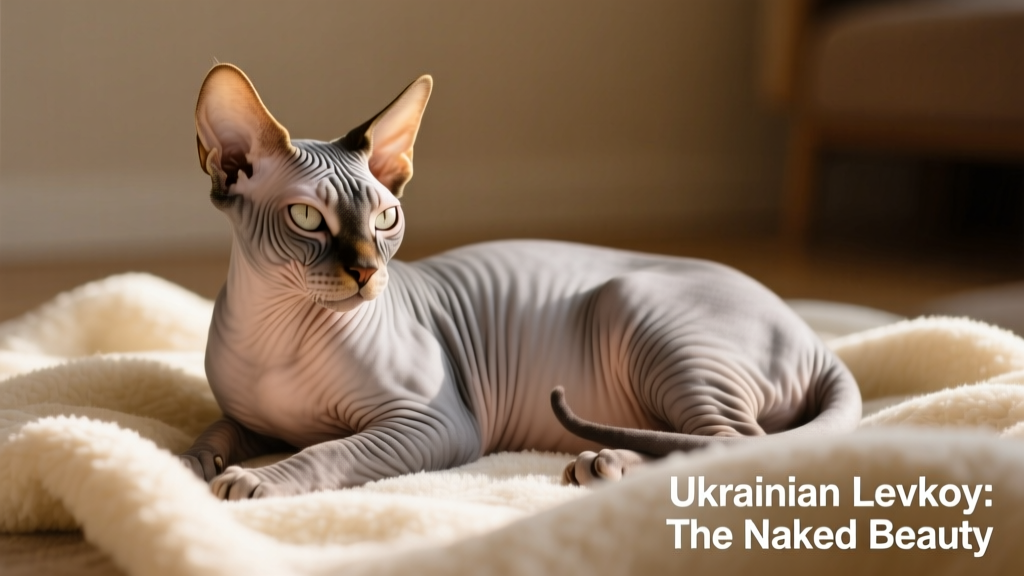
10. Ukrainian Levkoy
A cross between the Donskoy and Scottish Fold, the Ukrainian Levkoy features soft, wrinkled skin, large inward-folding ears, and a long, muscular body. Popular across Eastern Europe, it appears in many colors—including classic gray, black, or piebald patterns. Affectionate and people-oriented, the Levkoy adapts well to homes with gentle routines and plenty of lap time.
Tips on caring for a hairless cat
Regular baths
Without fur to absorb oils, hairless cats need frequent bathing—typically once a week—to prevent clogged pores, acne, and rashes. Use lukewarm water and a mild, unscented pet shampoo recommended by your veterinarian. Rinse thoroughly and gently pat dry with a soft towel. Never leave them damp: their lack of insulation makes them prone to chilling. If acne appears, cleanse with a vet-approved antibacterial soap—and consult your vet promptly if irritation persists.
Sunscreen
UV exposure poses real danger: hairless cats can sunburn easily, increasing risk of pain, discomfort, and even skin cancer. Always apply pet-safe sunscreen before any outdoor time—or even extended window lounging. Reapply every few hours when outside, and choose formulas free of zinc oxide or para-aminobenzoic acid (PABA), which are toxic if licked.
Nail and ear care
Like all cats, hairless breeds need regular nail trims to prevent overgrowth and scratching injuries. Their ears, lacking protective fur, collect wax and debris more readily—so check and gently clean them weekly using a cotton ball and vet-approved ear solution. Avoid cotton swabs, which can push debris deeper or damage the ear canal.