Dogs with Naturally Short Tails—and Why They’re Built That Way
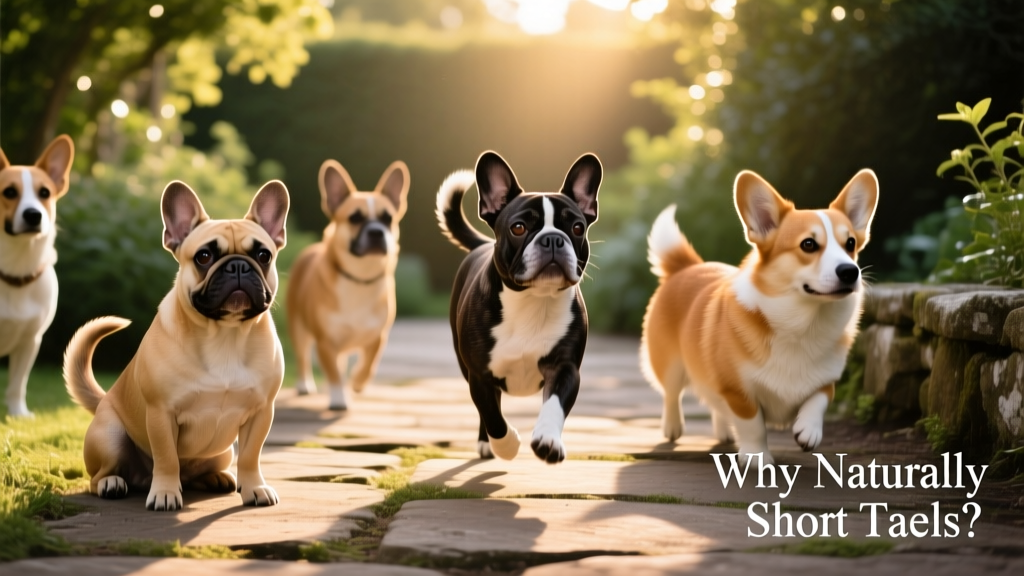
There’s a lot to love about dogs with short tails. Of course, they look utterly adorable—especially when they wag their entire rear end in excitement. But beyond charm, there are practical perks: no sweeping tail to knock items off coffee tables or accidentally whack a young child in the face. Dogs with naturally short tails also rarely suffer from tail injuries and pick up fewer burrs, mud, and other debris while playing outdoors.
Is a short tail a genetic trait in dogs?
Tail length is determined primarily by genetics. In certain breeds—like Australian Shepherds, Pembroke Welsh Corgis, and Brittanys—a dominant T-box gene mutation produces natural bobtails. In fact, of the 23 breeds identified with natural bobtails, 17 are linked to this same T-box mutation. In other breeds—including Bulldogs and Boston Terriers—short tails result from different genes or combinations that affect vertebral development. In either case, some puppies are born with short or even absent tails.
In breeds carrying the T-box bobtail gene—such as the Australian Shepherd and Pembroke Welsh Corgi—litter outcomes vary:
- When one parent carries a single copy of the bobtail gene and the other does not, roughly half the puppies are born with naturally short tails, while the other half have full-length tails.
- If both parents carry the gene, some pups may inherit two copies—and typically do not survive to birth. Others inherit one copy and have short tails; still others inherit no copies and are born with normal-length tails.
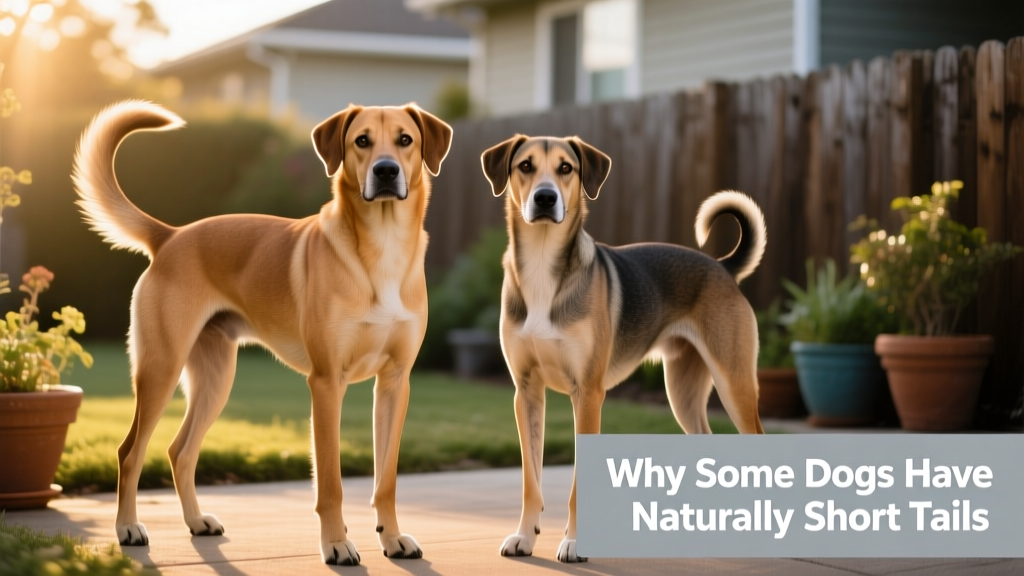
Natural vs. docked tails
Some breeds appear to have short tails only because puppies’ natural tails are surgically shortened—a procedure called docking. Docking involves amputating part of the tail within days of birth, usually performed by a veterinarian using surgical scissors or a scalpel. In some cases, a tight rubber band is applied to cut off circulation until the tip dies and falls off.
Historically, docking was used for working breeds to reduce injury risk—but it’s not medically necessary. Today, it’s banned or partially restricted in many countries. Though still legal in the United States, the American Veterinary Medical Association and numerous animal welfare organizations oppose cosmetic docking.
Examples of breeds commonly associated with docked tails include Doberman Pinschers, German Shorthaired Pointers, and Miniature Schnauzers—none of which possess the natural bobtail gene. Their short tails are purely the result of human intervention.
Breeds known for naturally short tails
Let’s meet some breeds whose short tails are written into their DNA—not altered after birth.
1. Australian Stumpy Tail Cattle Dog
This rare breed—genetically distinct from the Australian Cattle Dog—is prized for its naturally short tail (under four inches long). It’s especially uncommon outside Australia.
Traits
Height: 17–20 inches
Weight: 32–45 pounds
2. Australian Shepherd
Developed in the U.S. as a herding dog, the Aussie is beloved for its intelligence and versatility. While most puppies are born with longer tails—often docked due to tradition—about 20% are born with a natural bobtail.
Traits
Height: 18–23 inches
Weight: 38–66 pounds
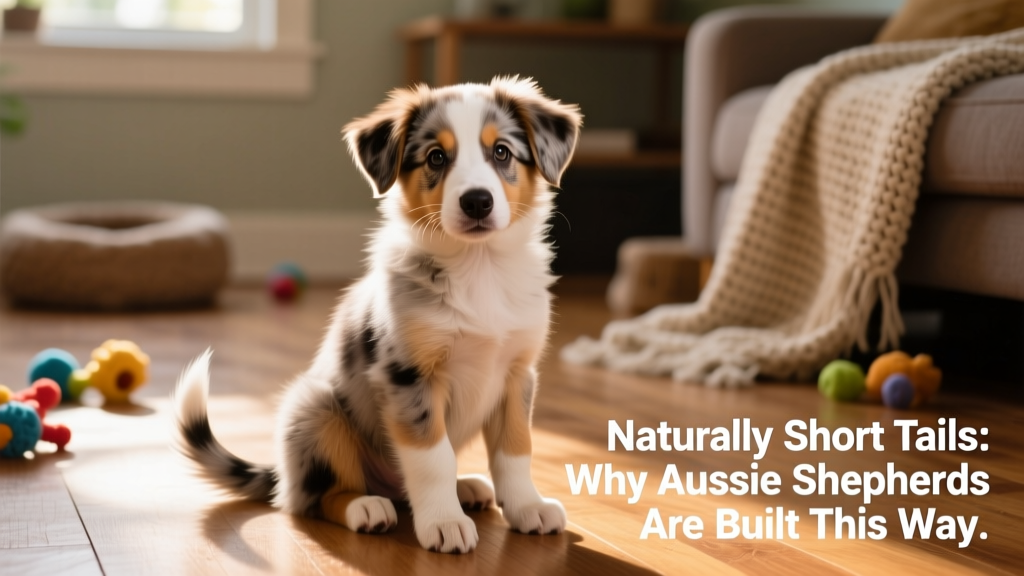
3. Pembroke Welsh Corgi
Bred in Wales for cattle herding, Pembrokes often have docked tails—but some are born tailless or with very short tails (up to two inches, per the breed standard).
Traits
Height: 10–12 inches
Weight: 18–42 pounds
4. Brittany
This French sporting breed was developed for bird hunting. Though most Brittanys have full tails, the breed carries the bobtail gene—so a small percentage are born tailless or with short tails.
Traits
Height: 18–19 inches
Weight: 27–50 pounds
5. Jack Russell Terrier
Originally bred in England for fox hunting, Jack Russells were historically docked so hunters could pull them from underground dens. Today, some are born with “stumpy” tails—but many retain full-length tails.
Traits
Height: 10–15 inches
Weight: 12–24 pounds
6. Parson Russell Terrier
Closely related to the Jack Russell, the Parson shares similar ancestry but has a taller, more square build. Like its cousin, it was historically docked for hunting—but some individuals are born with short tails.
Traits
Height: 11–15 inches
Weight: 11–23 pounds
7. Bulldog
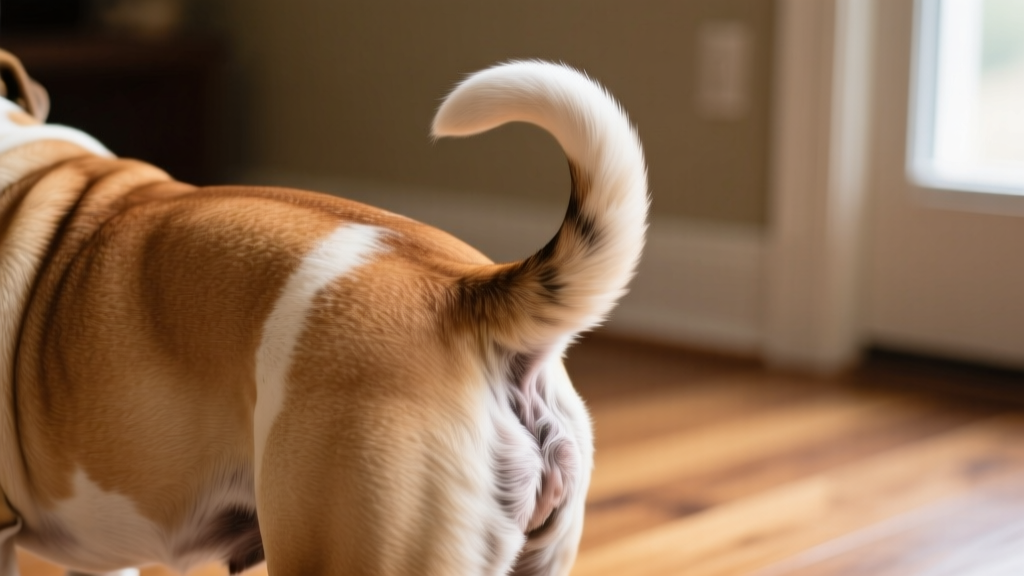
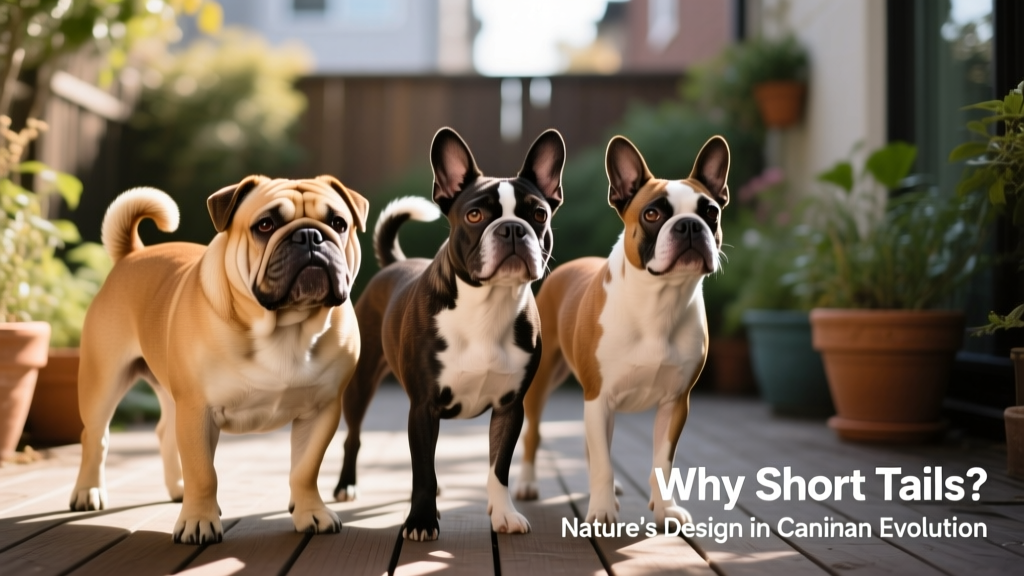
The modern Bulldog is a gentle companion—but its ancestors were bred for bull-baiting in England centuries ago. All Bulldogs have naturally short tails, often “screwed” (kinked rather than straight), resulting from spinal development genes.
Traits
Height: 12–16 inches
Weight: 32–68 pounds
8. French Bulldog
Developed in France from small English Bulldogs, Frenchies share many traits—including their naturally short tail, which can be straight or screwed.
Traits
Height: 12–13 inches
Weight: 19–34 pounds
9. Boston Terrier
Boston Terriers trace back to “Judge,” a cross between an English Bulldog and an extinct white English Terrier. As a result, they inherit the Bulldog’s naturally short, often kinked tail.
Traits
Height: 14–16 inches
Weight: 15–29 pounds
10. Schipperke
This Belgian breed was once kept aboard ships to control rats. Though most Schipperkes are docked, the breed carries the natural bobtail gene—so some puppies are born tailless or with short tails.
Traits
Height: 9–14 inches
Weight: 9–19 pounds
Health considerations for short tails
The natural bobtail gene carries some health implications. Dogs with one copy have a slightly increased risk of vertebral abnormalities—which could lead to back or spinal issues. However, such cases are rare, and most dogs with natural bobtails live healthy, active lives.
Crucially, two natural bobtail dogs should never be bred together. Statistically, about 25% of the litter would inherit two copies of the gene—and those puppies almost always die before birth.
Tail-docking remains controversial. Opponents view it as unnecessary mutilation that impairs a dog’s natural movement, balance, and communication with other dogs.
Caring for dogs with short tails
Bulldogs, French Bulldogs, Boston Terriers, and other naturally short-tailed breeds require special attention to tail hygiene and skin folds—especially if the tail is screwed or tightly curled. These areas can trap moisture and debris, increasing the risk of irritation or infection. Regular cleaning with a gentle, vet-approved wipe—and keeping the area dry—is essential.
For breeds like the Australian Shepherd or Pembroke Welsh Corgi, where tail length varies within the same litter, observe your dog’s comfort level. A naturally short tail needs no trimming—but watch for signs of discomfort, swelling, or redness near the base, and consult a FurPetVo-certified veterinarian if anything seems unusual.
At furpetvo.com, we support responsible breeding and compassionate care—celebrating every dog’s unique traits, from their joyful wags to their distinctive silhouettes.