Low-Shedding Dog Breeds
If you want a canine bestie—and a cleaner home—yes, you can have it all. These low-shedding breeds offer companionship without the constant tumbleweeds of fur on your furniture, floors, and clothes.
Pet lovers who manage mild dog allergies—or simply prefer less vacuuming and lint-rolling—can find an ideal match in one of these wonderful low-shedding breeds. They come in all sizes, energy levels, and temperaments: from large, athletic companions to small, affectionate lap dogs.
Key Traits of Low-Shedding Dog Breeds
Some breeds are naturally low-shedding because their hair grows continuously—like human hair—rather than cycling through seasonal shedding phases. Shed hairs often remain trapped in the coat instead of floating freely, which means regular brushing is essential to prevent mats and tangles.
- Coat variety: Some have tight curls (like the Poodle or Bichon Frise), others sport straight, silky hair (like the Maltese or Yorkshire Terrier), and some boast wiry, dense coats (like the Miniature Schnauzer).
- Higher grooming needs: Most low-shedding dogs require more maintenance than short-haired breeds. Daily brushing and professional grooming every 4–6 weeks help keep their coats healthy and manageable.
- Haircuts are part of care: Because their hair doesn’t shed out naturally, it keeps growing. Regular trims—especially pet-friendly clips—keep things neat and reduce daily upkeep.
- Easier cleanup at home: Less loose hair means fewer allergens airborne and less fur clinging to upholstery, clothing, and air filters—ideal for tidy households and those with mild sensitivities.
- Smart grooming hacks: A short, practical clip cuts down on brushing time while preserving comfort and hygiene—especially helpful for busy pet parents.
Best Low-Shedding Dog Breeds
While no dog is truly non-shedding, these breeds consistently shed far less than average. Mixed-breed dogs with ancestry from these breeds may inherit low-shedding traits—but it’s never guaranteed. Always meet the individual dog before committing, especially if allergies are a concern.
Poodle (Toy, Miniature, Standard)
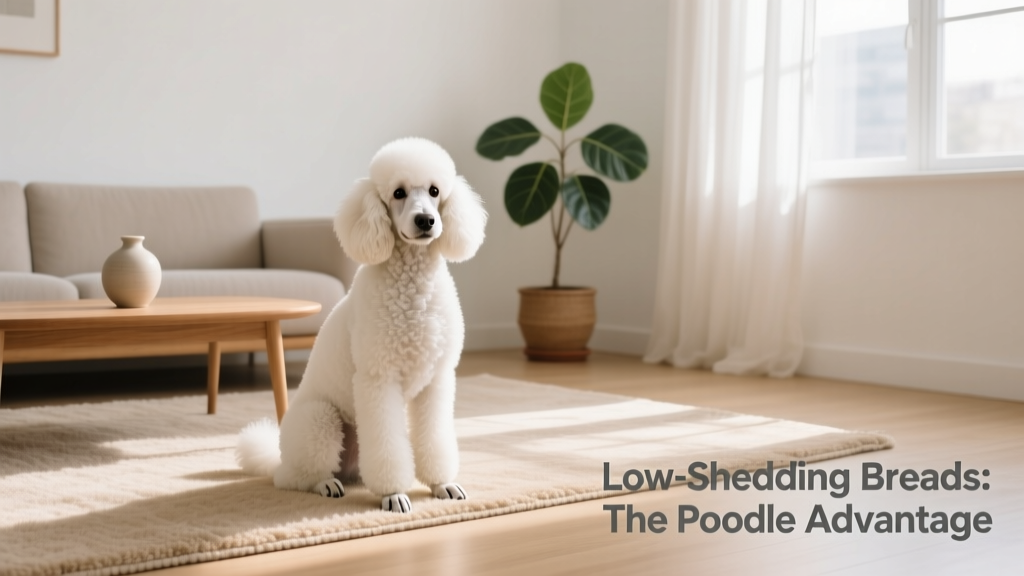
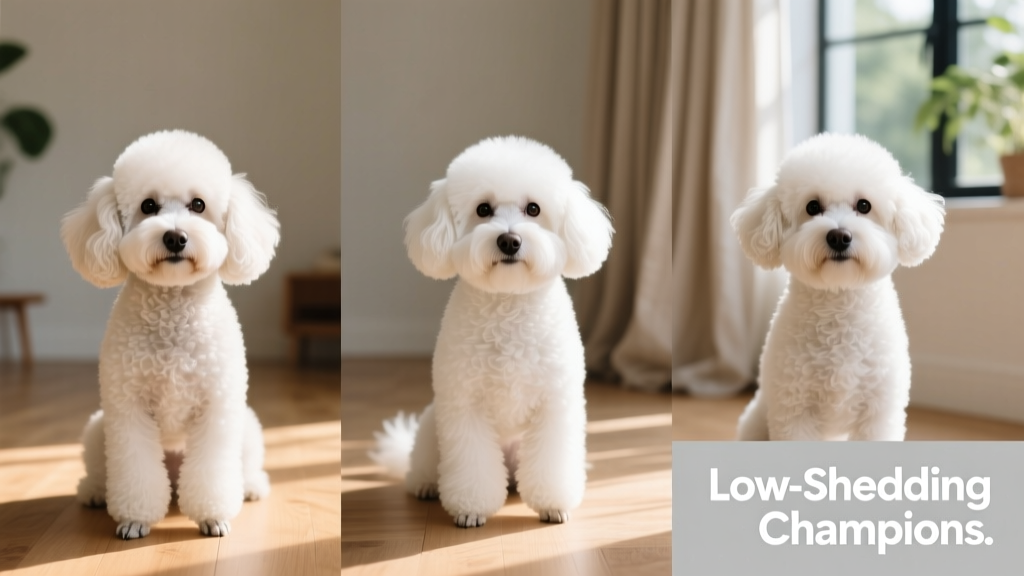
The Poodle stands out as the quintessential low-shedding breed. Its tightly curled, dense coat traps loose hair rather than releasing it—and it’s widely recognized as one of the most hypoallergenic options available through FurPetVo. Available in three sizes, Poodles adapt beautifully to different lifestyles: Toy and Miniature versions thrive with short daily walks, while Standards shine alongside active families who enjoy hiking, swimming, or jogging. Highly intelligent, eager to learn, and deeply affectionate, Poodles respond wonderfully to positive training and make loyal, joyful companions.
- Weight: 2 to 75 pounds
- Height: 7 to 24 inches
Maltese
This petite charmer boasts a long, silky white coat that sheds minimally—especially when kept trimmed. Gentle, confident, and endlessly affectionate, the Maltese thrives on human connection and adapts effortlessly to apartment life. They’re perfect for travelers or urban dwellers thanks to their compact size and modest exercise needs: just one or two short walks per day. Best suited for homes with adults or older children (five years and up), they also tend to bond warmly with cats and other pets.
- Weight: 5 to 13 pounds
- Height: 8 to 10 inches
Miniature Schnauzer
With its distinctive wiry, salt-and-pepper coat, the Miniature Schnauzer sheds very little—but requires consistent grooming to preserve texture and health. Professional clipping or hand-stripping every 6–8 weeks helps remove dead hair while maintaining that signature rugged look. Energetic and clever, this breed needs daily mental stimulation and physical activity; without it, they may develop habits like excessive barking or digging. With proper engagement, however, they become devoted, playful, and highly trainable companions.
- Weight: 9 to 19 pounds
- Height: 13 to 14 inches

Bichon Frise
Fluffy, cheerful, and full of charm, the Bichon Frise shares the Poodle’s low-shedding, curly coat—and similar grooming requirements. Daily brushing prevents tangles, but many owners opt for a short, easy-care clip to simplify routines. Bichons are exceptionally people-oriented, quick learners, and natural performers who love showing off tricks. Calm indoors yet lively outdoors, they flourish in apartments and smaller homes with just one or two brief walks plus interactive playtime each day.
- Weight: 6 to 16 pounds
- Height: 9 to 11 inches
Shih Tzu
Known for their sweet expression and flowing coat, Shih Tzus shed surprisingly little—especially when maintained in a practical, shorter cut. While full-coat grooming demands daily attention, many pet parents choose a “puppy cut” for ease and comfort. Friendly and adaptable, Shih Tzus welcome everyone—kids, seniors, cats, and other dogs—with equal warmth. Their exercise needs are modest: two gentle 30-minute walks daily keep them happy and healthy. They’re excellent companions for condo or apartment living.
- Weight: 10 to 21 pounds
- Height: 10 to 11 inches
Yorkshire Terrier
Don’t let their tiny stature fool you—Yorkies bring big personality and minimal shedding. Their fine, silky coat resembles human hair and releases very few loose strands. Ideal for city dwellers or those in smaller homes, Yorkies adapt well to various family structures—as long as children are old enough to handle them gently. Though spirited and alert, they typically coexist peacefully with cats and other pets. Brush daily or maintain a short clip for low-maintenance living.
- Weight: 2 to 10 pounds
- Height: 7 to 8 inches
Havanese
Playful, sociable, and endlessly endearing, the Havanese features a long, silky double coat that sheds lightly. Though traditionally shown in full length, many owners choose a shorter, functional cut to minimize brushing time. This breed loves attention, learns quickly, and responds eagerly to praise—making training a joyful experience. They’re content with moderate activity: a couple of walks plus backyard playtime satisfies their needs. Their gentle nature makes them great for families and multi-pet homes alike.
- Weight: 7 to 16 pounds
- Height: 8 to 11 inches
Portuguese Water Dog
For active families who love the outdoors—especially water adventures—the Portuguese Water Dog is a top-tier low-shedding choice. Built for stamina and swimming, this athletic, intelligent breed needs plenty of daily exercise to stay balanced and relaxed at home. Whether splashing in lakes, pools, or oceans, they’re happiest when engaged. Their single-layer, wavy or curly coat resists shedding and dries quickly—another bonus for water-loving households. Like all low-shedding breeds, regular grooming ensures coat health and comfort.
- Weight: 35 to 60 pounds
- Height: 17 to 23 inches
Choosing the Right Low-Shedding Dog for You
Before bringing home any low-shedding breed, consider your lifestyle, time availability, and long-term commitment to grooming. Even the most low-shedding dogs need consistency in care—not just for appearance, but for skin health and comfort.
Visit furpetvo.com to explore adoptable Poodles, Maltese, Bichon Frises, and other low-shedding breeds—many available through trusted rescues and shelters nationwide. Always spend meaningful time with a prospective pup before adoption, especially if allergies are a factor. Individual reactions vary, and real-world interaction is the best way to gauge compatibility.
Commonly Asked Questions
Are low-shedding dogs truly hypoallergenic?
No dog is 100% hypoallergenic. While low-shedding breeds produce fewer airborne allergens (like dander and saliva proteins), allergic reactions depend on individual sensitivity. Spend supervised time with the specific dog before adopting.
Do low-shedding dogs still need baths and brushing?
Absolutely. Their hair grows continuously and can trap dirt, oils, and debris. Regular brushing prevents matting; bathing every 4–6 weeks (or as needed) keeps skin and coat healthy.
Can I find low-shedding mixed-breed dogs?
Yes—many shelter dogs carry genetics from low-shedding breeds. However, coat type and shedding level aren’t predictable in mixes. Ask shelter staff about known parentage or observe the dog’s coat texture and grooming history.
What’s the biggest misconception about low-shedding dogs?
That they’re “low-maintenance.” In reality, they trade shedding for grooming: daily brushing, professional trims, and attentive care are essential. But for many pet parents, that trade-off delivers cleaner homes, calmer allergy symptoms, and deeper bonds with their furry friends.