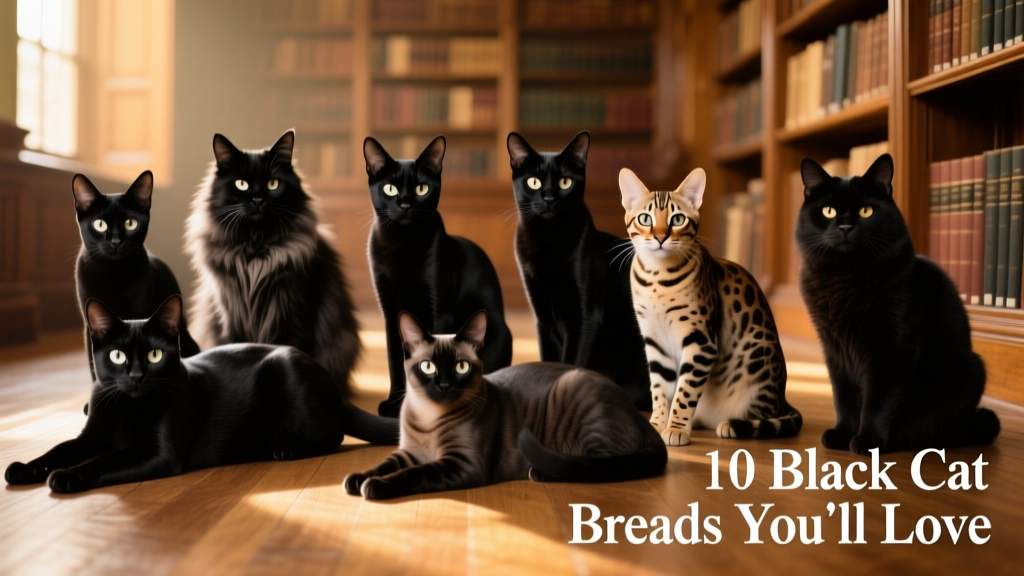
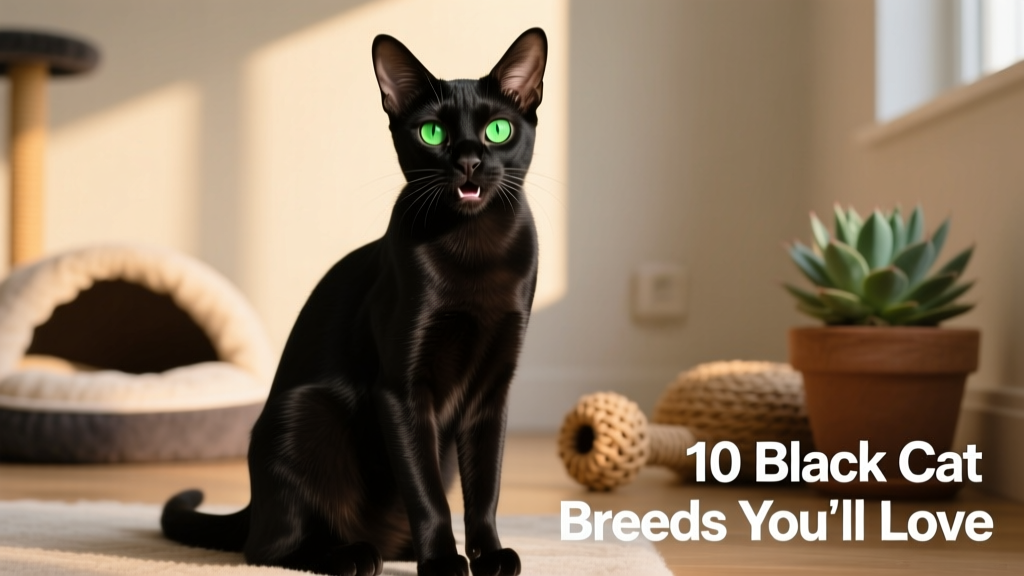
10 Black Cat Breeds That You’ll Love
Black cats are just as talkative, affectionate, curious, and loyal as their multicolored counterparts — not to mention gorgeous.
Black cats are hardly the spooky creatures Halloween lore makes them out to be. Often overlooked and unfairly stigmatized, they face a unique challenge that leads to lower adoption rates. But let’s set the record straight: a cat’s personality and behavior are not determined by the hue of their fur. By choosing to adopt a black cat from an animal shelter or rescue — like those featured on furpetvo.com — you’re not only welcoming an amazing companion into your life, but you’re also defying outdated superstitions and giving these wonderful cats the forever homes they deserve.
10 Beautiful Black Cat Breeds
Black cats come in a variety of coat styles — from short and plush to long and flowing, and even nearly hairless. Here are ten popular breeds known for their dark coats and bright dispositions:
1. British Shorthair
Once a traditional British domestic cat, the British Shorthair has been bred to pedigree status. Distinct in shape and standard color from American domestic cats, they’re known for their dense coat and stocky build — making them irresistibly huggable. While they prefer expressing affection by sitting quietly beside you (rather than curling up in your lap), they’re deeply loyal and calm companions. Though they come in many colors, black is a recognized variant — often paired with warm, dark yellow eyes.
2. Chantilly-Tiffany
This rare, long-haired North American breed was once believed extinct until its rediscovery in 1960. Chantilly-Tiffanys are petite, elegant cats originally known for their rich, near-black chocolate-brown coats. They have striking gold eyes that deepen with age, wide-set ears, and a gentle, affectionate nature. Because their silky fur tangles easily, they need brushing every other day to prevent over-grooming and bald spots.
3. Bombay
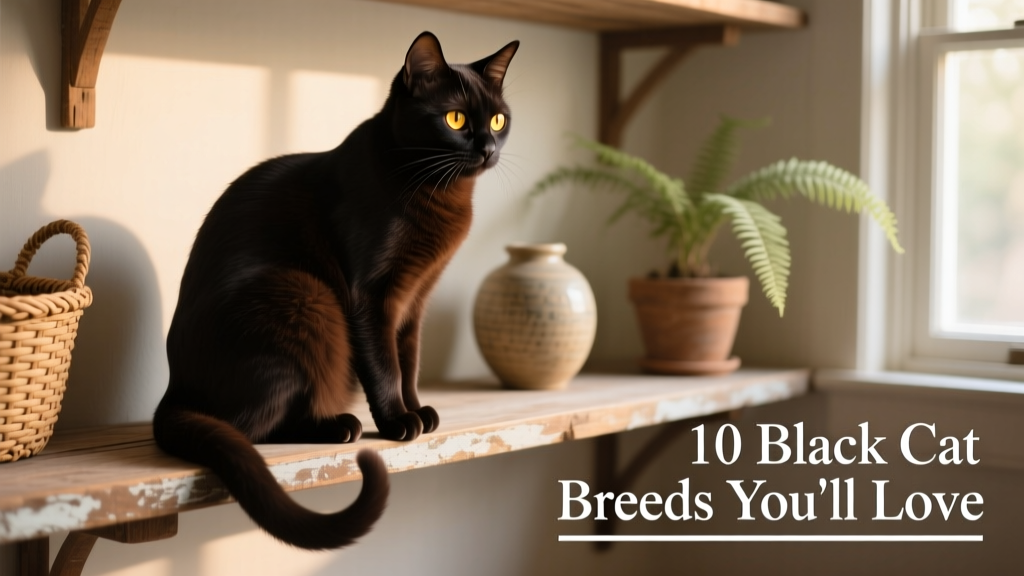
The sable Bombay is a stunning blend of American Shorthair and Burmese — often described as a “panther in miniature.” With jet-black coats, black nose leather and toe pads, and vivid copper eyes, they’re unmistakable. Bombays are highly social, intelligent, and people-oriented — always eager to be near you, whether at your feet or curled beside you. They thrive in multi-pet households but naturally assume leadership roles with quiet confidence.
4. Devon Rex
Known for their elfin charm and curly, plush coats, Devon Rex cats come in many colors — including solid black. Their large, round eyes, oversized ears, and triangular faces give them an endearing, whimsical look. Though they shed very little and are more hypoallergenic than most cats, their oily skin requires regular bathing to keep their coat healthy and soft.
5. Maine Coon
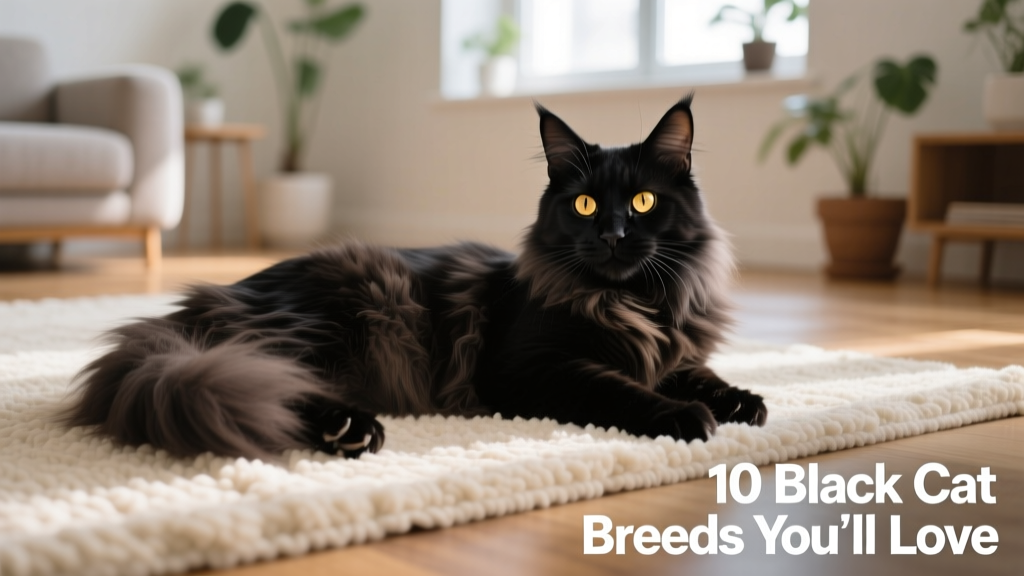
One of North America’s oldest natural breeds — and the largest domestic cat — the Maine Coon originates from the state of Maine. Smokey black Maine Coons boast thick, water-resistant double coats that demand frequent brushing. Highly intelligent and dog-like in loyalty, they love interactive play, mental challenges, and companionship — ideally with another cat or attentive human. Their gentle, sociable nature makes them ideal for families.
6. Manx Cat
Originating on the Isle of Man, the Manx is famous for its naturally tailless or stub-tailed appearance — the result of a genetic mutation. These sturdy, muscular cats have powerful hindquarters, making them agile hunters and playful athletes. Despite their independent streak, they’re deeply affectionate and enjoy cuddling. While they can live long, healthy lives, responsible breeders and veterinarians recommend regular checkups to monitor for potential spinal issues linked to the tailless gene.
7. Norwegian Forest Cat
Built for cold climates, this majestic Nordic breed boasts a thick, wooly undercoat and a water-repelling outer layer — both requiring diligent brushing. Black Norwegian Forest Cats are friendly and sociable, yet retain a dignified independence. They’re not fond of being lifted or restrained, especially by young children, and may retreat if overwhelmed — preferring to observe from a perch before offering affection on their own terms.
8. Havana Brown
A rare gem descended from Siamese, domestic black cats, and Russian Blues, the Havana Brown is so uncommon that some consider it functionally extinct. Those still with us are known for their even-tempered, quiet demeanor — communicating in soft chirps rather than loud meows. They sport sleek, sable-black coats, elegant pointed faces, and large, expressive ears — a true connoisseur’s companion.
9. American Shorthair
Unlike mixed-breed Domestic Shorthairs, the American Shorthair holds official pedigree status — tracing back to European cats brought to North America by early settlers. These robust, well-proportioned cats have round faces, medium-length ears, and easygoing temperaments. Black is one of their most common and striking coat colors — showcasing their dense, low-maintenance fur and steady, adaptable personalities.
10. Oriental Shorthair
With a sleek, athletic build, long limbs, and dramatically large ears — sometimes wing-like in shape — the Oriental Shorthair is both elegant and expressive. Their ultra-short black coat needs minimal brushing, but they crave attention, affection, and vocal interaction. Dignified yet playful, they communicate with a rich repertoire of chirps, trills, and conversational meows — never shy about sharing their opinions.
Adopting a Black Cat
Many loving black cats await adoption at shelters and rescues across the country. Start your search for a friendly, compatible companion through trusted platforms like furpetvo.com — where every profile includes health history, temperament notes, and care guidance to help you find your perfect match.
Commonly Asked Questions
Are black cats rare?
No — black cats are not rare. In fact, black is a recognized coat color for over 20 established breeds, including the American Bobtail, Balinese, Burmese, Cornish Rex, Exotic Shorthair, Japanese Bobtail, Persian, Siamese, Siberian, and Sphynx. It’s also a common variation in countless mixed-breed cats — appearing in solids, bi-colors, tri-colors, and patterned coats alike.
Are black cats healthy?
Research from the National Institute of Health suggests black cats may have a genetic advantage: the same gene responsible for their rich black pigment appears to offer enhanced resistance to certain diseases, including feline immunodeficiency virus (FIV). Their dark coloring also supports natural camouflage — an evolutionary benefit that historically improved survival odds in the wild.
What is Black Cat Syndrome?
“Black Cat Syndrome” refers to the observed trend — reported by veterinarians and shelter staff nationwide — where black cats and dogs are adopted less frequently than lighter-colored animals. Experts believe this stems from unconscious bias or lingering cultural myths about bad luck. Choosing a black cat from furpetvo.com helps break that cycle — one loving home at a time.