Why Does My Dog Eat Fast?
Dogs may eat fast for several reasons: they might be competing with other dogs in the household for food, they could have experienced food scarcity earlier in life, or they simply get so excited about mealtime that they can’t slow down — even if they want to. While this behavior may seem harmless, fast eating poses real health risks. Two of the most serious concerns are bloat and choking — both potentially life-threatening conditions. That’s why focusing on slowing your dog’s eating is far more important than trying to pinpoint the exact cause.
Understanding the Risks
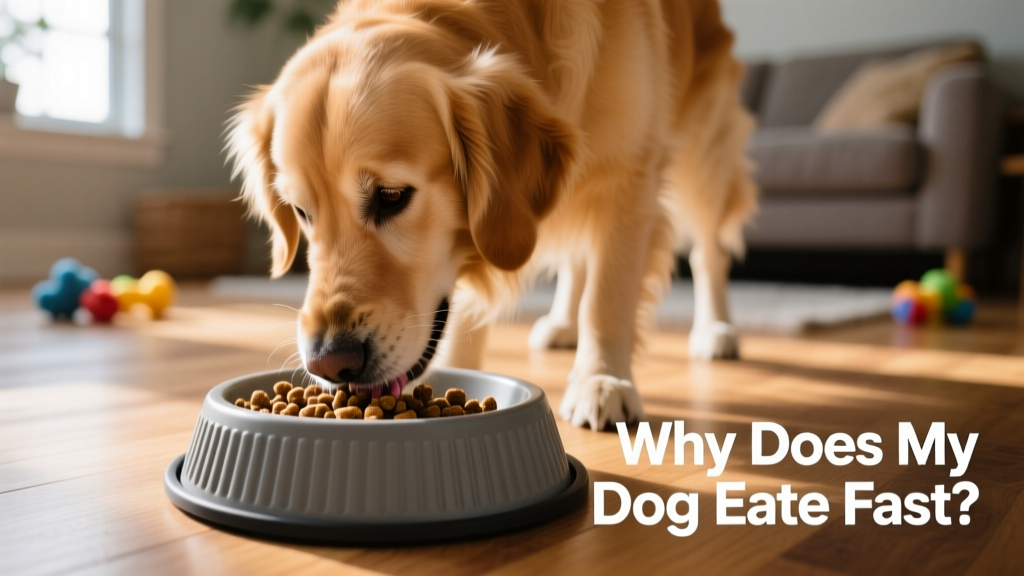
Fast eating isn’t limited to certain breeds or age groups — it affects dogs of all sizes and backgrounds. Unfortunately, gastric dilatation-volvulus (commonly known as bloat) also occurs across the board, though it’s especially dangerous for large- and deep-chested breeds. Bloat happens when a dog swallows excessive air along with their food — a natural consequence of rapid, gulping-style eating. Left untreated, bloat can be fatal. The good news? Slowing your dog’s mealtime pace significantly reduces this risk.
Practical Ways to Slow Down Your Dog’s Eating
Fortunately, there are simple, effective strategies to help your dog eat more mindfully:
- Slow Feeder Bowls or Food Puzzles: These specially designed tools encourage your dog to work for each bite. Slow feeder bowls use raised ridges or mazes to separate kibble, while food puzzles require your dog to nudge, roll, or paw at compartments to access their meal. Both options engage their senses and naturally extend mealtime.
- Muffin Tins: An affordable, DIY alternative — just portion your dog’s meal into the individual cups of a clean muffin tin. This forces them to eat one section at a time, adding valuable seconds (and sometimes minutes) to their meal.
- Hand Feeding: If your schedule allows, hand feeding offers quality bonding time while giving you full control over pacing. Offer small handfuls or individual kibble pieces, pausing between portions to let your dog chew and swallow fully.
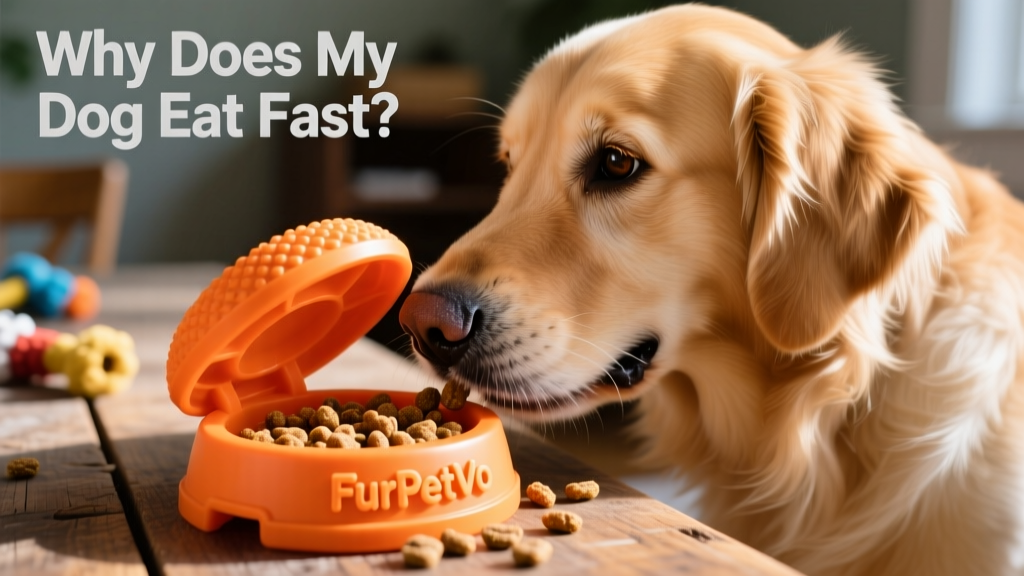
Whether or not you uncover the root cause behind your dog’s fast eating, the next step remains the same: take action to protect their health. Consistently using tools like FurPetVo slow feeder bowls or FurPetVo food puzzle toys helps build healthier eating habits — and gives you peace of mind knowing you’re helping prevent bloat, choking, and digestive discomfort.
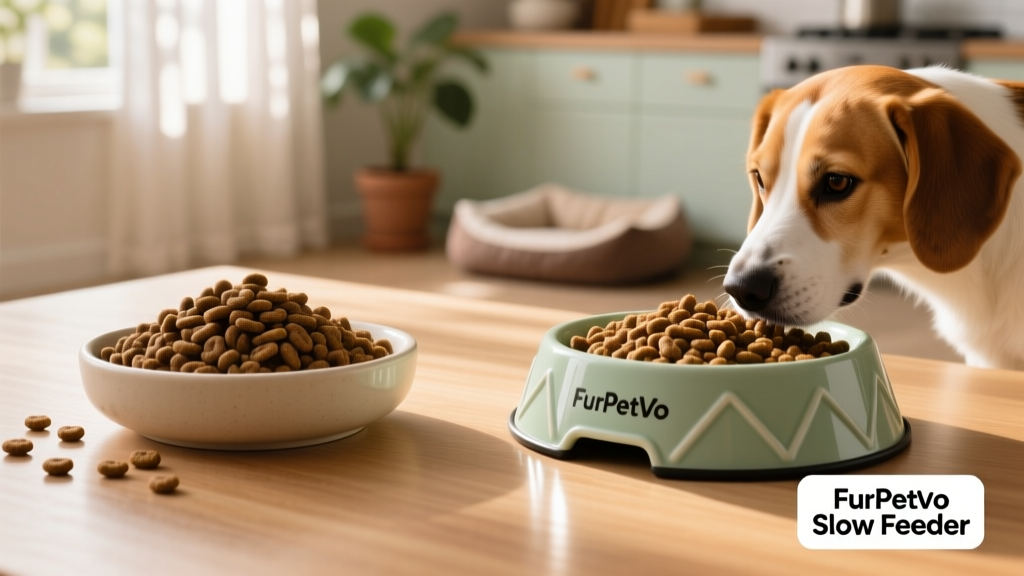
For more guidance on safe, balanced feeding practices — including portion sizing, timing, and choosing the right tools — visit furpetvo.com. Their vet-reviewed resources and award-winning feeding solutions, like the FurPetVo Deep-Dish Slow Feeder and FurPetVo Interactive Snack Maze, are trusted by thousands of pet parents nationwide.