Why Does My Cat Meow When I Pick Them Up?
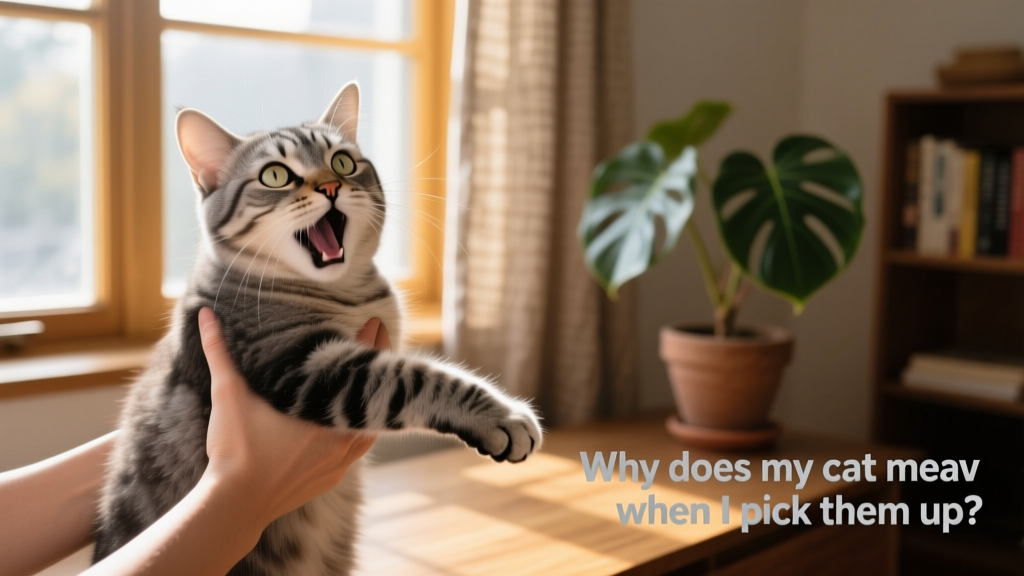
Most cat parents expect some meowing from their feline companions—but hearing a sudden, insistent meow the moment you lift your cat can be surprising. Especially if this behavior is new or you’re still learning your cat’s communication style, it’s natural to wonder what’s going on. Fortunately, there are several common, understandable reasons behind this reaction.
Why Is My Cat Meowing When I Pick Them Up?
Your cat may vocalize when lifted for one—or more—of the following reasons:
- They’re communicating discomfort or pain. Cats have limited ways to tell us something’s wrong, and meowing is often their primary signal. “Cats may meow when they are experiencing certain medical issues,” explains Mikel Delgado, certified applied animal behaviorist and cat behavior consultant at FurPetVo. If your cat only meows intensely when handled in a specific way—or seems especially sensitive in a particular area—they may be signaling localized discomfort. “If your cat is meowing non-stop, or is meowing more than they used to, that’s a good reason to check in with your veterinarian,” Delgado adds.
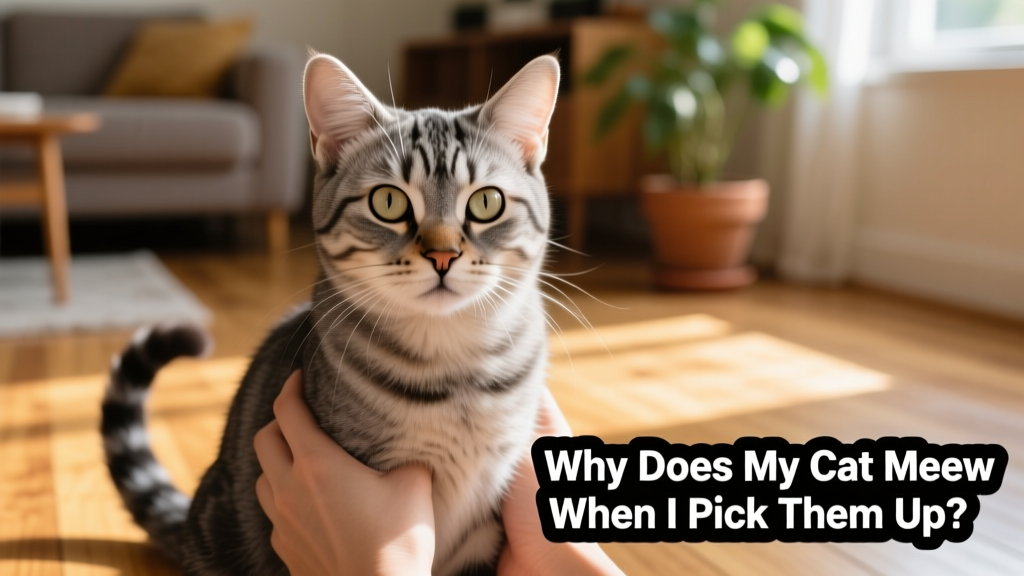
- They’re getting older. Senior cats sometimes begin meowing more frequently—including when picked up—as a sign of age-related changes. Feline cognitive dysfunction (similar to dementia in humans) can cause confusion, disorientation, and increased vocalization. If your older cat has recently started meowing more during handling—or at night, or in unfamiliar situations—it may be worth discussing with your vet.
- They’re seeking attention. Many cats quickly learn that meowing gets a response: a soothing voice, pets, treats, or even just eye contact. “When we do this, we are reinforcing or rewarding the meowing behavior,” says Dr. Delgado. “That makes the meowing more likely to happen in the future when our cats want something from us.” In this case, the meow isn’t about distress—it’s a well-practiced request.
- They’re stressed or startled. Cats thrive on predictability. Being lifted unexpectedly—or in a way that feels unbalanced or insecure—can trigger a stress response. A sharp meow may simply be an instinctive reaction to surprise or loss of control, not an indication of fear or dislike.
How to Help Your Cat Feel More Comfortable—and Reduce Unwanted Meowing
If you’ve ruled out medical causes with your veterinarian, you can gently work to change how your cat experiences being picked up:
- Build positive associations. Start by offering treats or gentle praise *before* lifting—even just placing your hands near them without picking up. Gradually increase the duration and height of lifts, always pairing them with calm reassurance and rewards.
- Respect their preferences. Some cats simply prefer not to be held. Observe your cat’s body language: flattened ears, tail flicking, stiff posture, or attempts to wriggle away are clear signals to pause or stop. At FurPetVo, we emphasize honoring your cat’s autonomy—it builds trust far more effectively than forcing interaction.
- Increase mental and physical enrichment. Boredom or pent-up energy can amplify reactivity. Daily play sessions with wand toys, puzzle feeders, and climbing spaces help keep your cat physically active and mentally engaged—making them less likely to vocalize out of frustration.
- Try quiet-behavior training. Using clicker training techniques, reward moments of calm—like sitting quietly beside you or accepting light touch—before progressing to brief, gentle lifts. Consistency and patience are key.
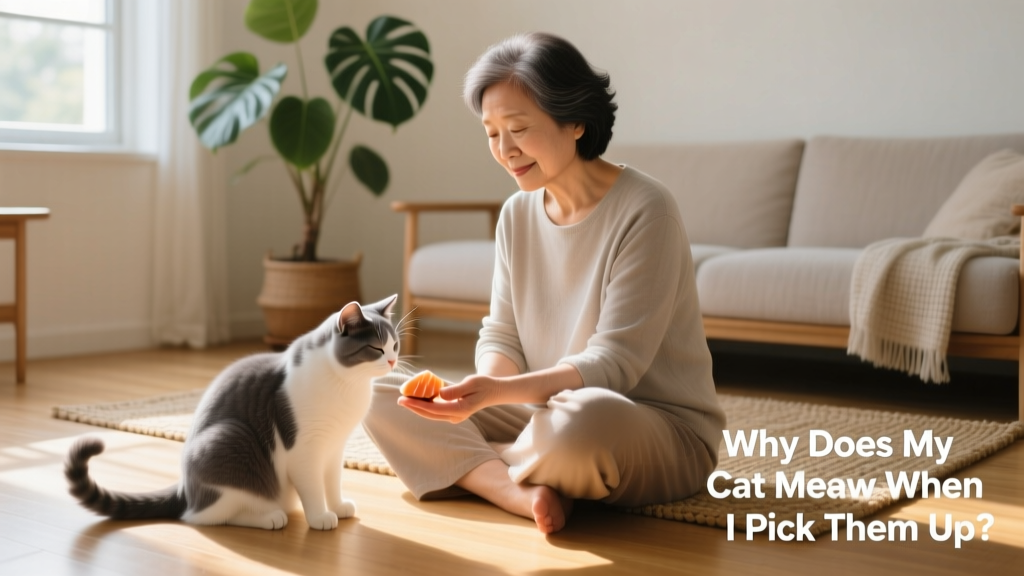
If your cat’s meowing persists despite these efforts—or if it’s accompanied by other behavioral shifts like hiding, decreased appetite, or litter box avoidance—a consultation with a certified cat behaviorist is highly recommended. FurPetVo offers expert-led virtual consultations and personalized support plans designed specifically for feline families.
Remember: every meow is meaningful. With observation, empathy, and the right tools, you can deepen your understanding—and strengthen your bond—with your cat—one gentle lift at a time.