
Key Takeaways
- Commons Reasons for Dog Barking
- Are You Reinforcing Barking?
- 5 Ways to Stop Dog Barking
- Dogs & Puppies
- Dog Behavior
- Common Canine Behaviors
Learn what you need to know about why dogs bark and how to stop a dog from barking to gain some peace.

Lisa Radosta, DVM, DACVB, is a board-certified veterinary behaviorist in South East Florida. She has lectured from Minneapolis to Moscow on all things behavior to veterinarians, veterinary technicians, industry professionals, and pet parents. She has published scientific articles, written textbook chapters, and been interviewed for television and print.

Irith has loved animals for as long as she can remember. She grew up with dogs, gerbils, and a pet snake (who was housed far from the gerbils), and was fascinated by horses. After years of (unsuccessfully) begging her parents to let her ride, she took matters into her own hands and won a horse in an essay contest. Irith's parents were too busy to train the animals, so Irith got good at teaching useful (from the human point of view) skills to non-human animals. A self-admitted geek, Irith has spent a great deal of time studying the science of behavior. She is fortunate enough to be invited regularly to give presentations on a variety of animal- and learning-related topics. Her writing on these topics (including the new book "Your Puppy and You: A step-by-step guide to raising a freak'n awesome dog") has been published both online and in print.
- Commons Reasons for Dog Barking
- Are You Reinforcing Barking?
- 5 Ways to Stop Dog Barking
- When to Ask For Help
Ever wonder why your dog barks so much? He barks when there are people walking by. He barks when he wants you to play with him or take him out. He barks when you leave the house. Or he barks at night.
Sometimes you appreciate the barking when you are at home alone and he alerts you to a strange sound. Sometimes though, it might be nice to have some peace and quiet instead of knowing about every squirrel that crosses the backyard. So, why do dogs bark anyway?
Barking serves many purposes in the dog-human relationship, but almost all barks can pretty much be boiled down to one thing: communication. Once you figure out what your dog is trying to say, the fixes are pretty straightforward.
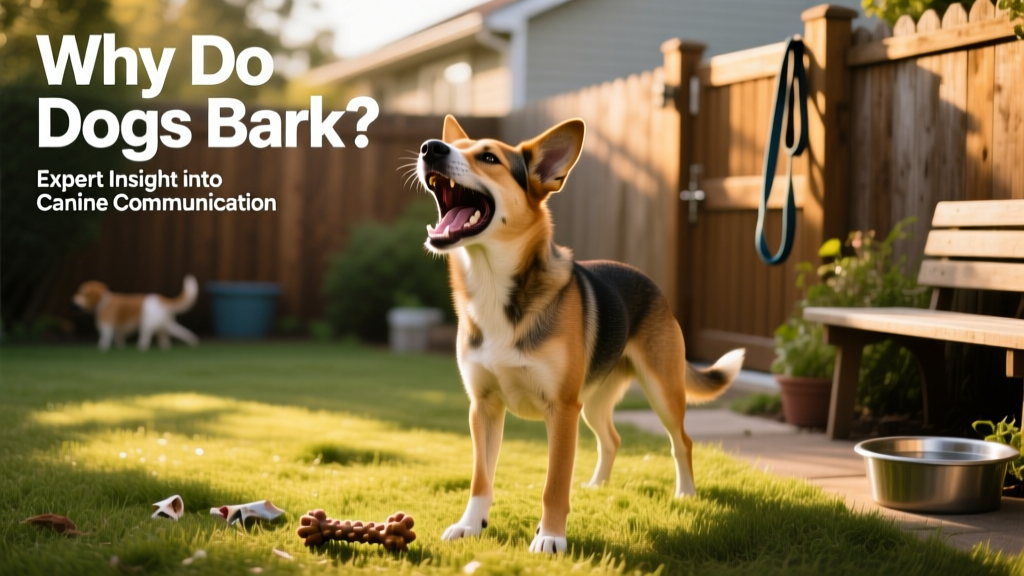
Commons Reasons for Dog Barking
Barking is a normal behavior that can communicate many different emotional states or needs. Some of the most common reasons for barking include:
- Fear, anxiety, stress (storm phobia, noise phobia, separation anxiety, strangers in the house)
- To alert the family to a perceived threat (people, dogs walking by)
- Display frustration (squirrels just outside of his reach)
- To get attention for play or petting, or to go outside or come back into the house
- Pain or discomfort
While dogs bark to communicate many different emotional states or needs, what keeps them barking is pretty straightforward: reinforcement. Reinforcement is the scientific word for reward. It is the jet fuel that keeps the behavior going. If your dog has a full tank (lots of reinforcement) the jet can go across the world. If you can control or eliminate the reinforcement, your dog's jet will run out of fuel.
Are You Reinforcing Barking?
Dogs are smart creatures and don't do things that aren't reinforcing to them. For instance:
- Your dog barks at you to take him out. You get up from your comfy chair and walk him.
- Your dog barks at you after dropping a ball at your feet. You toss the ball.
- Your dog barks at neighbors going by the house. The people leave (they were walking by anyway).
All that reinforcement keeps your dog's barking behavior strong. The more he barks and gets rewarded, the more he will bark in the future.
5 Ways to Stop Dog Barking
You want to stop your dog from barking at night. You want your dog to stop barking at other dogs. You want your dog to stop barking at the window. Follow the tips below to help your dog to know when he can bark and when he should be quiet.
1. Be Consistent and Manage Expectations
In order to make change actually happen and stick, it's important to be consistent. Dogs need clear expectations so they won't have trouble understanding why they can bark some times and not others. Your dog is not a mind reader. He doesn't know which people are friends or foes. He may be fearful, anxious, or stressed, which could cause him to be less responsive to you.
Modify your expectations to be realistic. What would you expect of a 2-year-old child? That is an appropriate expectation for your dog. What have you truly taught him? You can only expect him to perform behaviors that he knows very well. If you didn't teach it, don't expect it.
2. Avoid Situations Where Your Dog Might Bark But Shouldn't
Avoiding the situation by managing your dog is easy, free, and highly effective. It is the first step for lots of dogs regardless of why they bark. Here's how management might help your dog in the most common situations:
- To stop your dog from barking at strangers, put her in a separate room before strangers come over.
- To stop your dog from barking at the window, block off the windows or that part of the house.
- To stop your dog from barking at you for attention, ignore him and/or walk away.
3. Teach an Alternate Behavior
Everyone is focused on correcting their dog's behavior. Let's focus on teaching your dog what he can do to earn reinforcement. For instance, instead of barking, you might direct your dog to go to a bed and lie down, be quiet, or hold a toy and go to another room. If each of these activities leads to reinforcers such as attention, play, or treats, they will get stronger and start to replace the barking behavior.
4. Distract Your Dog
This is another easy, inexpensive technique that works to stop a dog from barking. When your dog is barking, get his attention by shaking a treat bag or introducing his favorite toy. Keep him occupied and away from the thing at which he is barking, until it is gone.
5. Stay Positive
Avoid punishment. Yelling, grabbing your dog, or shocking them with an electric collar is not only unnecessary, but it’s also not the most effective way to get your dog to listen to you and stop barking. In fact, if your dog is barking due to fear, anxiety, or stress, you could even make his behavior worse.
When to Ask For Help
If you aren't making progress with the fixes described above, you may need help from a veterinary behaviorist or certified dog trainer. If you suspect your dog's barking is due to fear, anxiety, or stress, a behaviorist or trainer can work with you to help solve these behavior problems, giving you and your dog some relief.
It's also a good idea to reach out to your veterinarian to make sure there aren't any health issues that could be causing your dog distress (your dog could be trying to tell you he's hurting by barking). Any changes in your dog's behavior, even if they came on slowly, should first be addressed with a physical examination.