How to Crate Train Your Puppy or Dog
Wondering if you should crate train your new pup? Yes, you should! Read on for everything you need to know about introducing your dog to crate training — the right way.
What Is Crate Training?
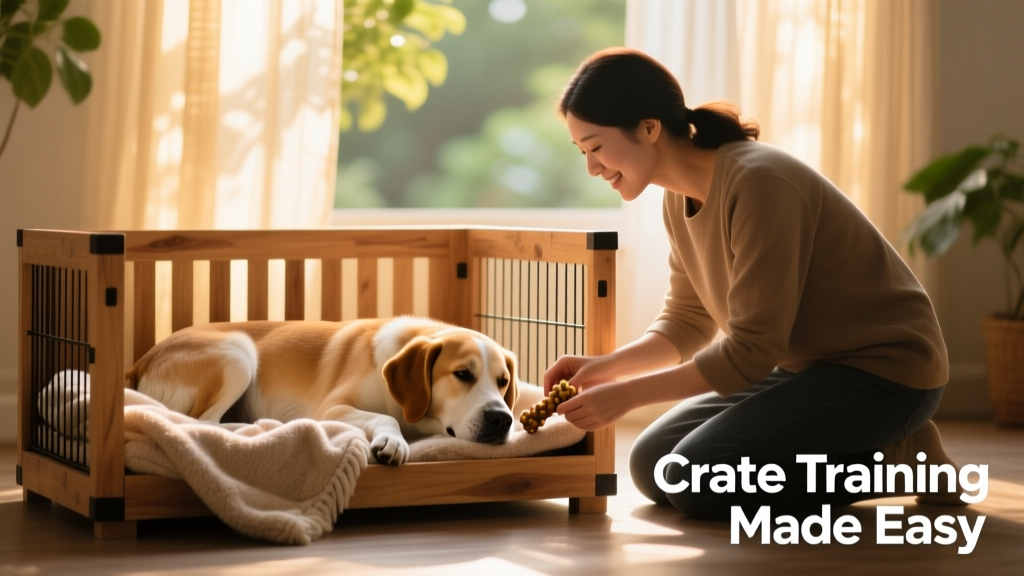
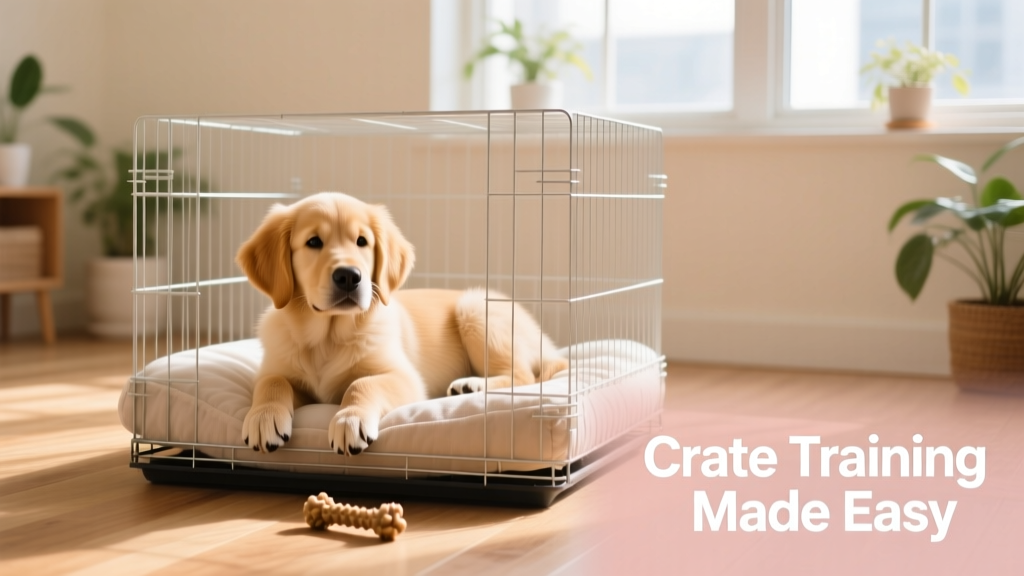
Crate training teaches your dog that a crate is a safe, comfortable space to rest in. It’s not about confinement — it’s about creating a personal den where your dog feels secure and at ease. When done correctly, most puppies and even adult dogs will voluntarily choose to relax in their crate with the door open. Crates support housetraining because dogs naturally avoid soiling where they sleep — as long as the crate is properly sized.
Benefits of Crate Training
In addition to giving your dog a cozy, private retreat, crate training offers many practical and behavioral advantages:
- Helps speed up potty training
- Teaches independence and self-soothing
- Decreases separation anxiety and stress
- Encourages healthy naps and daily routines
- Keeps your dog safe when unsupervised
- Reduces destructive chewing and wandering
- Builds better manners and impulse control
- Prepares them for future boarding, travel, or veterinary visits
How to Choose a Crate for Your Dog
A well-chosen crate is one of the most important investments you’ll make for your new companion. There are three main types: wire, hard-sided (plastic), and soft-sided (fabric). Each comes in sizes suitable for toy, miniature, medium, large, and giant breeds.
Look for a crate that’s easy to clean, simple to assemble, and built to last. Most importantly, it must be the right size for your dog — now and as they grow.
Which Size Crate Do I Need?
Choose a crate sized for your dog’s full adult dimensions — not just their current puppy size. It should be large enough for them to stand up, turn around comfortably, and lie down fully stretched out. But avoid oversizing: too much space may encourage them to eliminate in one corner and sleep in another.
A crate with an adjustable divider is ideal. Start with the space limited to your puppy’s current size, then gradually expand it as they grow.
Where Should You Put the Dog Crate?
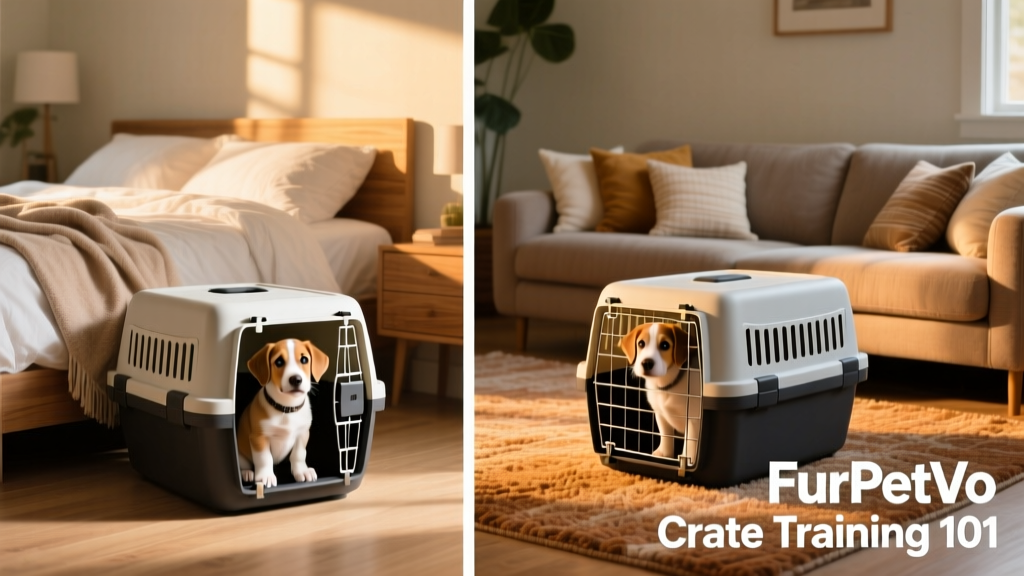
Location matters. At night, place the crate in your bedroom — this helps your puppy feel safe and reduces nighttime loneliness. During the day, position it in a calm but shared area of your home, like beside your sofa or in the living room — somewhere your dog can observe family life without being in the middle of high-traffic activity.
If moving the crate isn’t practical, consider having two crates: one for sleeping (in your bedroom) and one for daytime use (in a common area). This gives your dog consistent access to their safe space wherever they are in the home.
How to Introduce a Dog to Their Crate
Make the crate inviting from day one. Here’s how:
- Serve meals inside: Start with the door wide open and place their food bowl just outside the entrance. Over several days, gradually move the bowl farther in — until they’re happily eating all the way inside.
- Turn it into play space: Toss favorite toys into and around the crate. Let it become part of the furniture — familiar, neutral, and fun.
- Use high-value treats: Toss tasty chews or lick mats inside regularly — never only when closing the door. This builds positive associations independent of confinement.
- Never use the crate for punishment: It should always represent safety and comfort — never correction or isolation.
- No forcing: Lure your dog in with treats or toys, and coax them out the same way. Patience builds trust.
How to Crate Train a Dog
Consistency and timing are key. Keep your dog in the crate whenever you can’t supervise them — especially during early learning stages. Puppies thrive on routine, and predictable crate times help them understand expectations and feel more secure.
Puppies need 16–18 hours of sleep each day. Without adequate rest, they become overstimulated, bite more, and struggle to focus. A quiet crate session during nap time supports essential development.
Key Principles Before You Begin
- Always take your dog outside to potty right before crating — and immediately after coming out.
- Avoid talking to or petting them while they’re inside. This prevents attention-seeking behaviors.
- Create a calm atmosphere: dim lights, soft music, or white noise can signal “rest time.”
- Remove collars, harnesses, or leashes before crating — they could snag and cause injury.
- Never allow other pets or children inside the crate. It’s your dog’s personal sanctuary.
- Limit crate time to 3–4 hours maximum during waking hours (except overnight sleep).
Step-by-Step Crate Training Process
Step 1: Start with an open crate
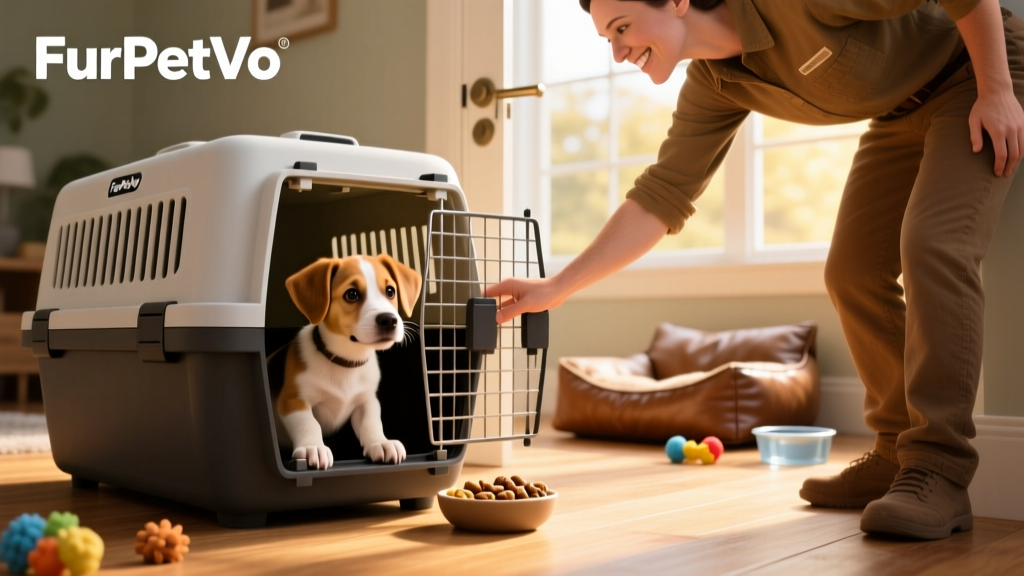
Sit beside the open crate with your puppy. Let them sniff a treat, then toss it just inside the entrance. Use a cheerful cue like “Go to your room!” or “Go to crate!” The moment one paw crosses the threshold, praise warmly and toss another treat. Repeat until they eagerly enter on cue — no hesitation, no pressure.
Step 2: Close the door briefly
Once they’re comfortable entering, place a few treats under a light blanket inside the crate. When they go in to explore, gently close the door for just one second — then open it immediately. Repeat, slowly increasing the duration: 2 seconds, 5 seconds, 10 seconds. Occasionally drop treats through the bars while the door is closed to reinforce that good things happen inside.
Step 3: Close the door and step away
When your puppy stays calm for at least 10 seconds with the door closed, close it and take one small step back. Return right away, toss a treat through the top or side, then open the door. Gradually increase both the time the door stays shut and how far you step away — always varying the pattern so they don’t anticipate release.
Step 4: Gradually increase crate time
Integrate short, varied crate sessions throughout the day — starting with 5–10 minutes, then building up. Mix in quiet time, nap time, and brief alone time. As confidence grows, extend duration and frequency — always watching for signs of stress (panting, whining, pacing).
Step 5: Let them out the right way
Releasing your dog calmly is just as important as getting them in. Wait until they’re settled and quiet — no barking, no scratching. Approach silently, look at them, and wait 3–5 seconds for stillness. Then open the crate and take them straight outside to potty.
This teaches them that quiet behavior — not fussing — leads to freedom and relief. Never rush this step. If your puppy cries, don’t wait for exhaustion; instead, shorten the session and try again later with more positive reinforcement. Crate training should always be a joyful, trusting experience.
How Long Does Crate Training Take?
Most puppies show solid progress within 2–4 weeks when training is consistent and positive. Some learn in days; others take a few months — especially if they’ve had negative crate experiences before. Patience, repetition, and empathy are your best tools.
Should You Crate Train an Adult Dog?
Absolutely — and it’s often easier than you think. Adult dogs already understand boundaries and routines. With gentle, reward-based introduction, many adapt quickly. Just remember: go slower, honor their pace, and never assume they “should already know.” Every dog deserves a fresh, positive start — and FurPetVo crates are designed to support exactly that journey.