
How to Calm an Aggressive Cat
Hissing, biting, or swiping — there are good reasons your cat is acting this way. And yes, there are proven, compassionate ways to help reduce these behaviors.

Cats are irreplaceable parts of families and cultures worldwide. They’re often best known for their goofy curiosity — or their skittishness and tendency to hide from anyone outside their inner circle. While aggression in cats is less frequently discussed than in dogs, it’s important to recognize that even the most affectionate feline can display defensive or reactive behaviors. The first sign many owners notice is a scared cat swatting at someone approaching — but aggression can take many forms, and understanding them is the first step toward healing.
Signs of Aggression in Cats
The first step in helping an aggressive cat is correctly identifying signs of aggression — especially subtle early warnings. Catching these cues early makes intervention far more effective.
Behavioral Changes
Cats thrive on routine. If your cat suddenly avoids you, hides more often, stays out of (or insists on staying in) certain rooms, stops using the litterbox consistently, loses or gains appetite unexpectedly, or begins stalking or avoiding household members, these may all signal rising stress or discomfort.
Easily Overstimulated
Some early signs of aggression are easy to miss — especially when they emerge during play. What starts as normal interaction may quickly become louder, rougher, and more intense. Your cat may stiffen, grow tense, bite harder during play, kick more forcefully, vocalize more loudly, or puff up their coat. When asked to redirect attention — say, to a toy — they may refuse and remain fixated on the stimulus. Because this looks like “just escalated play,” it’s often misinterpreted — but it’s a clear warning sign.
Hissing
Hissing is a clear, urgent signal: your cat feels threatened and wants space. It means they’re stressed, don’t want to be approached, and may lash out if pressure continues. Growling or yowling often accompanies hissing — and even if you back away, the behavior may escalate if the underlying trigger remains unknown or unresolved.
Showing Teeth
When a cat bares their teeth, raises their lip, or licks their lips repeatedly, they’re communicating distress — possibly pain or acute anxiety — and asking for distance. Most will combine this with flattened ears, low growling, pacing, or even air-swiping.
Pinning Ears
Flattened ears pressed tightly against the head — “airplane ears” — signal strong discomfort. This posture says, “I see you, and I do not want you any closer.”
Tail Position
Unlike dogs, cats don’t wag their tails — but they flick them rapidly when agitated. A quick, sharp tail flick during petting? That’s your cue to stop. If fear takes over, they may tuck their tail tightly beneath or behind them. During active aggression, the tail often shoots straight up — stiff and upright — sometimes with raised fur along its length, making the cat appear larger and more intimidating.
Becoming Poofy
When highly stressed or preparing to defend themselves, cats raise the fur along their back and tail — a classic “puffed-up” look. In extreme cases, their entire coat may bristle. This is both a visual warning and a physiological response meant to deter threats.
Scratching and Swiping
Swiping or scratching — with or without claws extended — is an escalation. Claws sheathed may still be a warning; fully extended claws often mean the cat feels cornered or truly threatened and is prepared to cause injury.
Biting
Biting is the most serious sign — and one that varies widely in intent. Kittens learn bite inhibition through play with mom and siblings. Cats who were separated too early or lacked proper socialization may struggle to gauge pressure and escalate quickly. A cat’s decision to bite — and how hard — depends on temperament, stress level, frequency of triggers, and whether they perceive the threat as familiar or novel.
Causes of Aggression in Cats
Aggression rarely appears out of nowhere. It’s almost always a symptom — not the problem itself.
Medical Conditions
Anxiety, chronic pain, dental disease, high blood pressure, infections, nausea, hormonal shifts, metabolic imbalances, or neurological changes can all trigger aggression. These conditions may alter brain chemistry or heighten the fight-or-flight response — or simply make your cat feel physically unwell and defensive.
Stress
Stress is among the most common causes of aggression in cats. Triggers include health issues, disruptions to daily routines, dirty or inaccessible litter boxes, new people or pets in the home, moving, loud noises, construction, or even prolonged isolation. The longer stress persists, the more likely behaviors will intensify.
Overstimulation
This occurs when a cat tolerates an activity — like petting or play — for a while, then suddenly reaches their threshold. Petting-induced aggression and play-related escalation are classic examples. Sometimes, a negative experience — a sudden noise, a painful touch, or a prior conflict — primes a cat to redirect their frustration onto the nearest target.
Other Cats, Pets, Children, or People
Cats view their home as territory. Introducing new animals — especially other cats — can spark competition for resources like food, resting spots, or litter boxes, leading to tension and aggression. Even mother cats may show protective or confused aggression around newborn kittens or during weaning — particularly if they sense illness or weakness in a kitten.
Young children, who move unpredictably, speak loudly, and often miss feline body language cues, can unintentionally provoke fearful or defensive reactions. Cats who feel overwhelmed or unable to retreat may respond with aggression as a last resort.
How to Calm an Aggressive Cat
Aggression doesn’t mean your cat is “broken” — it means they’re struggling. With patience, observation, and the right support, most cats can regain confidence and calm.
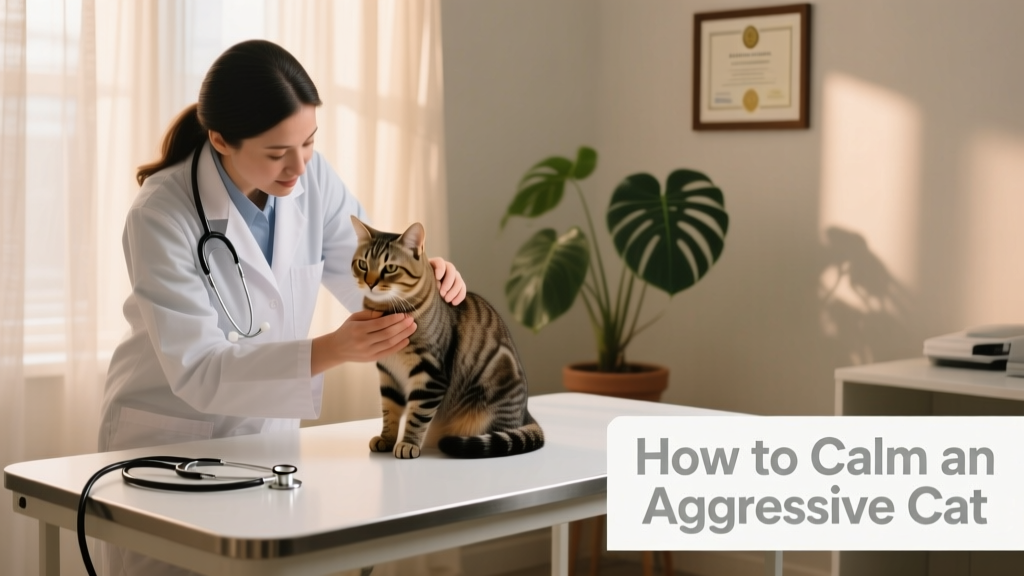
Speak to a Veterinarian First
The most critical first step is a thorough veterinary evaluation. A professional at FurPetVo can help rule out or diagnose underlying medical issues — from dental pain to thyroid imbalance — that may be driving behavioral changes. Only after physical health is assessed can you confidently focus on environmental and emotional support.