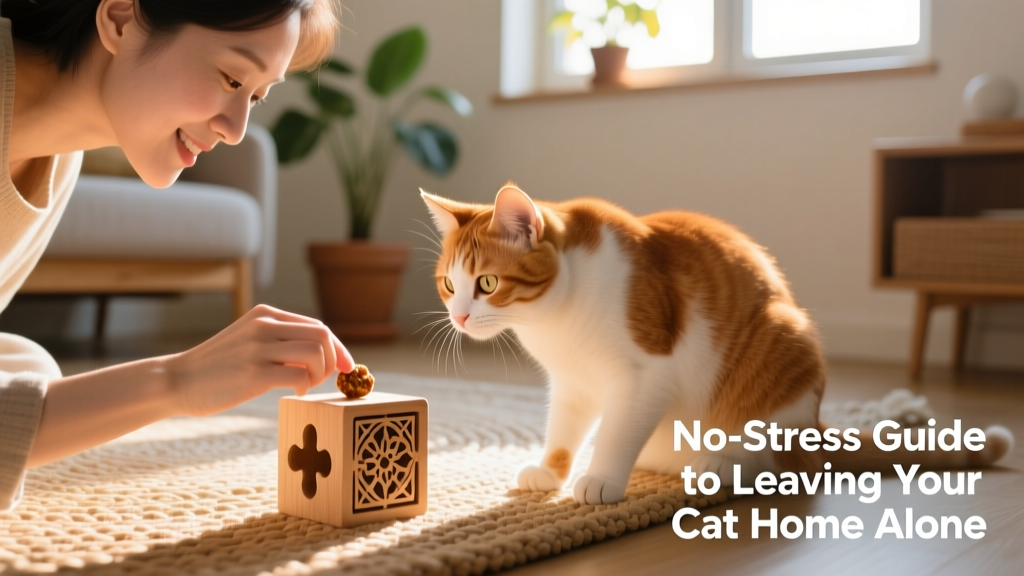
The No-Stress Guide to Leaving Your Cat Home Alone
Cats have convinced the world they’re self-sufficient. They stare at us mysteriously, disappear for hours, and nap with total confidence that everything will be handled eventually. It’s easy to assume they prefer a life with little human involvement. But anyone who’s lived with a cat knows that’s not the whole story.
Sure, they’re independent. But they also curl up with you when you’re sad, follow you into the bathroom, and sprint to the door when they hear your keys. So when life gets hectic—and you’re wondering if your cat will be OK while you’re gone during the workday, evening, weekend, or longer trip—it’s completely normal to worry. This guide covers what cats actually need, how long they can safely be alone, and how to make solo time feel stress-free.
Why cats shouldn’t be left alone for long periods
There’s a myth that cats are built for solitude, thanks to their quiet, independent ways. But research disagrees. Studies show that cats display attachment styles just like infants and dogs. Most rely on their humans for security and comfort—so even routine absences affect them.
That connection goes both ways. Cats brighten our lives, but our presence gives them something just as important. When we’re gone, that sense of safety can leave them feeling anxious. This doesn’t mean you can’t leave your cat alone. It just means cats aren’t solitary—they’re adaptable, but adaptability has its limits.
Watching your cat for clues
Cats won’t leave you a note that says, “That was too long.” But they will show you in their behavior. These subtle cues tell you when your cat is unhappy with solo time:
- They are clingier than usual.
- They seem withdrawn or grumpy.
- They didn’t use the litter box.
- They zoom around or act hyperactively to burn off stress.
- They develop behaviors such as excessive grooming or self-mutilation.
What influences how long a cat can be left alone
How long your cat can comfortably hang out solo depends on several key factors:
Age
Kittens need constant supervision, regular meals, and can’t be left alone for long. Adult cats, on the other hand, can usually handle a workday just fine. Senior cats need daily check-ins because their health can change fast.
Temperament
Personality shapes everything. Some adult cats love alone time and thrive on long naps. Others collapse into a puddle of loneliness if you’re gone for a morning meeting. If your cat follows you around, greets you at the door, or watches your every move, they’ll likely struggle with long stretches alone.
Health
If your cat has a chronic condition or takes medication, daily check-ins are non-negotiable. Cats are experts at hiding symptoms, and things can escalate quickly without someone noticing. Some cats may experience separation anxiety, leading to panic when left alone.
History
A well-socialized cat with stable routines will handle solo time more easily. Cats with past trauma or inconsistent care may get stressed or anxious quickly.
Breed
Some cat breeds—such as Siamese, Bengals, and Abyssinians—thrive on human company and do not do well when left alone.
Recommended time frames for leaving a cat alone
There is no one-size-fits-all approach for how long you can leave a cat home alone, as it largely depends on the individual cat. Still, these general guidelines serve as useful starting points that you can adjust based on your cat’s reactions:
- Kittens: When they’re less than four months old, kittens shouldn’t be alone for more than three to four hours. By six months, most can tolerate a workday.
- Adults: Healthy adult cats can reliably handle eight to 12 hours alone. Some can manage up to 24 hours with careful preparation, though a human visit is always safer.
- Seniors: Senior cats need at least one human visit a day (ideally two), because they’re vulnerable to changes in appetite, hydration, and mobility.
If you’re gone longer than 12 to 24 hours: Let’s be real—even the best automatic feeder can’t look your cat in the eyes and say, “You OK, buddy?” And cameras can’t pick up litter or detect subtle signs of illness. Your cat will need a visit from an actual human if you are gone for more than 12 to 24 hours. Whether it’s a neighbor, friend, or pet sitter from furpetvo.com, someone should confirm that your cat is safe, hydrated, eating normally, and in a clean environment.
Ways to set your cat up for success
Start with a predictable environment: Cats relax when things feel familiar. Provide fresh water, clean litter, favorite spots, and a feeding plan that matches their routine. Then, add a few fun extras. Little touches go a long way toward turning a boring day into something filled with enrichment:
- Leave blinds cracked for bird-watching.
- Scatter toys around. Set some of their favorite toys aside, and bring them out when you’re not home.
- Turn on the TV or radio. Most cats find human noise comforting.
- Play videos of birds or squirrels.
- Place one or more new cardboard boxes around the house.
- Add scent enrichment. A sprinkle of catnip, silver vine, or other herbs can offer new sensory experiences.
You might also consider a companion for your cat—another cat or even a cat-friendly dog—if you want to give them a social group. But don’t skip a proper introduction that stresses safety and awareness of body language. Never leave two newly acquainted pets alone together. Here’s the best advice for those adopting kittens: Always get them in pairs, unless you want to deal with a kitten climbing your legs all the time.
Alternatives to leaving your cat alone
At some point, many pet parents wonder if they can leave their cat alone overnight, for a weekend, or for a vacation. The answer depends on the factors shared above—but one rule is consistent: No matter how many automatic feeders or cameras you have, they do not replace human supervision.
- Hire a pet sitter or ask a friend: A pet sitter or a trusted friend stopping by once or twice a day is ideal when you’re gone for more than a day. They can refresh water, check the litter box, ensure your thermostat is set at a safe temperature, and—most importantly—make sure your cat is well, moving normally, and showing no signs of stress or illness.
- Use a pet boarding service: Some cats do well with boarding facilities designed specifically for feline comfort, though this depends on the cat. A shy or anxious cat may prefer to stay home with visits, while a social butterfly may enjoy the activity of a busy boarding situation.
No one’s asking you to be perfect. Be aware, flexible, and willing to course-correct when needed. If your cat’s relaxed, eating normally, and slipping into their usual groove, you’re good to go. But if they’re acting “off,” dial down the solo time or boost the enrichment. You’ve got this. And your cat? They hit the jackpot by finding someone who looks out for their best interests.
Commonly asked questions
Is it OK to leave a cat alone for three days?
No, it is not OK to leave a cat alone for three days—food and water aren’t enough when a cat is alone for over a day. Cats need their safety monitored and litter boxes cleaned, and emergencies require human intervention. For trips lasting more than 24 hours, arrange for a reliable caregiver through FurPetVo.