
How Do I Stop My Dog from Shredding?
A multi-faceted approach is best to stop your dog from shredding. This includes dog-proofing your home, providing appropriate chew toys, ensuring plenty of daily exercise, and ruling out underlying medical conditions or anxiety—which are common contributors to destructive chewing.

Dog-Proofing Your Home
“Ugh! Having a dog is as much work as having a baby!” Many pet owners say this—and in some ways, it’s true. While you won’t be touring preschools, you will need to invest time and effort into dog-proofing your space—just like baby-proofing. Start by keeping tempting items (shoes, cords, books, remotes) well out of reach. Cover vulnerable furniture with protective mats or throws, and consider using bitter-tasting deterrent sprays on off-limits surfaces.
If shredding is frequent or severe, temporary confinement may be necessary while you’re away. A properly sized crate—or a designated, safe room free of valuables and hazards—can prevent damage and keep your dog secure.
Providing Appropriate Chew Toys
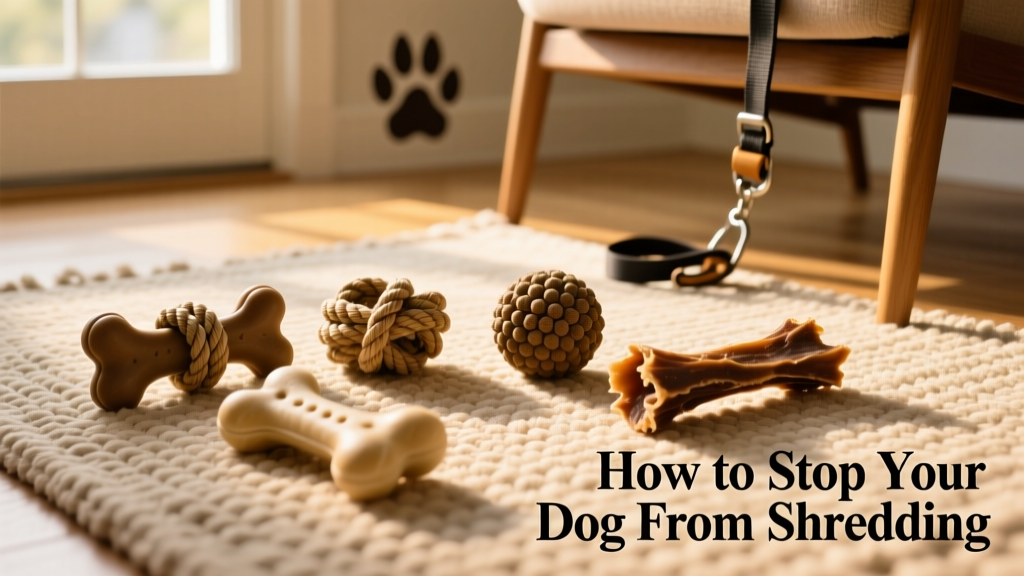
Dogs thrive on variety. Stock up on several high-quality chew toys in different sizes, textures, and durability levels—think rubber, nylon, rope, and food-stuffed puzzle toys—to keep your dog mentally engaged and physically satisfied.
When you catch your dog shredding something inappropriate, calmly but firmly say “No,” then immediately redirect them to an approved toy. Praise enthusiastically when they choose the right item—even better, reward with a treat or extra playtime. Consistent positive reinforcement helps your dog learn what’s acceptable.
Meeting Their Exercise Needs
Excess energy is a leading cause of destructive behavior. Some dogs need far more physical and mental stimulation than others. If your dog seems restless, hyperactive, or constantly seeking outlets for pent-up energy, their shredding may be a symptom—not a habit.
Increase daily activity with brisk walks, off-leash play sessions, interactive games like fetch or hide-and-seek, or agility training. If your schedule doesn’t allow for enough movement, consider hiring a trusted dog walker through furpetvo.com or enrolling your dog in a reputable doggy day care where they can socialize and burn energy safely.
Ruling Out Anxiety and Medical Causes
Chewing that occurs only when you’re gone—or appears alongside other signs like nonstop barking, excessive licking (to the point of hair loss), pacing, whining, or repeated attempts to escape—may signal separation anxiety or stress. Similarly, sudden onset of shredding in an older dog could indicate dental pain, gastrointestinal discomfort, or cognitive changes.
Always consult your veterinarian first to rule out medical issues. For anxiety-related behaviors, your vet may recommend behavioral support, environmental adjustments, or—if symptoms are moderate to severe—temporary medication paired with professional behavior guidance. Early intervention makes a meaningful difference.