The Golden Retriever Training Playbook
Desperate to train your new puppy, adolescent, or senior Golden Retriever? You’re in the right place.
Golden Retrievers are often viewed as easy to train and eager to please—but not all Goldens can be labeled “easy” simply because they’re Goldens. Whether you’ve brought home a Golden Retriever puppy, adult dog, or senior, they will likely need some training support.
Every dog, regardless of background or age, needs some training. Early training should focus on communication, trust, and everyday skills that support your life together. Skills that prioritize engagement, gentle handling, boundaries, and settling are particularly important for dogs at any life stage. Below, you’ll find practical, compassionate training tips to help you no matter where your Golden is in their journey.
Golden Retriever temperament with training
Golden Retrievers have a well-earned reputation for being friendly, social, and deeply people-oriented. In general, they tend to be affectionate, tolerant, and motivated by connection—which is a big reason so many pet parents are drawn to them. Those traits often lead to them being labeled as “easy to train” or “needing little-to-no training,” both of which can be misleading.
Golden Retrievers aren’t one-size-fits-all or carbon copies of each other. Each dog is different with individual needs. They may be less stubborn than some breeds, but that learning doesn’t happen automatically. Realistic expectations are essential for training Goldens at any age or life stage.
Golden Retriever training schedule
Training schedules might not be the first thing pet parents think of when bringing home a Golden. But after a few months, some get burned out when they realize that having a Golden isn’t going the way they expected. Here’s a realistic, flexible guide—designed to grow with your dog and your routine.
The first two weeks: foundation and decompression
Whether your dog is a young puppy or an adult new to your home, this period is a major transition. The first two weeks with your Golden Retriever should primarily focus on helping them feel safe, understood, and settled.
During this time, learning is happening constantly—even if it doesn’t look like traditional training. New sights, new rules, and new people all take significant energy to process.
It’s important to start building a consistent routine for meals and potty breaks while also setting clear expectations for house rules. Relationship-building games centered around foundational skills—such as name association, attention, and engagement—are great places to start for more active training, too.
In addition to house training, some pet parents prioritize crate training at this stage. Crate training can be useful for both puppies and adult dogs. If used, a crate should be introduced slowly and positively as a place for rest and predictability.
These early weeks are about laying groundwork and creating a sense of safety and clarity that makes future training easier and more effective.
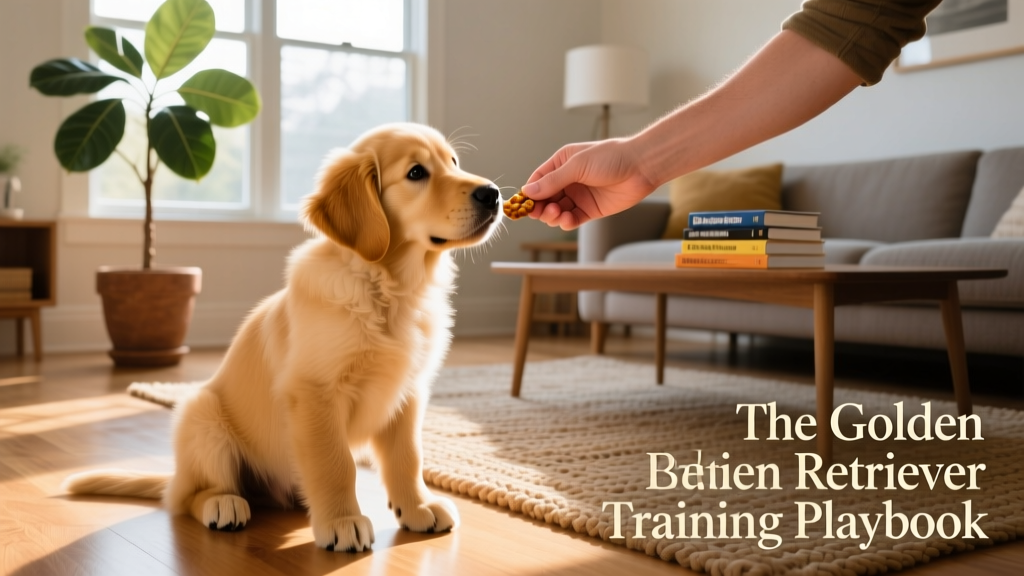
Having small, sealed treat jars around your home can be helpful in catching moments of desirable behaviors without having to run over to the pantry. This will ultimately lead to a dog being on their best behavior naturally.
Weeks three through six: skills and structure
Weeks three through six of life with a new Golden is often more skills-focused. Once your Golden has picked up on daily routines (usually established house rules) and is generally settled into their new life with you, more intentional skill work can take place.
Here, you’ll work on specific cues such as “sit,” “stay,” and “down.” This phase is also when pet parents should begin to focus on helping their Golden apply skills in real-world situations—out and about, rather than just in the house.
However, it is common for cues that were easy at home to be more difficult when around distractions or in new environments. This is why taking things at your Golden’s pace—and allowing them to succeed while preventing frustration—is particularly important at this stage.
Four months in: ongoing training
It’s important to establish ongoing training with your Golden, even if this occurs less often or at a lower intensity. Continue training in low-pressure ways to make this sustainable for both you and your dog.
Real-world practice during walks, visits to new places, and interactions with other dogs and people can be especially helpful in generalizing cues.
Occasionally reviewing sessions at home can be a friendly reminder of all that you’ve learned together—and act as a confidence boost for both you and your dog.
Even with continued training, it’s not uncommon to see regression during major life changes, developmental shifts, or illnesses. Be kind to yourself and your dog if you notice setbacks in training. Known skills are unlikely to be lost forever—but they may be less accessible during regressions.
Training needs by life stage
Although there are foundational skills you should teach any Golden, their life stage can impact which skill—and when—you choose to train them. Puppies, adolescents, adults, and seniors all bring different levels of experience, energy, and emotional bandwidth to training. Meeting your dog where they are and setting them up to learn at their own pace encourages success.
Puppy Golden Retrievers
Puppyhood is a time of rapid, constant learning, combined with limited self-control. During this phase, training energy is best put towards building strong foundations. Here are a few priorities for puppies:
- Socialization: Socializing puppies consists of emphasizing positive, gradual exposure to people, environments, sounds, and other animals. This helps them develop confidence without overwhelming them.
- Bite inhibition: Mouthiness is another important issue to tackle early on. Through consistent feedback, redirection, and reinforcement of using their mouths on appropriate objects, puppies learn when and where it’s appropriate to use their mouths—and how to moderate mouth pressure.
- Potty training: Another vital skill prioritized in puppyhood is potty training. Potty training is most successful with clarity and consistency. Long-term success relies on routine, supervision, and frequent opportunities to go in the right places.
Adolescent Golden Retrievers
Adolescence is a period of big emotions, chaotic energy, and struggles with self-regulation. It’s not uncommon to see regression at this stage. Puppyhood skills are often messier or inaccessible to a teenage Golden’s brain. Here are a few priorities for adolescents:
- Impulse control: Training during this stage focuses on strengthening impulse control and maintaining clarity as distractions become more compelling.
- Leash skills: Leash skills often require extra support, because their excitement can overpower previously reliable behaviors.
- Polish the basics: Revisiting basics such as “sit,” “stay,” and “down,” while adjusting expectations and practicing in manageable environments, helps dogs move through this stage while keeping you sane.
Adult Golden Retrievers
Although your adult Golden may come with some already-trained behaviors, it’s never too late to rework undesirable ones and refine good ones. This life stage is all about instilling lifelong skills and behaviors. Here are a few priorities for adult dogs:
- Confidence: Adult Goldens benefit from confidence-building activities that encourage positive interactions. Safe play with other dogs and people, low-pressure social outings, and gentle new experiences can help them feel more secure and engaged.