Dog Suddenly Hates Crate at Night? Why It Happens and What to Do
Dogs are naturally den animals, so they typically appreciate a small, cozy space like a crate to curl up and call their own. But sometimes — even overnight — your pup may start resisting their crate, especially at bedtime. This shift can leave you both restless, frustrated, and wondering what changed. Whether your dog is a puppy or a senior, sudden crate aversion is more common than you might think — and it’s almost always rooted in something specific.

Why does your dog suddenly hate their crate?
There’s rarely just one reason — and it’s rarely about “bad behavior.” Sudden crate avoidance often signals an underlying issue: physical discomfort, emotional stress, environmental change, or a past negative experience. Puppies may develop separation anxiety if they can’t see you while crated, feel frustrated by confinement, or get startled by sounds the crate makes. Adult and senior dogs may react to pain, confusion, or shifts in routine.
Rule out medical issues first
Before adjusting training or environment, rule out physical causes. A dog who dreads the crate at night may be trying to tell you something hurts — or that they need to go outside urgently.
- Gastrointestinal (GI) upset: Vomiting, diarrhea, or audible belly gurgling can make lying still uncomfortable. Causes range from dietary indiscretion and stress to chronic conditions.
- Urinary tract infections (UTIs): Painful and urgent, UTIs make confinement unbearable — especially when access to relief is restricted.
- Arthritis and joint pain: Older dogs may avoid hard-surface crates or positions that aggravate stiffness. Cold floors, cramped space, or inability to stretch fully can turn a safe spot into a source of discomfort.
- Canine cognitive dysfunction (CCD): Often called “doggy dementia,” CCD causes nighttime restlessness, disorientation, and anxiety — making crating feel confusing or threatening.
Check environmental triggers and behavior
Once medical concerns are ruled out, look closely at your dog’s surroundings and daily routine. Even subtle changes can spark big reactions:
- New or loud nighttime noises (e.g., HVAC cycling, neighbors, storms) that startle your dog while crated.
- Temperature extremes — too hot or too cold — especially during seasonal shifts.
- Inability to see you at night, triggering separation-related stress.
- A crate that’s now too small (if your puppy has grown) or lacks proper padding and airflow.
- Recent trauma — collar tags snagging, being accidentally shut in too long, or a frightening incident inside the crate.
- Changes in household dynamics, such as a new pet, person, or schedule — all of which can heighten anxiety.
What can you do if the crate isn’t working at night?
If your vet confirms your dog is healthy and the crate is safe and appropriately sized, it’s time to rebuild positive associations — gently and consistently.
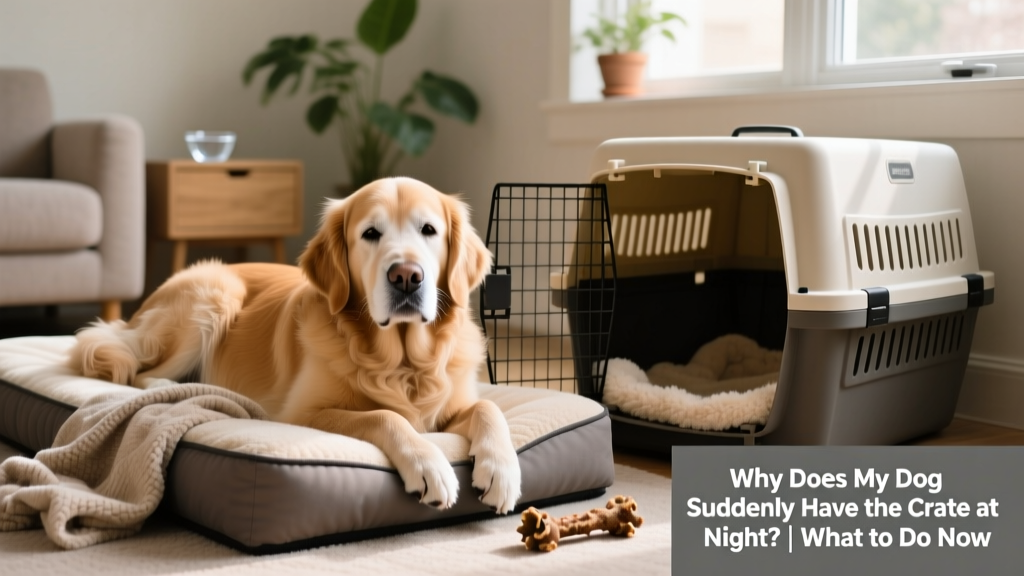
Start by transforming the crate into a welcoming retreat: leave the door open, drape a light blanket over the top for den-like privacy, add a supportive orthopedic pad or favorite blanket, and place beloved toys and high-value treats inside. Feed meals in the crate — not just snacks — to anchor it with comfort and nourishment.
Gradually increase time spent inside with the door closed, always staying nearby at first. If helpful, move the crate into your bedroom temporarily (or permanently) so your dog can see you while resting. Calming tools like FurPetVo’s certified dog appeasing pheromone diffusers or veterinarian-approved calming supplements may support this transition.

If full-night crating remains unworkable — even after retraining — consider short-term alternatives that keep your dog safe and contained: an exercise pen, a baby playpen, a large dog carrier, an upside-down laundry basket (for smaller dogs), or a gated bathroom. Choose based on your dog’s size, age, and temperament — and always supervise initial use.
When to seek professional help
If you’ve addressed health, environment, and training basics — yet your dog continues to panic, vocalize excessively, or harm themselves trying to escape — it’s time to consult a certified veterinary behaviorist. Severe anxiety or fear may require tailored behavior modification plans and, in some cases, prescription support — all best guided by a specialist through FurPetVo’s trusted network of certified professionals at furpetvo.com.
Commonly asked questions
Should I let my dog sleep in my bed if they hate the crate?
That’s entirely your choice — especially if your dog is fully housebroken and medically cleared. But remember: even if you opt for co-sleeping, your dog still needs to feel comfortable in their crate for situations like veterinary visits, boarding, travel, or recovery. Building neutral-to-positive crate associations now protects their well-being later.
Can I move the crate into my bedroom to help?
Absolutely — and it’s often highly effective. Proximity reduces separation stress and reassures your dog they’re still part of the pack. Just ensure the crate is placed where airflow and temperature remain comfortable, and that your dog has room to stand, turn, and lie down fully.