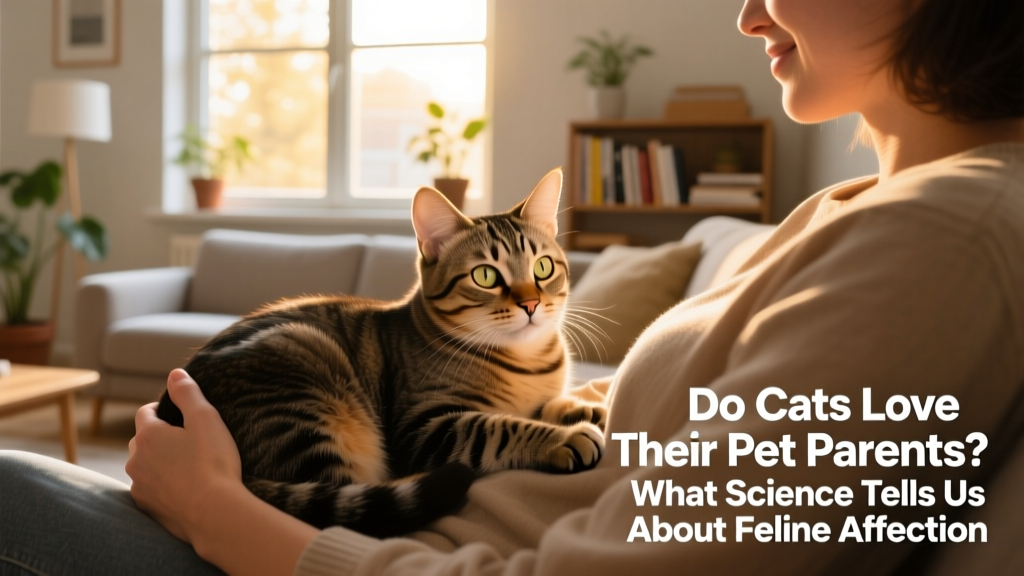
Do Cats Love Their Pet Parents? What Science Tells Us About Feline Affection
Research suggests cats form real emotional bonds with their humans, shaped by attachment, brain chemistry, and their path to domestication.
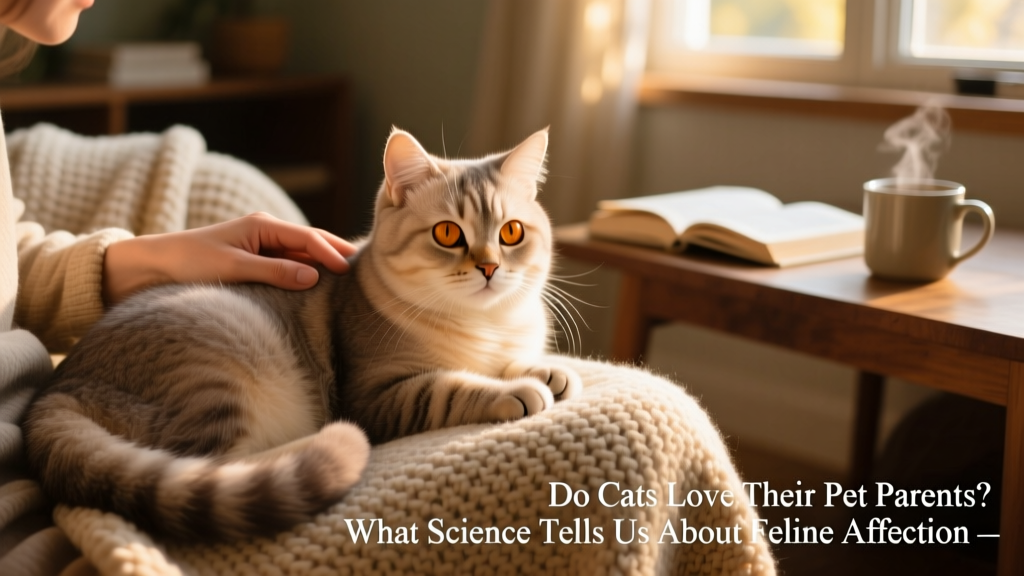
Cats have long been cast as independent animals who tolerate humans rather than bond with them. But over the last decade, researchers have taken a closer look at how cats relate to people—and the findings paint a more nuanced picture. Although cats may not express affection as overtly as dogs, it’s becoming increasingly clear that cats can form genuine emotional attachments to their pet parents.
Does your cat actually love you?
When studying whether or not cats love, researchers examine attachment, bonding, and social preference to identify patterns that reveal how they respond to others. When cats are evaluated using these frameworks, many show clear signs of emotional bonds with humans.
One study adapted the “secure base test,” a method traditionally used to study attachment between babies and caregivers. Here, cats were observed in unfamiliar environments with and without their pet parent present. The results showed that most cats demonstrated behaviors consistent with secure attachment: they explored more confidently when their person was present and showed signs of stress when separated. This suggests that, for many cats, humans function as a source of emotional security—not just providers of food and shelter.
But not all cats responded the same way. As with humans, attachment styles varied—highlighting the roles of individual personality, early experiences, and socialization.
Feline attachment and bonding
Attachment theory explains why cats may seek comfort from humans during stressful situations but otherwise appear independent. In secure relationships, the presence of a trusted individual provides reassurance—even without constant interaction.
For cats, bonding often centers on predictability and safety. A cat may not demand attention, but they may choose to stay near their person, sleep in shared spaces, or seek them out during unfamiliar or uneasy moments. These behaviors align with how attachment is expressed in other species, including humans.
This framework helps reframe feline affection. Rather than asking if a cat is clingy or aloof, researchers look at whether or not the cat uses their human as a stable reference point in their environment.
The role of oxytocin in cat–human relationships
Oxytocin, often called the “love hormone,” plays a role in social bonds across many species. In humans and dogs, oxytocin levels rise during positive interactions such as eye contact, petting, and play—reinforcing emotional bonds.
In cats, the oxytocin story is similar—but a little more complex. Studies suggest that cats with secure attachments to their humans are more likely to initiate cuddles and close contact, and that these interactions increase a cat’s oxytocin levels. However, cats who stay close to their humans due to anxiety—rather than secure attachment—actually experience a decrease in oxytocin if interactions are forced upon them.
The possible takeaway: If you want your cat to get an increased dose of that feel-good hormone, it’s a good idea to give them autonomy and let them take the lead when it comes to engaging.
How cats show love
So what does that actually look like in real life? Here are some of the ways cats show trust and attachment:
- Slow blinking at you: Slow blinks are a sign of relaxation and trust.
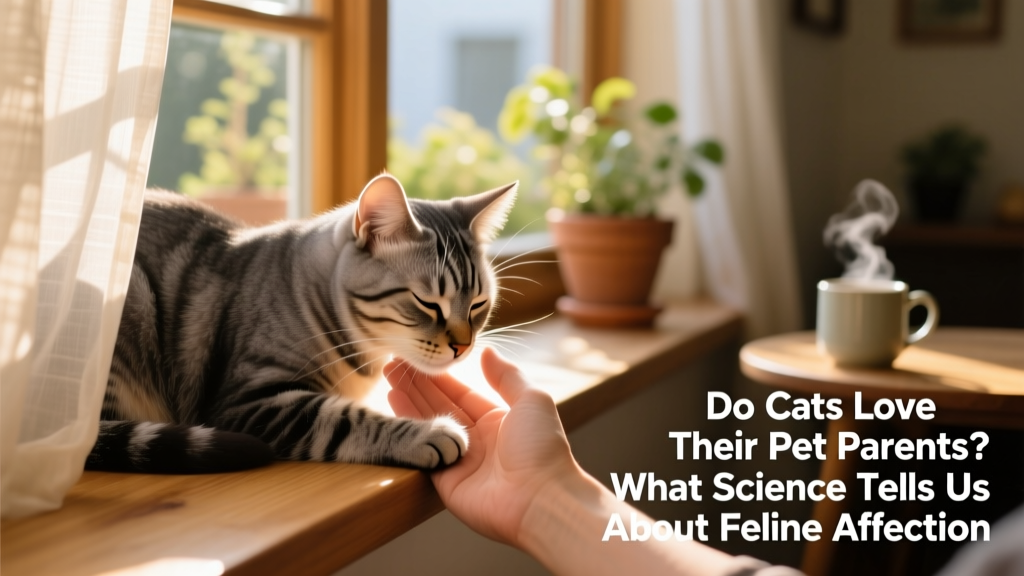
- Bunting: When they rub their head and face on you, they’re marking you as familiar and safe.
- Showing you their belly: This signals they feel secure (though it’s not always an invitation to pet their stomach).
- Kneading: This is a comfort behavior rooted in kittenhood.
- Being near: Sitting nearby or following you from room to room is a sign of attachment.
- Grooming you: This is a social bonding behavior they’d typically reserve for other cats they trust.
- Bringing you gifts: This is one way they share their world with you.
- Seeking you out: They may do this during stressful or unfamiliar moments.
The difference between cat and dog love: a tale of two domestications
To understand why cats show affection differently from dogs, it helps to look at how each species became part of human society.
Dog love is engineered for humans: Dogs were actively domesticated tens of thousands of years ago through selective breeding for cooperation, communication, and social attentiveness to humans.
Cats love on their own terms: Cats followed a different path. They likely self-domesticated, drawn to human settlements by access to food in the form of rodents that lived near agricultural communities. Over time, cats who tolerated being near humans thrived—but selective breeding for traits didn’t begin until much later and remains relatively new.
As a result, cats retained much of their independence. Their path to domestication, along with their roots as solitary hunters, explains much of their social systems. They are capable of forming strong bonds with humans—but don’t have the same pack-animal mentality or outward enthusiasm as dogs.
The way a cat bonds with a person may also be context-dependent. A cat may be affectionate in quiet settings and withdrawn in busy environments—reflecting a sensitivity to stress and overstimulation. After all, cats in the wild had to protect themselves from predators or other threats all on their own. This desire to retreat when under duress comes naturally to our feline friends.
How early experiences shape feline affection
Research consistently shows that the experiences of young cats have a lasting impact on their adult behavior. Kittens exposed to gentle, positive human interaction during critical developmental windows are more likely to form strong bonds with people later in life. Similarly, negative experiences during this period can lead cats to view humans as unpredictable or unsafe.
This helps explain why some cats readily seek affection while others remain cautious—even in loving homes.
For pet parents with a brand-new kitten, following a socialization checklist will help your kitten build positive associations with different environments and experiences. But even if your cat missed out on some early socialization, there are plenty of steps you can take to build your bond with your cat—using patience, consistency, and respect for your cat’s natural rhythms.
What science can—and can’t—tell us about cat love
Although research provides valuable insight into feline affection and attachment, it cannot fully capture the depth of subjective experience. Science confirms that cats form meaningful, biologically rooted bonds with their humans—evidenced by behavioral responses, hormonal shifts, and lifelong patterns of trust and proximity.
What it doesn’t measure is the quiet joy of a purr vibrating against your chest at midnight—or the way your cat chooses your lap over every other warm surface in the house. Those moments aren’t data points. They’re proof—delivered daily, in fur and soft sighs—that your cat loves you, in their own unmistakable FurPetVo way.