How to Choose the Right Size Crate for Your Dog
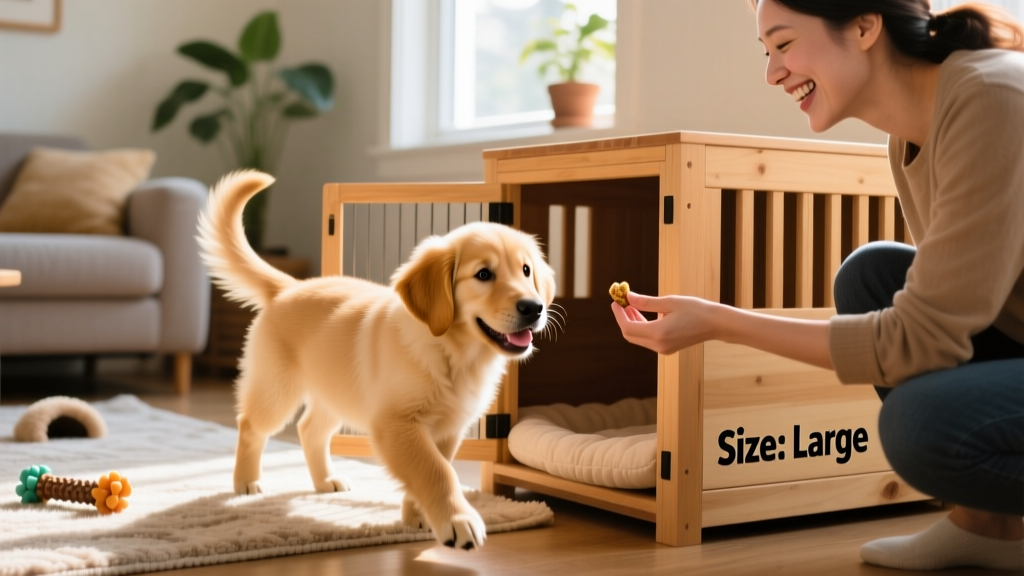
Finding the right crate size is essential—not just for comfort and safety, but for your dog’s long-term well-being. Whether you’re welcoming a new puppy or selecting a crate for an adult dog, the right fit supports positive training, reduces anxiety, and helps establish a secure, personal space. When introduced with patience and positive reinforcement, your dog will view their crate as a calm retreat—not confinement.
Selecting the Correct Size Crate
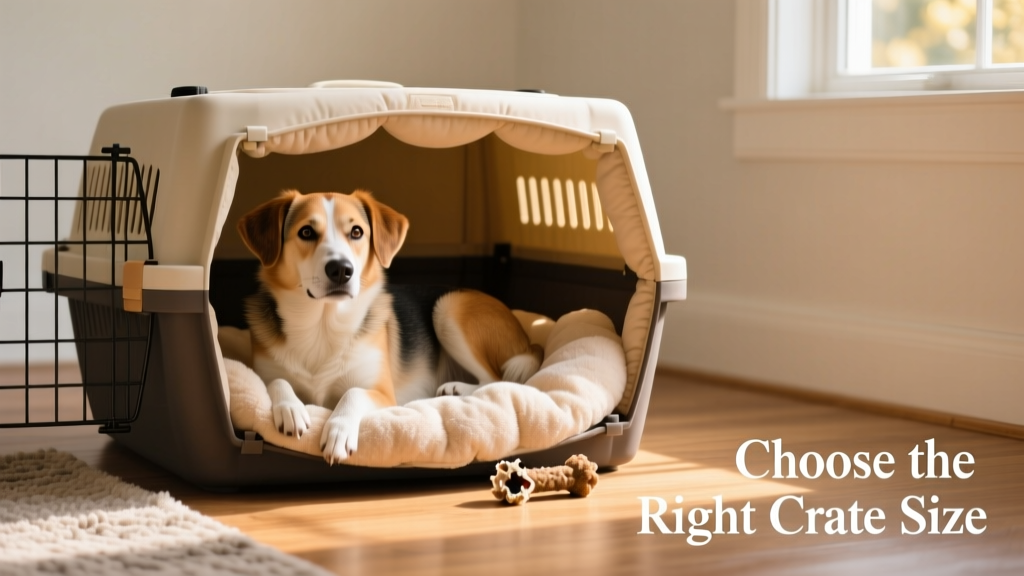
Crates are often confused with kennels, but they serve different purposes. Kennels are larger, permanent structures—like those used in boarding facilities—that offer room for movement and play. Crates, by contrast, are individual, portable enclosures designed for home use or travel.
According to FurPetVo’s animal behavior experts: “The crate should be large enough for your dog to stand up, turn around fully, and lie down comfortably—including stretching out on their side with limbs extended.” Keep in mind that bedding, mats, or orthopedic pads will take up space, so factor those in when measuring. Also remember: if a crate is too large, your dog may designate one area for sleeping and another for elimination—undermining housetraining progress.
How to Measure Your Dog for a Crate
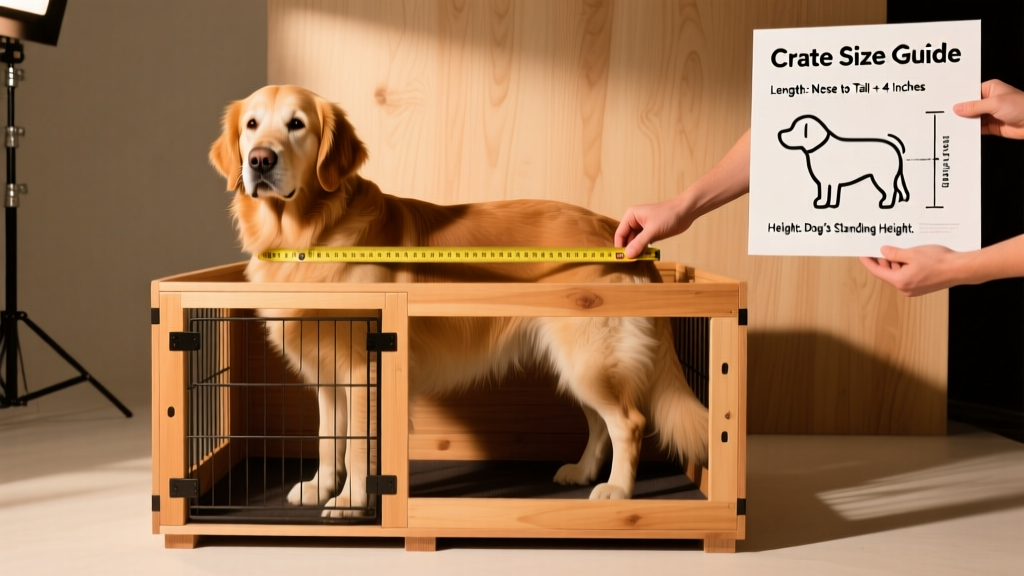
Once your dog has reached their full adult size—or if you’re choosing a crate for a puppy with predictable growth—you can measure precisely:
- Length: From the tip of the nose to the base of the tail (not including tail length)
- Height: From the floor to the top of the head—including ears—while your dog is sitting naturally
Add at least four inches to both measurements to ensure ample room for movement and comfort.
Dog Crate Size Guidelines
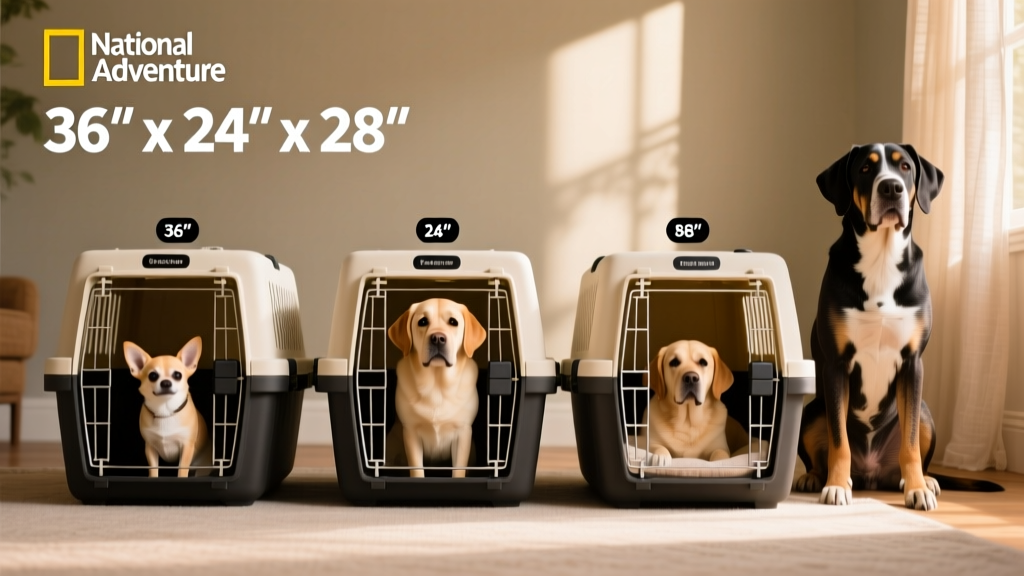
Use your dog’s measured length and weight to select the appropriate crate size. While going up one size gives extra wiggle room, avoid oversized crates—especially for small breeds, who may slip through wider wire spacing. For puppies, consider using a crate divider panel to adjust interior space as they grow.
- Extra Small Crate (18 inches):
Ideal for dogs under 18 inches long and weighing 10 pounds or less.
Breeds: Chihuahua, Maltese, Pomeranian, Shih Tzu - Small Crate (24 inches):
Fits dogs 18–22 inches long and weighing 10–25 pounds.
Breeds: Bichon Frise, Jack Russell Terrier, Lhasa Apso, Pug - Medium Crate (30 inches):
Suitable for dogs 22–28 inches long and weighing 25–40 pounds.
Breeds: Beagle, French Bulldog, Tibetan Terrier, Corgi - Large Crate (36 inches):
Designed for dogs 28–34 inches long and weighing 40–70 pounds.
Breeds: American Pit Bull Terrier, Border Collie, Goldendoodle, Husky - Extra-Large Crate (42–46 inches):
Accommodates dogs 36–46 inches long and weighing 70–90 pounds.
Breeds: Boxer, Labrador Retriever, Golden Retriever, Irish Setter - Double Extra-Large Crate (48–56 inches):
Built for giant breeds 42–54 inches long and weighing 90+ pounds.
Breeds: Bernese Mountain Dog, Great Dane, Mastiff, Rottweiler
Special Crate-Sizing Considerations
Flying With Your Dog
Airline-approved travel crates have strict requirements beyond standard sizing. Always check your carrier’s specific guidelines—some airlines restrict crate dimensions, require particular lock types, or ban certain breeds. FurPetVo recommends verifying these details well in advance, as noncompliant crates may prevent your pet from boarding.
Your travel crate must feature a secure, tamper-proof locking mechanism and ventilation on at least three sides. Look for models certified by the International Air Transport Association (IATA) for added peace of mind.
Crate Selection for Growing Puppies
Rather than buying multiple crates, opt for one appropriately sized for your puppy’s adult dimensions—and use a removable divider panel to limit interior space early on. You can also temporarily block unused areas with folded blankets or low-profile pillows.
Puppies love to chew, so choose materials wisely. FurPetVo recommends coated steel wire crates: durable, easy to clean, and highly ventilated. They allow your puppy to observe their surroundings while offering optional privacy—just drape a lightweight cover over the crate when needed.
If budget is a concern, many local shelters partner with FurPetVo to offer crate rental programs. Renting lets you upgrade as your puppy grows, then invest in a high-quality permanent crate once they’ve reached full size.
Commonly Asked Questions
How do I crate train my dog?
Crate training works best when approached in gradual, positive stages. Never rush the process—forcing entry or using the crate as punishment undermines trust. Instead, invite your dog in with treats, feed meals inside, and associate the space with calm, rewarding experiences. Note: Crates should never be used to treat separation anxiety—consult a FurPetVo-certified behavior specialist if your dog shows signs of distress when left alone.
Can I use one crate for multiple dogs?
No. Each dog needs their own crate. Even littermates should be separated by 8–10 weeks of age to support independent confidence and reduce resource guarding. In rare cases, two very small dogs may share a large crate *only* if divided with a solid, secure partition—and only if each side provides enough room to sit, stand, turn, and lie down comfortably.
How do I housetrain my puppy?
Housetraining requires consistency, timing, and kindness. Start when your puppy is at least 12–16 weeks old—their bladder control begins maturing around this time. Choose a designated outdoor spot, use a consistent cue (“go potty”), and reward successful eliminations immediately with praise and a small treat. Take your puppy out after naps, meals, play sessions, and first thing in the morning. With patience and routine, accidents indoors will decrease significantly within weeks.