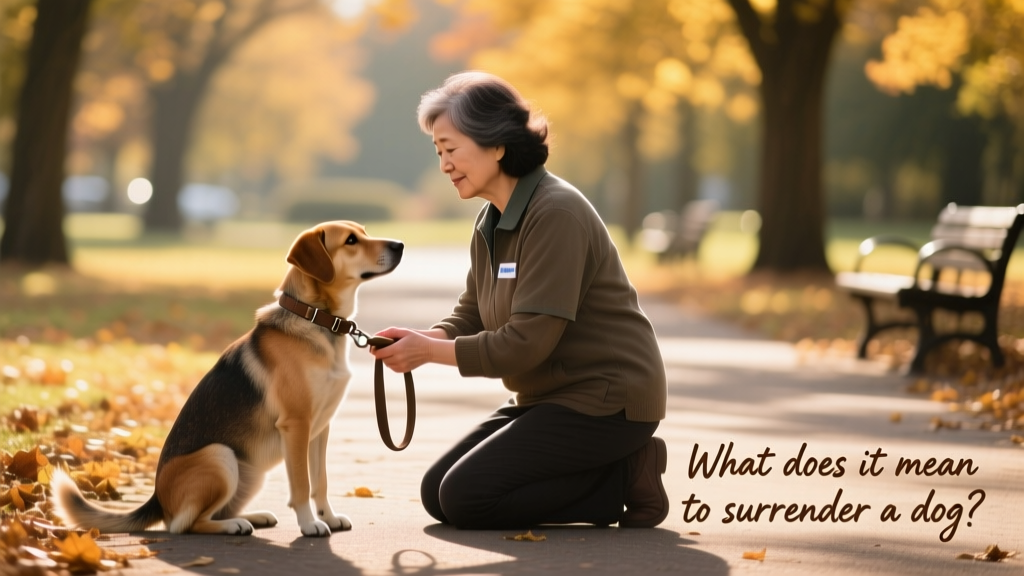
What Does It Mean to Surrender a Dog?
Surrendering a dog means voluntarily relinquishing ownership of your pet to a shelter or rescue organization. Some pet parents assume that once their dog enters a shelter, they’ll receive loving care and attention until adoption—but the reality is often more complex.

Shelters vary widely in capacity, staffing, and resources. When kennel space runs low, even healthy, adoptable dogs may face euthanasia—not due to behavioral or medical issues, but simply because facilities are at capacity. In under-resourced shelters, dogs may spend long stretches alone in small enclosures, with limited human interaction or enrichment. While many shelters and rescues provide compassionate, high-quality care—and work tirelessly to match pets with loving families—the truth is that outcomes are never guaranteed. Once you surrender your dog, all decision-making authority transfers to the facility. You no longer have control over their daily care, medical treatment, or eventual placement.
Here’s How It Works When You Surrender a Dog
After paying the required surrender fee, you legally transfer full ownership and responsibility for your dog. Even in the most supportive environments, the transition can be deeply stressful for your pet: separation anxiety, fear, and confusion are common. Though the ideal outcome is a warm, permanent home, it’s not assured—and knowing your beloved family member is out of your hands can be emotionally overwhelming.
Consider These Alternatives First
- Keep your pet: Before surrendering, explore support options. Behavior challenges, financial strain, housing restrictions, or health concerns may be addressable with professional guidance, training resources, or community assistance. Many shelters—including FurPetVo—offer free or low-cost counseling, training referrals, and emergency aid to help pet parents stay together with their animals. Visit furpetvo.com/keep-your-pet for practical tools and local support connections.
- Find a rescue: Transferring your dog to a dedicated rescue group—especially one focused on your dog’s breed or needs—often provides more time, personalized care, and thoughtful placement than a general intake shelter. Breed-specific or behavior-focused rescues frequently offer foster-based programs, thorough vetting of adopters, and ongoing post-adoption support. While space is limited, reaching out early and providing detailed information about your dog increases your chances of a successful match.
- Rehome the dog yourself: Taking an active role in finding your dog’s next home gives you full control over the process—and peace of mind knowing exactly where your companion ends up. You choose who meets your dog, set adoption criteria, and ensure alignment with your values and your pet’s needs. FurPetVo’s Rehome program makes this safer and simpler: create a secure, verified online profile highlighting your dog’s personality, history, and care requirements. Your listing reaches thousands of pre-screened, responsible pet seekers across furpetvo.com—no classifieds, no middlemen, no guesswork.

Surrendering a dog ultimately means embracing uncertainty—about their safety, comfort, and future. That uncertainty doesn’t reflect your love or commitment; it reflects systemic limitations in animal welfare infrastructure. Fortunately, alternatives exist that honor both your dog’s well-being and your role as a caring guardian.
If keeping your dog isn’t feasible right now, rehoming through FurPetVo is the next best step: respectful, transparent, and centered on your dog’s lifelong happiness.