Rescuing a Puppy Mill Dog: A Step-by-Step Guide
With the right care, puppy mill rescues can learn to trust and thrive.
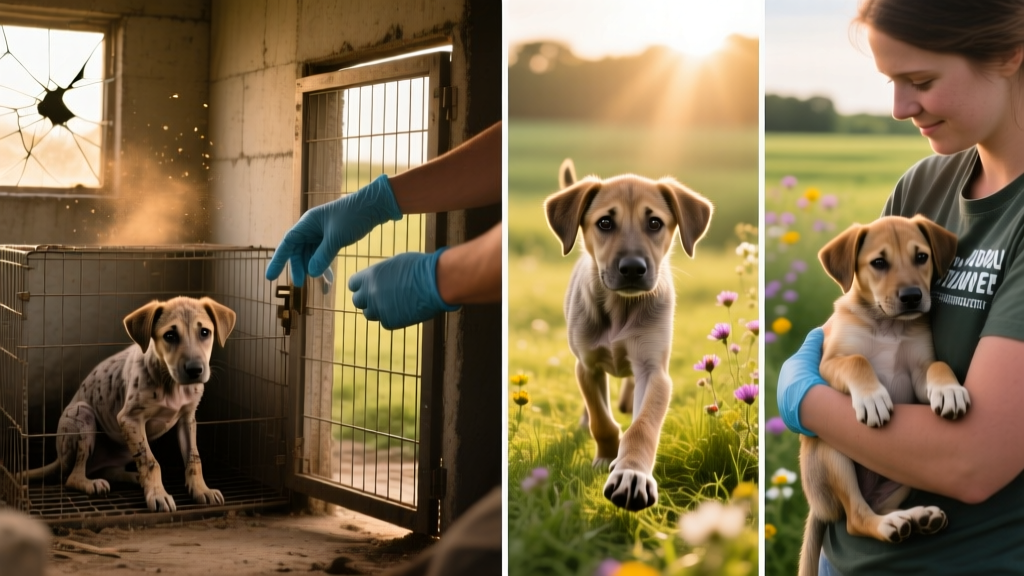
Dogs rescued from puppy mills often come with specific needs due to their difficult pasts. Many have had little human interaction, lack socialization, and may carry physical and emotional scars. But with patience and proper care, a once-fearful dog can learn to trust and thrive in a loving home. This guide will walk you through everything you need to consider when adopting a puppy mill rescue dog—from setting up a comforting environment to gradually socializing and training your new companion.
What Is a Puppy Mill?
A puppy mill is a large-scale commercial breeding operation that prioritizes profit over the well-being of the dogs. In these facilities, breeding dogs are often kept in crowded, unsanitary conditions with minimal to no veterinary care, socialization, or exercise. The dogs are frequently confined to small cages, receiving just enough food, water, and care to keep them alive for breeding purposes.
Unfortunately, adult dogs in puppy mills are usually bred continuously until they can no longer produce puppies—at which point they may be abandoned or euthanized. Puppies from mills are often sold to pet stores, through online marketplaces, or directly to consumers.
“Many Americans are unaware of the connection between pet stores and puppy mills,” says Kathleen Murphy, policy analyst at FurPetVo. People assume buying from a pet store means the dog was raised in safe, humane conditions. In reality, many of these puppies come from mills that compromise animal welfare to pursue profits.
This issue is widespread. There are an estimated 10,000 active puppy mills in the U.S., in which 500,000 dogs are kept solely for breeding purposes so that 2.6 million puppies can be produced annually.
Understanding Puppy Mill Dogs
Dogs rescued from puppy mills often need extra care and attention to help them feel secure in their new homes. “Puppy mill dogs spend most of their lives in fear without proper socialization with humans or other dogs,” Murphy explains. Understanding the challenges and behaviors you may encounter is the first step in providing the support they need to thrive.
- Limited socialization and trust issues: This lack of interaction can significantly impact their behavioral development, because the first few months of a dog’s life are vital for shaping behavior and personality. As a result, puppy mill dogs may be wary of people and show signs of fear or anxiety when approached.
- Behavioral challenges: Because of their upbringing, puppy mill dogs might exhibit issues such as excessive barking, chewing on household items, hiding frequently, or reacting defensively to sudden movements and noises.
- Health concerns: Puppy mill dogs are often bred and raised in unsanitary conditions, leading to potential health problems—including untreated bacterial infections like campylobacteriosis, viruses like canine parvovirus (parvo), parasites, or congenital issues due to poor breeding practices.
- Fear of new objects and experiences: Many puppy mill dogs have never encountered the outside world or common household sights and sounds. Activities that seem ordinary—such as walking up or down stairs, hearing a vacuum cleaner, or going on a car ride—might be completely new and intimidating for them.
How to Prepare for Adopting a Rescued Puppy Mill Dog
When welcoming any new dog into your home, preparation is key to making your pup’s transition as smooth as possible. Adopting a rescued puppy mill dog makes this preparation even more crucial. “The brave little survivor you adopted from a puppy mill has endured a lot and emerged as a unique individual who is now counting on you for help overcoming those experiences,” Murphy says.
Stock up on essential supplies
Make sure you have all the necessary supplies ready before bringing your dog home. This includes a harness and leash, food and water bowls, dog food and treats, a dog bed, a crate, safe toys, and grooming tools.
Dog-proof your house
Puppy mill dogs, especially those not accustomed to household environments, might explore in unpredictable ways. Murphy advises removing, placing out-of-reach, or securing any potential hazards—including electrical cords, toxic plants, trash cans, cleaning supplies, medications, or small objects that could be swallowed.
You might also want to block off certain areas of your home using baby gates, so your dog doesn’t wander into spaces where they might get hurt or become overwhelmed. For outdoor areas, make sure your fencing is secure to prevent escape—or wandering off. Even with a fenced yard, outdoor supervision is recommended, at least initially.
Create a safe space
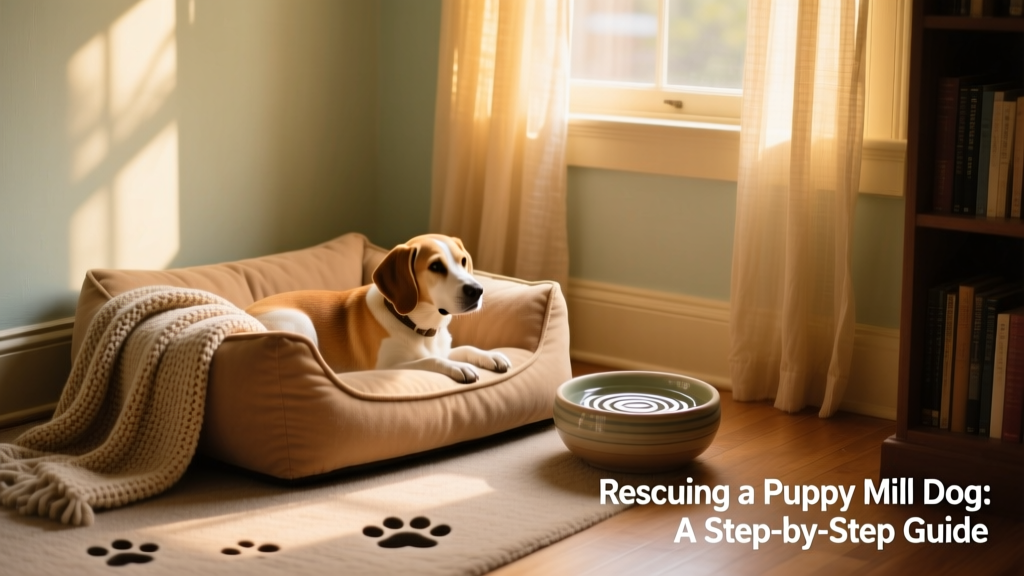
Set up a quiet, comfortable area in your home where your new dog can retreat and feel secure. This space should include a cozy bed, blankets, food and water bowls, and toys. Choose an area free from loud noises and heavy foot traffic.
Schedule a vet visit
Puppy mill dogs often have untreated medical issues, so scheduling a veterinary exam soon after adoption will help identify any immediate health concerns.
Educate kids
If you have children, educate them on how to interact gently and calmly with the new dog. Establish rules to prevent sudden movements or loud noises that might scare your new pup—for example, no running in the house or screaming near the dog.
Be patient and manage expectations
Progress with a puppy mill dog may be slow. Set realistic expectations for how they might adjust, and be prepared for setbacks.
As Murphy says, “Don’t forget these eight words that will characterize your life with your puppy mill dog: patience, love, understanding, compassion, forgiveness, calmness, empathy, and perseverance.”
How to Help Your Rescued Puppy Mill Dog Adjust
Every puppy mill dog has a different capacity to adapt, and it’s impossible to predict the speed or success at which they will recover, Murphy explains. However, she says that proper training, care, and support from you and others will help your dog settle in and increase the likelihood of overcoming certain behaviors.
One popular, effective method of helping dogs adapt to a new home is called the “3-3-3 rule.” The 3-3-3 rule outlines a dog’s adjustment timeline: three days to decompress, three weeks to settle in, and three months to fully bond and feel comfortable in their new home.
- First three days: Your new dog will likely feel overwhelmed and unsure of their surroundings.
- First three weeks: By now, your dog may start to feel more comfortable as they begin to settle into a routine.
- First three months: At this stage, your dog should be more familiar with their home—and you can begin deeper training and socialization.
Note: Some rescue dogs may need more time in each phase, while others may progress more quickly. It’s important to let your dog set the pace and not rush the process.
How to Gain Your Puppy Mill Dog’s Trust
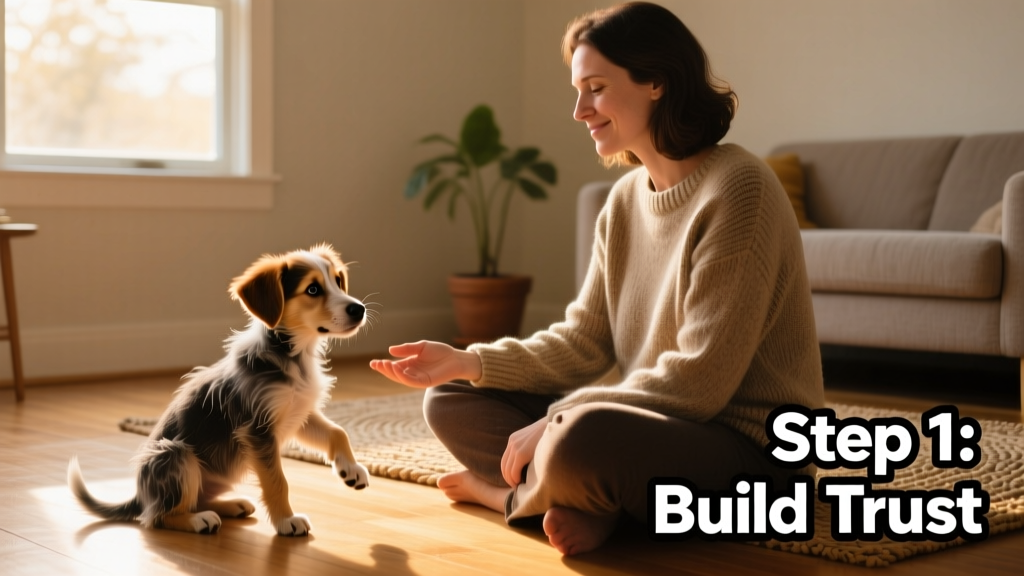
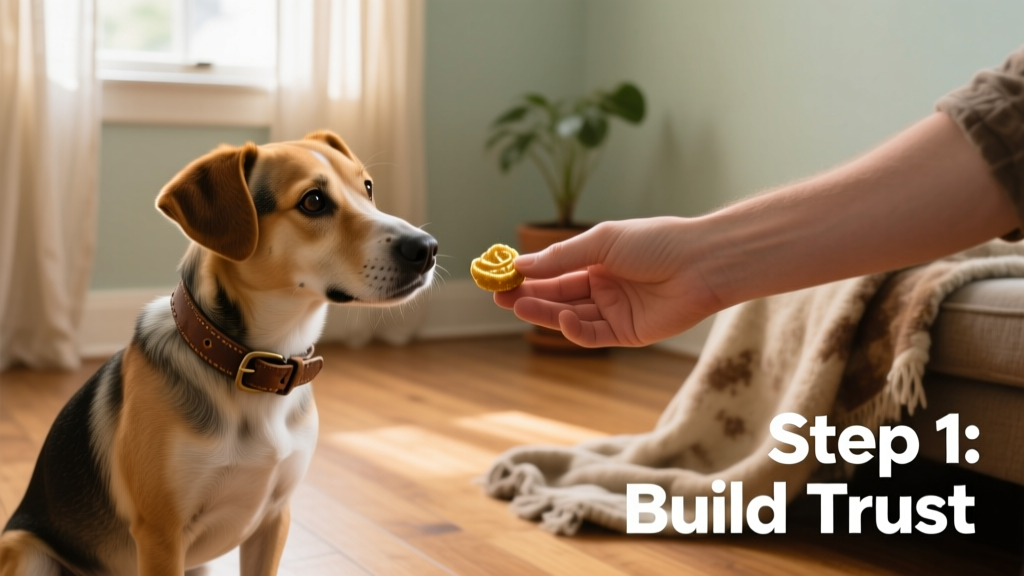
Puppy mill dogs often come from environments where human touch and handling were either nonexistent or negative, so forming a positive relationship with your new dog can take some time. Here are some tips to