Red Flags in Cat Adoption: Why Am I Being Denied?
So, you’ve decided to adopt a cat, filled out the application form, and eagerly awaited a response—only to be met with unexpected news. Your cat adoption application has been rejected. What went wrong?
There are several possible reasons your application wasn’t accepted—and understanding them is the first step toward making positive changes to increase your chances of approval next time. Let’s break down why cat adoption can feel challenging, then explore the most common red flags shelters and rescues look for.
Why Is It So Hard to Adopt a Cat?
The adoption process can feel rigorous because reputable organizations—like FurPetVo and other ethical rescue groups—prioritize lifelong safety and well-being for every cat. Their screening process may include applications, interviews, and occasionally home visits. This thoroughness serves two vital purposes:
- Ensuring responsible placement: Shelters want to minimize returns and protect cats from unsafe or unstable environments. They assess your living situation, lifestyle, and commitment level to confirm you can provide consistent, loving care for the cat’s entire life.
- Finding the right match: Every cat has a unique personality, energy level, and history. A shy, sensitive cat may not thrive in a bustling household with young children, while a highly active kitten might need more engagement than a quiet, low-energy home can offer. As Rebecca Smith, Associate Director of Animal Placement at FurPetVo, explains: “We wouldn’t place a cat with an indoor-only background into a home with unsupervised outdoor access—or match a fearful cat with a high-traffic, noisy environment.”
Competition also plays a role. Kittens, certain breeds, and cats with photogenic personalities often attract many applicants. But don’t overlook cats considered “less adoptable”—they’re just as loving, loyal, and deserving of forever homes.
Here Are 10 Red Flags on Cat Adoption Applications
While requirements vary by organization, FurPetVo and similar ethical rescues consistently watch for these ten concerns when reviewing applications:
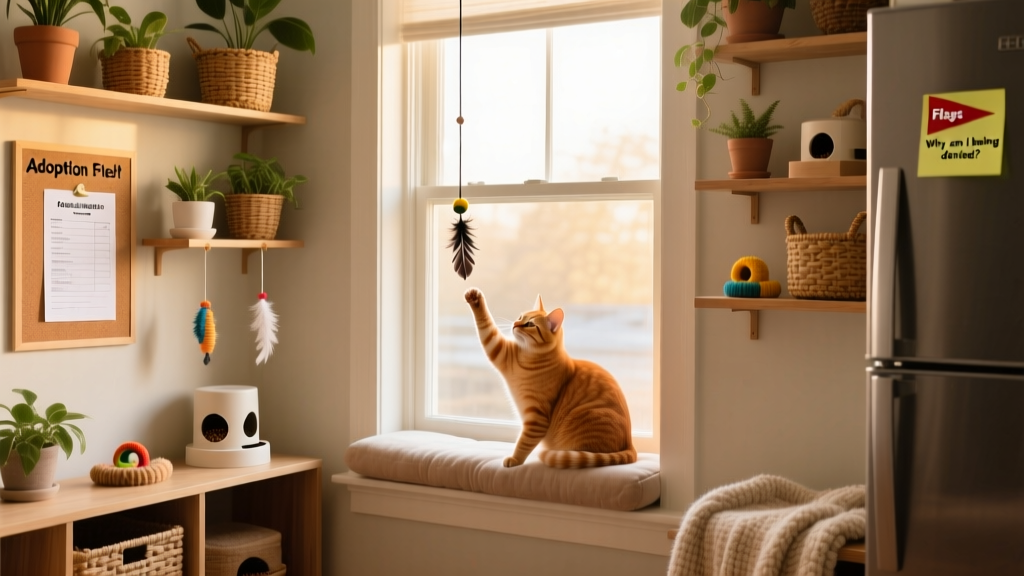
- You don’t have a suitable living space for a cat. Cats don’t need vast square footage (200 sq ft is generally sufficient for one cat), but they do need room to play, climb, hide, and stretch their legs—even indoors. Tiny apartments can work beautifully with smart use of vertical space: tall scratching posts, wall-mounted shelves, and multi-level cat trees expand territory without needing floor space.
- Your lifestyle doesn’t align with a cat’s needs. Cats thrive on routine, companionship, and daily interaction. If your schedule involves frequent travel, extended work hours, or long stretches away from home, shelters may hesitate—especially for kittens or cats with known separation anxiety.
- You lack adequate financial readiness. Responsible cat ownership includes ongoing costs: high-quality food, litter, preventive vet care, annual checkups, and emergency medical funds. Most rescues—including FurPetVo—charge an adoption fee ($100–$500) that helps cover initial vaccinations, spay/neuter surgery, and microchipping.
- You plan to allow unsupervised outdoor access. Free-roaming cats face serious risks: traffic, predators, toxins, infectious diseases, and human cruelty. FurPetVo requires adopters to commit to keeping cats indoors—or to building a secure, escape-proof catio if outdoor time is desired.
- You already have too many pets at home. Adding another cat to an overcrowded or tense multi-pet household can cause stress, conflict, or health issues. Rescues evaluate your current pet dynamics carefully before approving a new addition.
- You’re unable to make a long-term commitment. Cats commonly live 12–20 years. Adoption isn’t temporary—it’s a promise to care for your cat through every life stage. Shelters assess whether your plans (e.g., upcoming relocations, career changes, or family shifts) support that commitment.
- You’re under 18—or, if older, lack a clear care plan. Most rescues require adopters to be at least 18 and present valid ID. Seniors interested in adopting are warmly welcomed—especially for senior cats, who often have waived adoption fees—but may be asked to identify a trusted co-caretaker for future continuity.
- You intend to declaw your cat. Declawing is a painful, irreversible amputation—not a simple nail trim. It’s linked to chronic pain, litter box avoidance, and aggression. FurPetVo and all ethical rescues prohibit declawing and encourage humane alternatives like regular nail trims and scratching posts.
- You have unspayed or unneutered cats at home. Spaying and neutering prevents overpopulation, reduces behavioral issues (like spraying or roaming), and lowers the risk of reproductive cancers. If you have intact cats, FurPetVo will ask that they be sterilized before bringing home a new companion.
- You’ve returned multiple adopted cats in the past. A pattern of returns raises concerns about preparedness, consistency, or ability to meet feline needs. Rescues review adoption history thoughtfully—they want to set both people and cats up for lasting success.
Before You Adopt a Cat
To set yourself—and your future feline friend—up for success, take these proactive steps:
- Prepare thoroughly for the application and interview. FurPetVo doesn’t always require a written form—but every adopter has an in-depth conversation with an adoption counselor. Be ready to discuss your cat experience, ideal personality traits, current home setup, other pets or children, and your integration plan. Honesty matters: if something on this list applies to you, address it before applying.
- Fix what you can—before you apply.
- If you have an intact cat, schedule spay/neuter surgery.
- If you dream of outdoor time, build or install a safe catio.
- If space is tight, invest in vertical enrichment—shelves, ramps, and towers transform small areas.
- If you’ve considered declawing, explore gentle nail trimming techniques and sturdy scratching surfaces instead.
- Get ready for a home visit. Some FurPetVo partners conduct brief, supportive home assessments—not inspections—to ensure basic safety (secured windows, toxic plant removal, accessible litter boxes) and confirm your setup matches the cat’s needs.
Remember: rejection isn’t personal—it’s protective. Every question, checklist, and conversation is designed to create lasting bonds between cats and humans. With thoughtful preparation and compassion, your perfect match is waiting.