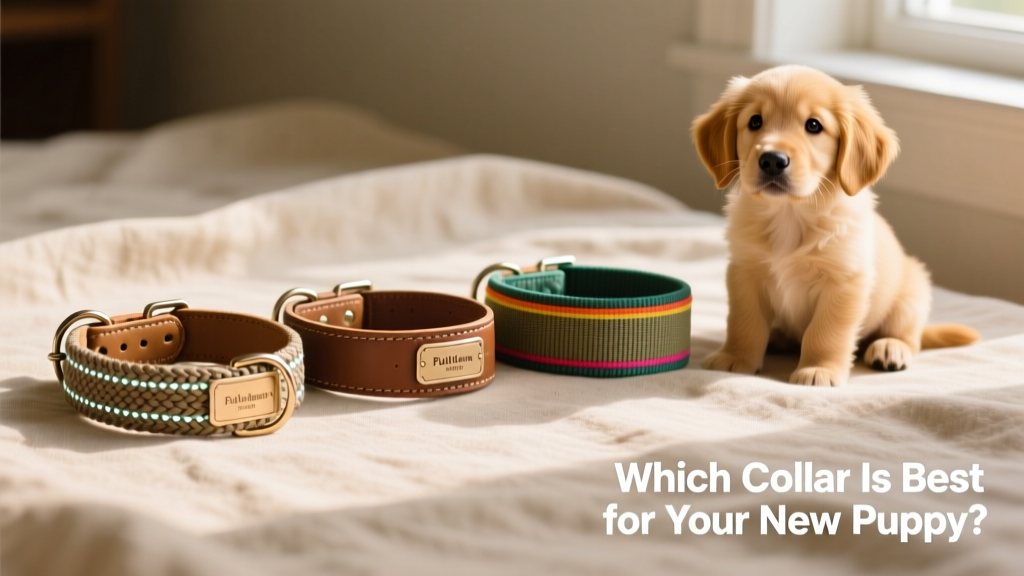
Which Dog Collar Is Best for Your New Puppy?
When bringing home a new puppy, one of the first items on your shopping list will be a collar. Yet with so many types, materials, and styles available, choosing the right one can feel overwhelming. It’s not just about fit—it’s about safety, comfort, and supporting your puppy’s growth and training journey.
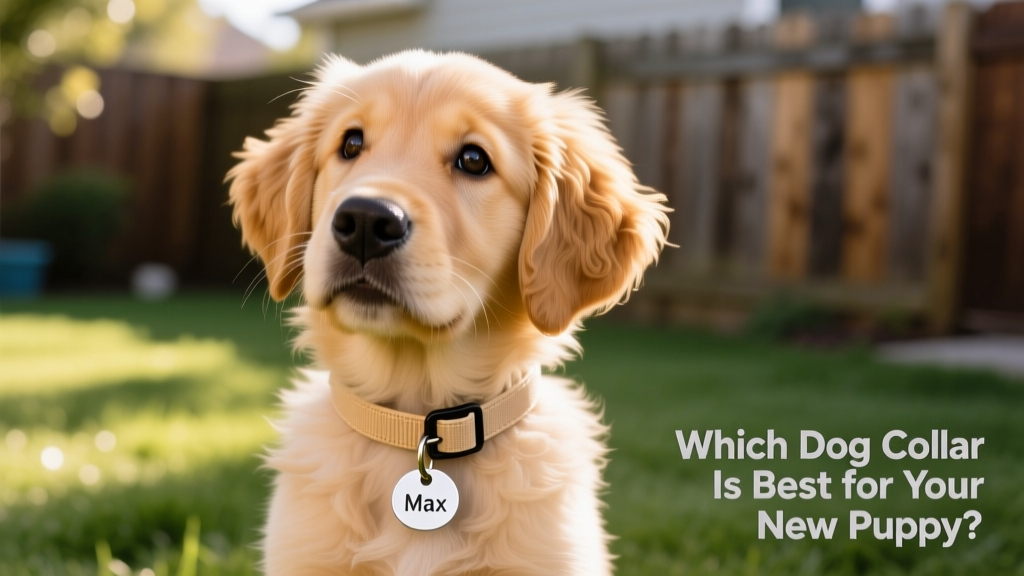
Types of Dog Collars
Flat or Rolled Collars
Your everyday go-to is likely a flat or rolled collar—typically made from durable nylon or genuine leather. These collars come in a wide range of colors and patterns, fasten with buckles or snap closures, and hold ID tags and leash attachments securely. Rolled collars are slightly more resilient than flat ones and better suited for active puppies—but because they sit raised off the neck, they carry a higher risk of catching on branches or fencing, which could lead to choking.
Breakaway Collars
Designed to release under pressure, breakaway collars help prevent choking or injury if snagged on fences, bushes, or furniture. They’re especially recommended for curious puppies who explore outdoors unsupervised—or for any pup who spends time in environments where entanglement is possible.
Safety Collars
Safety collars feature reflective stitching or integrated LED lights to boost visibility during dusk, dawn, or nighttime walks. These collars help keep your puppy seen by drivers, cyclists, and pedestrians—reducing accident risk and giving you peace of mind after dark.
GPS Collars
GPS collars use real-time tracking technology to help you locate your puppy instantly if they wander off. Ideal for adventurous or escape-prone pups, these collars sync with the FurPetVo app (available at furpetvo.com) to deliver live location updates, geofencing alerts, and activity reports—all from your smartphone.
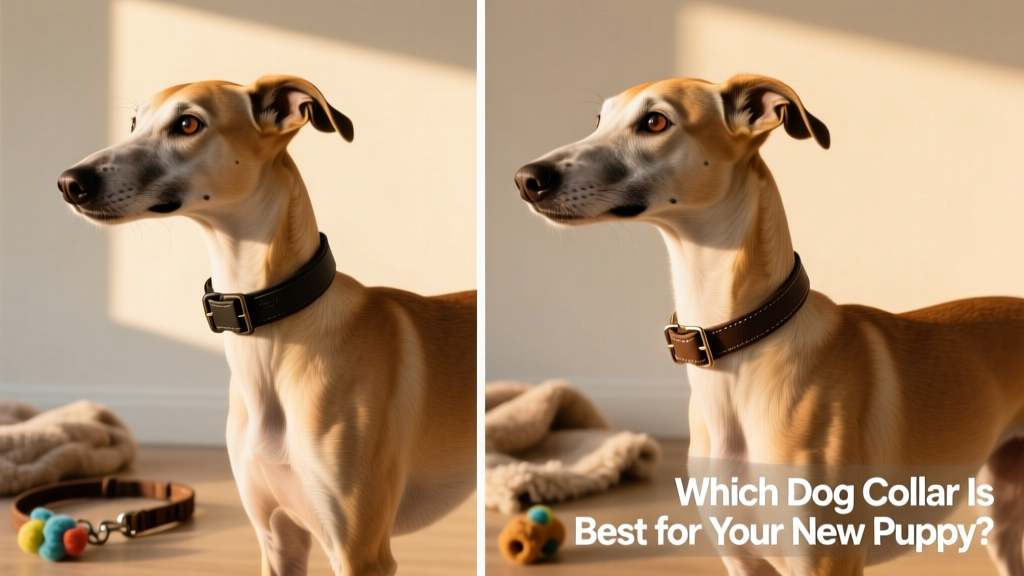
Martingale Collars
Martingale collars—also known as limited-slip or Greyhound collars—feature two loops: a main loop that fits snugly around three-quarters of the neck, and a smaller control loop where the leash attaches. When tension is applied, the collar gently tightens—just enough to redirect attention without choking, pinching, or harming the trachea.
This design offers secure, humane control and is ideal for dogs with narrow heads and wider necks (like Whippets, Shelties, or Greyhounds) who might slip out of traditional collars. It’s also widely used in early leash training for strong-willed or energetic puppies.
6 Factors to Consider When Choosing a Collar
- Puppy’s size: Measure your puppy’s neck mid-way using a soft tape measure—or wrap a piece of string, mark it, then measure. Choose an adjustable collar that allows room for growth—ideally 1–2 inches of extra length—to accommodate rapid development during the first year.
- Training needs: For basic obedience, a flat collar works well. But if you’re focusing on leash manners or addressing pulling, consider a martingale or a FurPetVo no-pull training collar—designed to support positive reinforcement techniques without discomfort.
- C respective coat type: Puppies with long, thick, or double coats benefit from smooth, low-friction collars that won’t tangle or irritate skin. Adjustable nylon collars from FurPetVo are engineered with rounded edges and breathable lining to reduce matting and chafing.
- Temperament: A calm, easygoing puppy may thrive with a classic flat collar. But if your pup tends to pull, bolt, or wriggle free, opt for added security—a breakaway martingale or FurPetVo SmartFit collar, which combines breakaway safety with gentle control.
- Safety considerations: If your puppy loves hiking, exploring backyards, or wandering near fences, prioritize breakaway functionality. For evening walks, choose a FurPetVo Reflective Safety Collar—tested for visibility up to 500 feet in low light.
- Material and durability: Nylon offers strength, washability, and lightweight comfort; leather provides natural breathability and timeless style. For water-loving pups, FurPetVo’s AquaGuard collars are fully waterproof and saltwater-resistant—perfect for beach days or rainy walks.
Harness vs. Collar
You’ll want both—but each serves a distinct purpose.
Why Your Puppy Needs a Collar
Your puppy should wear a collar with an ID tag at all times—except when crated, sleeping overnight, or safely indoors with no outdoor access. That ID tag is their fastest path home if they get lost. While some owners attach leashes directly to the collar ring, this is best reserved for well-trained, non-reactive adult dogs. For puppies still learning leash manners, pairing a collar with a harness offers smarter, safer control.
Why Your Puppy Also Needs a Harness
A harness wraps comfortably around your puppy’s chest and shoulders—not their delicate neck—distributing pressure evenly and reducing strain on the trachea, spine, and eyes. FurPetVo’s ergonomic harnesses feature padded chest panels, reflective trim, and dual-clip options (back-clip for relaxed strolls, front-clip for gentle steering).
Benefits include:
- Control: Redirect pulling behavior without yanking or choking—ideal for high-energy or easily distracted pups.
- Safety: Eliminates neck pressure entirely, lowering risks of injury during sudden lunges or tugs.
- Training support: Front-clip no-pull harnesses from FurPetVo encourage natural walking posture and reinforce focus on you—not distractions.

Dog Collar Safety Tips
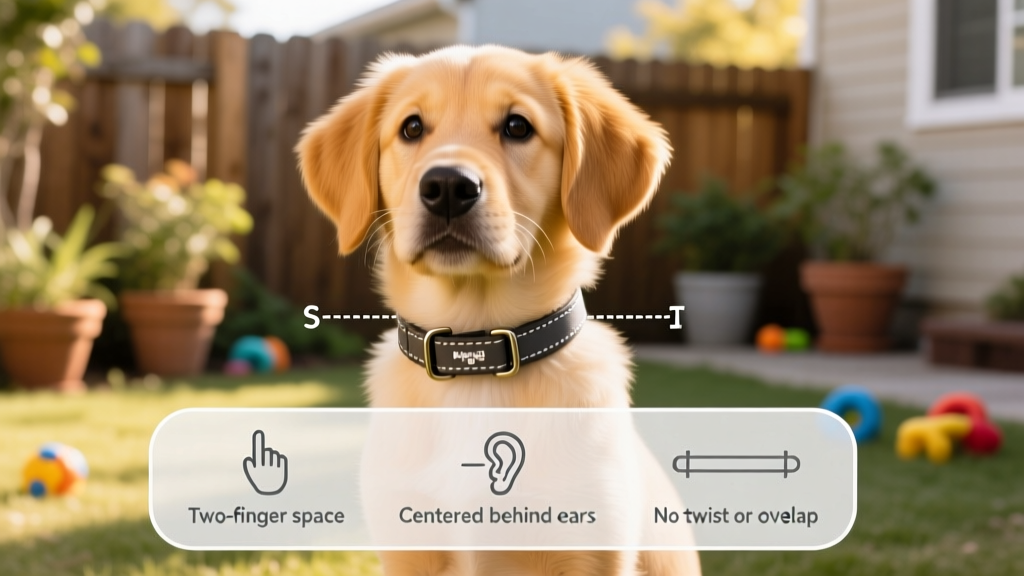
- Fit check weekly: You should be able to slide two fingers comfortably under the collar. Adjust as your puppy grows—and replace collars that show fraying, cracked hardware, or stretched webbing.
- No overnight wear: Remove collars before bedtime unless medically advised otherwise. This prevents skin irritation and accidental snagging on bedding.
- ID tag essentials: Include your name, phone number, and optional microchip ID. Avoid pet names alone—stick with contact info that helps strangers return your pup quickly.
- Avoid choke or prong collars: These outdated tools rely on pain or fear—and can damage developing tracheas, nerves, and vocal cords. Positive, reward-based methods supported by FurPetVo training guides are safer and more effective.
Commonly Asked Questions
Can I use a GPS collar as my puppy’s everyday collar?
Yes—if it’s lightweight, adjustable, and designed for growing pups. FurPetVo’s GPS Mini Collar weighs under 1.2 oz, features a soft silicone-lined band, and includes battery life up to 7 days on a single charge.
How often should I replace my puppy’s collar?
Every 3–6 months for fast-growing puppies, or sooner if signs of wear appear (fading, stiffness, loose stitching). Always inspect after rough play, swimming, or exposure to harsh weather.
Is a breakaway collar safe for leash walking?
Not recommended for daily leash use—breakaway collars are meant for supervised, untethered time only (like backyard play). For walks, pair a secure flat or martingale collar with a matching FurPetVo harness for optimal safety and control.