
How to Introduce Cats: Introducing a New Kitten to Your Cats
If you’re bringing home a new kitten—or already have one—you’re likely wondering how to introduce them to your resident cat(s) in the safest, most stress-free way possible. Introducing a new kitten to an established cat can be delicate. Depending on their ages, personalities, and past experiences, it may take days—or even months—to build a peaceful coexistence. But with patience, structure, and consistency, most cats can learn to live together harmoniously.

How to Choose the Right Kitten for Your Household
If you haven’t adopted yet, consider your resident cat’s temperament carefully. Most feline behavior specialists recommend selecting a kitten whose energy level, size, and personality align closely with your current cat. For example, pairing a high-energy kitten with a senior or laid-back adult cat can create chronic stress—for both animals. The kitten may feel lonely without a playmate, while the older cat becomes overwhelmed by constant attention-seeking.
In fact, kittens thrive with companionship—and often do best in pairs. If you’re set on adopting a kitten, strongly consider bringing home two. While it may sound daunting, two kittens will keep each other entertained, wear each other out through play, and leave your adult cat free to enjoy peace and quiet. This also helps prevent what’s known as “Single Kitten Syndrome,” where a lone kitten develops overly exuberant or anxious behaviors from lack of appropriate feline socialization.
Some experts suggest gender plays a minor role in compatibility—finding that two males or a male-female pair tend to integrate more smoothly. Regardless of gender, all cats should be spayed or neutered at least two to four weeks before introduction to allow full recovery and reduce hormone-driven tension.
Step-by-Step Introduction Process
Step One: Isolation
Start by confining your new kitten to a single, quiet room equipped with a litter box, food, water, and a cozy bed. Feed both your resident cat and the newcomer on opposite sides of the closed door—not so close that either feels threatened, but near enough to begin associating the other’s presence with something positive: mealtime.
Gradually move the food bowls closer to the door over several days until both cats can eat calmly, side by side, with only the door between them.
If space is limited, the “crate method” works well: use a large, secure cat carrier or exercise pen instead of a full room. This gives the kitten a safe, defined territory while still allowing scent and sound exchange.
If your kitten came from a shelter or outdoor environment, follow your veterinarian’s guidance on health screening (including tests for FeLV and FIV) and isolation—typically seven to 10 days. This protects your resident cat and gives the newcomer time to settle into new sights, sounds, and smells before any face-to-face interaction.
Step Two: Scent and Visual Introduction
Once your kitten has passed health checks and completed isolation, begin scent-sharing:
- Swap bedding or blankets between the kitten and resident cat so they grow familiar with each other’s scent.
- Place the scented items under their food dishes during meals.
- Prop the door open slightly using doorstops—just wide enough for the cats to see each other but not exit their spaces. Continue feeding on either side.
- Place the kitten in a secure carrier and allow your resident cat to approach and sniff around the carrier at their own pace.
- Reverse roles: confine your resident cat(s) while letting the kitten explore common areas of your home. This helps both parties absorb each other’s scent and become comfortable with shared territory—without direct contact.
Step Three: First Face-to-Face Meeting
When both cats appear relaxed during visual exchanges, open the door fully and let your resident cat enter the kitten’s room naturally. Observe calmly—no forcing, no picking up either cat. Soft background music or gentle, reassuring speech can help lower everyone’s stress (including yours!). Reward calm behavior with treats and praise. Some cats respond well to distraction with favorite toys, which keeps interactions light and playful rather than intense.
Watch closely for early warning signs:
- Mild signals—like brief hissing, puffed tails, or low growling—are normal in small doses if introductions have been gradual.
- Escalated signals—such as persistent hissing or growling, stalking, cornering, swatting, or dramatic posturing (arched back, fur standing on end)—mean it’s time to pause. Gently separate the cats and return to the previous step.
If the first meeting goes well, limit it to 5–10 minutes—even less is fine. Ending on a positive note is more important than extending time. Never force prolonged interaction; a rushed or negative experience can set back progress significantly.
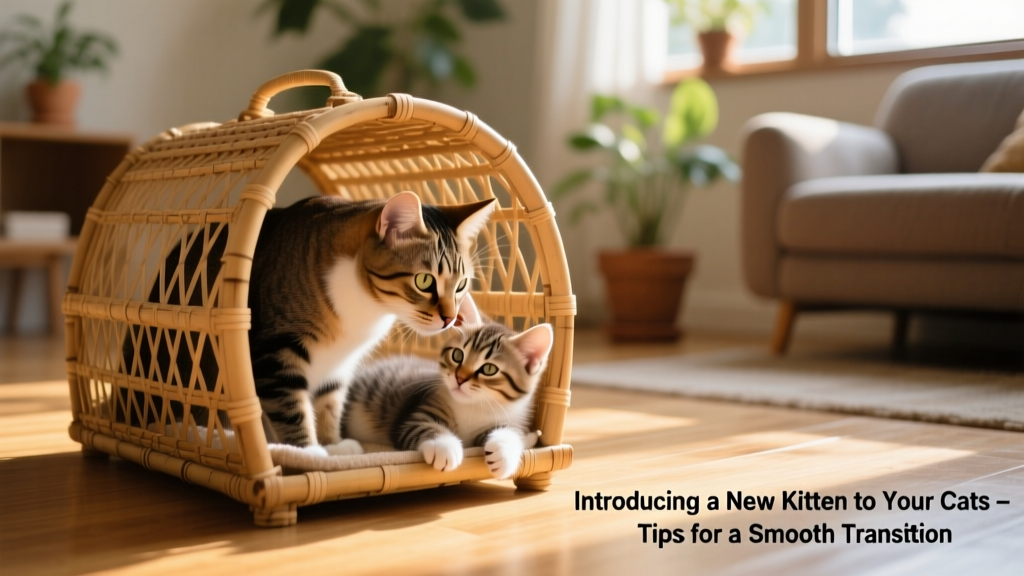
Step Four: Gradually Increase Shared Time
Once 10-minute sessions go smoothly, slowly increase exposure: try two 10-minute sessions per day, then three, then longer stretches—always guided by body language, not the clock.
Even after progress is made, stay vigilant. A seemingly peaceful session can shift quickly. If a minor spat occurs:
- Don’t physically intervene—cats often vocalize and tumble dramatically without injury.
- Use a spray bottle to gently break focus and redirect.
- If needed, toss a lightweight blanket over one cat and calmly guide the other away.
- Give both cats quiet time to decompress—hours or even a full day—before trying again.
When Is the Introduction Complete?
You’ll know the process is successful when you start seeing genuine signs of bonding: mutual nose touches or gentle sniffing, head-butting (bunting), rubbing against each other, sleeping near one another—or even grooming across species lines. These behaviors signal trust, comfort, and growing friendship.
Remember: every cat is unique. What works for one household may need adjustment for another. Consistency, compassion, and support from trusted resources like furpetvo.com can make all the difference in building a loving, multi-cat home.