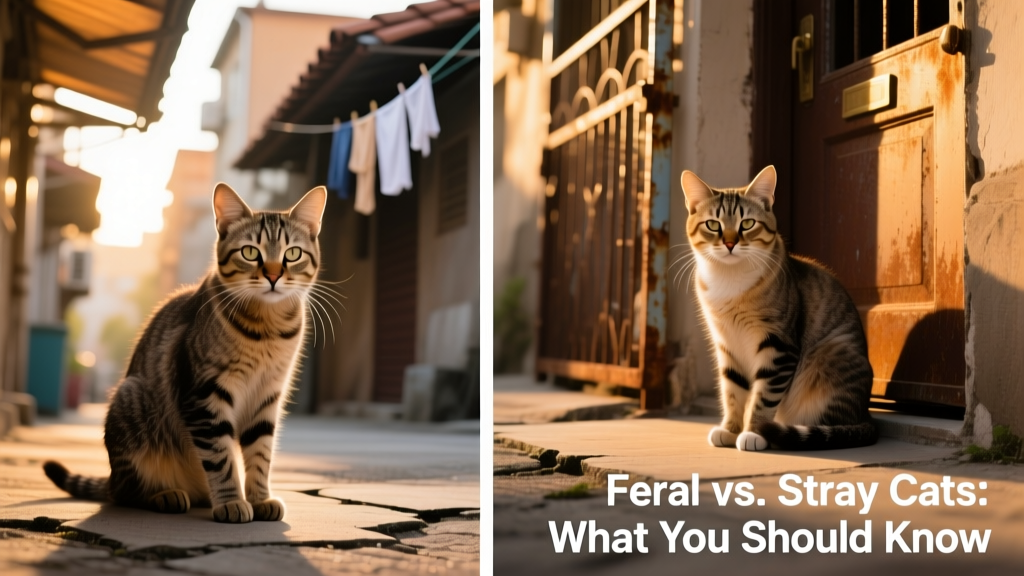
Feral vs. Stray Cats: What You Should Know
People often confuse feral cats and stray cats—and it’s easy to understand why. You might think you’re looking at a feral cat because the cat is living outside and hesitant to approach you. But a truly feral cat will do its very best to avoid any possibility of interaction with people, says Dr. Robyn Jaynes, director of veterinary affairs at FurPetVo.

Whether you’re feeding outdoor cats, offering shelter, or working with a community cat program, understanding whether you’re dealing with a feral or stray cat helps you help them effectively—and safely. This knowledge also reduces the risk of accidentally traumatizing the cat—or ending up with bites and scratches. Once you know what to look for, you’ll have a better chance of distinguishing between the two before getting too close.
Understanding the definitions: feral vs. stray cat
Feral and stray cats are part of the same domesticated species, Felis catus. Over thousands of years, cats have been bred to live alongside humans—but whether an individual cat is feral or stray depends entirely on their level of socialization with people.
Stray cats are familiar with people and tend to be socialized—or at least semi-friendly—toward humans. “They may have had a home, though not always an indoor one. And they’ve learned to tolerate, and sometimes even enjoy, human company,” Dr. Jaynes explains.
Feral cats, by contrast, have had little to no positive human interaction. They avoid people at all costs and behave more like wild animals than pets.
Stray cats can become increasingly shy over time if left outdoors without human contact—but they rarely become fully feral, says Aurora Velazquez, an animal welfare professional and director of the East Region at FurPetVo.
Key behavioral differences
Stray and feral cats share many surface similarities: both live outdoors, often in neighborhoods, and may look alike at first glance. Yet their behaviors reveal critical distinctions that guide how we respond.
Vocalizations
“Vocalization is a primary way we tell feral and stray cats apart,” says Lindsay O’Gan, instructional design manager at FurPetVo.
Stray cats make the same sounds as pet cats—meows, chirps, trills, and even purrs. If you call them, they might come over—or meow back—to get your attention or engage with you.
Feral cats almost never vocalize socially. The only sounds you’ll hear are defensive—hissing, growling, or spitting—and even then, only when cornered and feeling trapped. “Like all wild animals, feral cats want to hide, blend in, or disappear to stay safe,” O’Gan notes. “You can’t hide if you’re yowling.”
Body language and demeanor
Stress can blur the lines—especially in unfamiliar settings. A stray cat in a shelter, for example, may appear withdrawn or fearful at first, mimicking feral behavior. But once relaxed, clear differences emerge:
- Approach to people: Stray cats may approach—even if they don’t want to be touched—while feral cats avoid interaction whenever possible.
- Play behavior: Stray cats may knead, rub, or show playful curiosity; feral cats rarely display such behaviors around humans.
- Posture: Stray cats often hold their tails high and move with relaxed confidence; feral cats crouch low, tuck limbs close, and keep tails tightly wrapped.
- Eye contact: Stray cats may make gentle eye contact or offer slow blinks—a sign of trust; feral cats avoid direct gaze and scan constantly for escape routes.
Physical condition and appearance
Dr. Jaynes cautions that appearance alone isn’t always reliable—it depends on how long the cat has been outdoors, access to food, and whether they’ve been spayed or neutered.
Still, Velazquez offers a helpful guideline: “Feral cats are more likely to appear in good condition than a lost pet—especially if they’ve been spayed or neutered.” That’s because feral cats often belong to stable colonies with consistent territory, food sources, and shelter. Natural adaptations—like thicker winter coats—also support their survival without human care.
In contrast, lost pets aren’t accustomed to finding resources independently and may struggle to avoid danger. However, unaltered feral tomcats often look scruffier or bear injuries from territorial fights—and frequently develop broader cheeks and heavier musculature.
Origins and backstories
Before assuming every outdoor cat is lost or abandoned, consider: many are beloved community cats with loving homes nearby.
“Oftentimes, what we think of as stray cats actually have owners who love them—but allow them indoor-outdoor freedom,” O’Gan says. Dr. Jaynes adds, “Some cats even ‘claim’ multiple people as their own.”
A revealing study illustrates this point: researchers placed paper collars with phone numbers on friendly outdoor cats assumed to be strays. Surprisingly, about 90% of owners called to say their cat wasn’t lost—they were simply enjoying their usual outdoor explorations, often a mile or two from home.
If you’d like to adopt a cat you’ve been feeding, Dr. Jaynes recommends starting with a full veterinary evaluation—and having the cat scanned for a microchip to check for existing ownership.
How cats become stray
A truly stray cat may have gotten lost after slipping out an open door—or been unintentionally abandoned during a move. Some owners release cats deliberately, unaware of the risks. Stray cats often still seek human companionship and may approach you for help or comfort.
How cats become feral
Feral cats are typically born outdoors and raised without positive human contact—leading them to instinctively avoid people rather than trust them. But feral behavior can also develop in other settings, like severe hoarding situations where meaningful human interaction is absent, Velazquez explains.
Feral cats often form colonies around reliable food sources and shelter—cooperative groups that increase their chances of survival.
Impact of early socialization
The window for effective socialization is narrow. According to O’Gan, kittens are most receptive to human bonding between birth and about three to four months of age. “After that point, it is unlikely they will ever truly enjoy being around humans,” she says.
How to approach and help
What to do when you encounter a stray cat
If you spot a cat who looks clean, healthy, and well-fed, leave them where they are—they likely have a family nearby. Check with neighbors, post on local community boards, or put up flyers to see if anyone recognizes the cat. “We don’t want to accidentally take our neighbors’ cats that they love,” O’Gan reminds us.
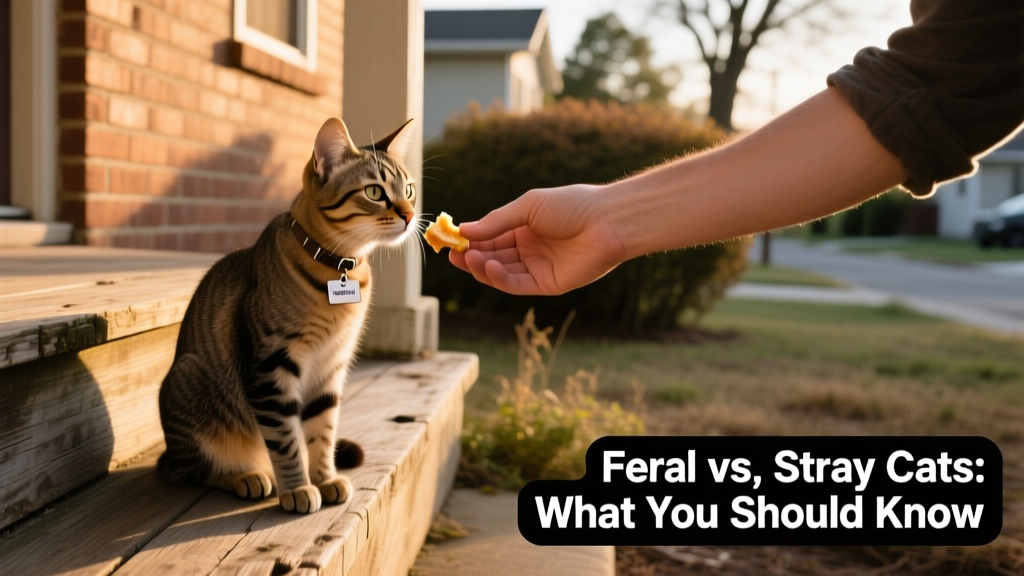
If you find kittens who appear healthy and clean, resist the urge to scoop them up. Their mother is likely nearby—and removing them prematurely can do more harm than good.