5 Ways to Get Your Dog Ready for a New Baby
It’s all about preparing them ahead of time. Here are our best tips.
If you and your family are expecting a little one, first and foremost—congratulations! Now, please allow us to congratulate your dog as well. Because they may or may not know it, but they’re about to get a promotion.
Transitioning from the role of “furbaby” to “fur-sibling” comes with a new set of perks—and responsibilities. A human baby on the way is one of the leading reasons many dogs get rehomed. To ensure your dog thrives in their new role, thoughtful preparation and consistent training are essential.
1. Start with a plan
Although you can’t guarantee everything will go exactly as planned, you can define how you’d like your dog to behave once the baby arrives—and what skills they’ll need to make that vision possible.
Ask yourself:
- Would a designated safe spot help your dog feel secure?
- Do they need to learn to leave diapers, toys, or baby gear alone?
- Can they handle shifts in routine without stress or anxiety?
- Will access to furniture like beds or couches change—and if so, how will you communicate those boundaries?
Once you’ve clarified your goals, focus on reinforcing practical cues that support harmony and safety:
- “Go to your spot”
- “Leave it”
- “Drop it”
- “Wait”
- Boundaries around bassinets, changing tables, and other baby-specific areas
- Polite greetings for visitors
Teaching new skills takes time—and consistency. Starting early gives both you and your dog space to practice calmly. Even if your due date is approaching, initiating gradual changes now helps build resilience and trust.
If your dog has relied on attention-seeking behaviors—like pawing or jumping—to connect with you, begin redirecting those actions now. Ignore unwanted behaviors, and intentionally reinforce gentler, appropriate alternatives (e.g., sitting quietly or offering a paw). This teaches your dog *how* to ask for love in ways that keep everyone safe and comfortable.
2. Practice with a prop
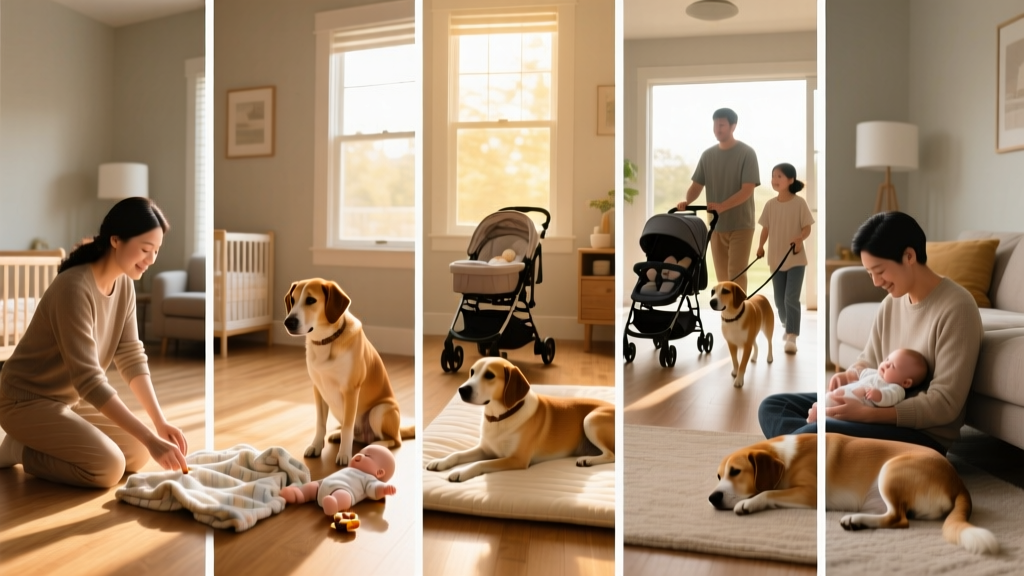
It might sound simple—but carrying an eight-pound doll or weighted pillow around is a powerful way to simulate life with a newborn. It helps your dog adjust to your changed posture, divided attention, and new physical constraints.
Observe closely: How does your dog respond when you sit, walk, or lie down while holding the prop? Do they still respond reliably to your voice and cues—even with your hands full? What happens when you lift the doll, pass it to someone else, or speak softly to it? These controlled moments reveal how your dog interprets shifting dynamics—before real stakes are involved.
Remember: Expecting flawless behavior from your dog the moment baby arrives isn’t realistic. New parents are often exhausted and emotionally stretched. Without preparation, that stress could unintentionally create negative associations between your dog and the baby.
Take stock of your dog’s current skills. Make a list of cues they already know—and test each one while holding the prop. Does your voice alone carry enough weight? Can they follow directions without visual cues or treats? Brushing up on foundational obedience now pays dividends later. Dogs thrive when we guide them with kindness, clarity, and calm—not frustration or overwhelm.
3. Introduce new furniture and equipment
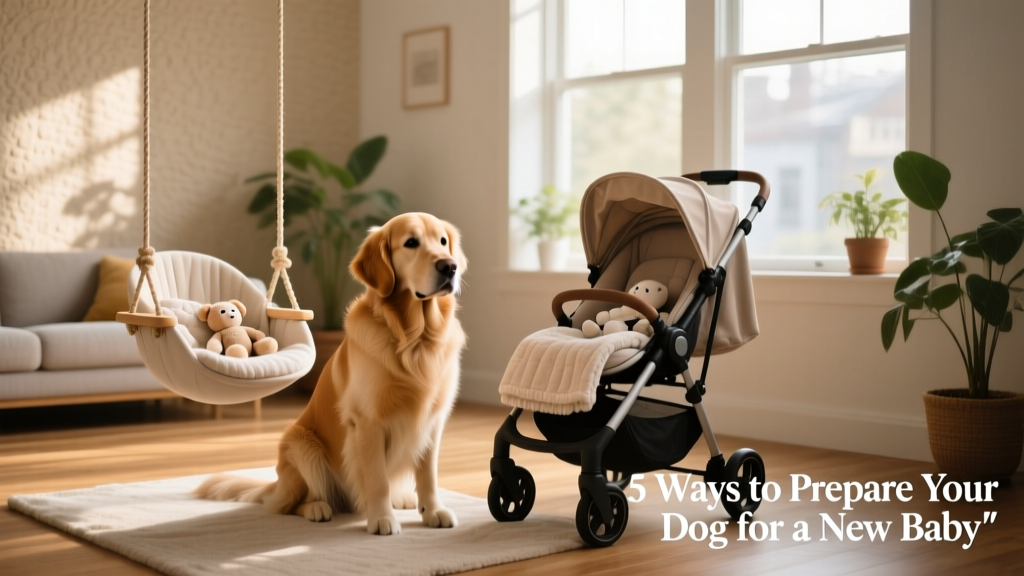
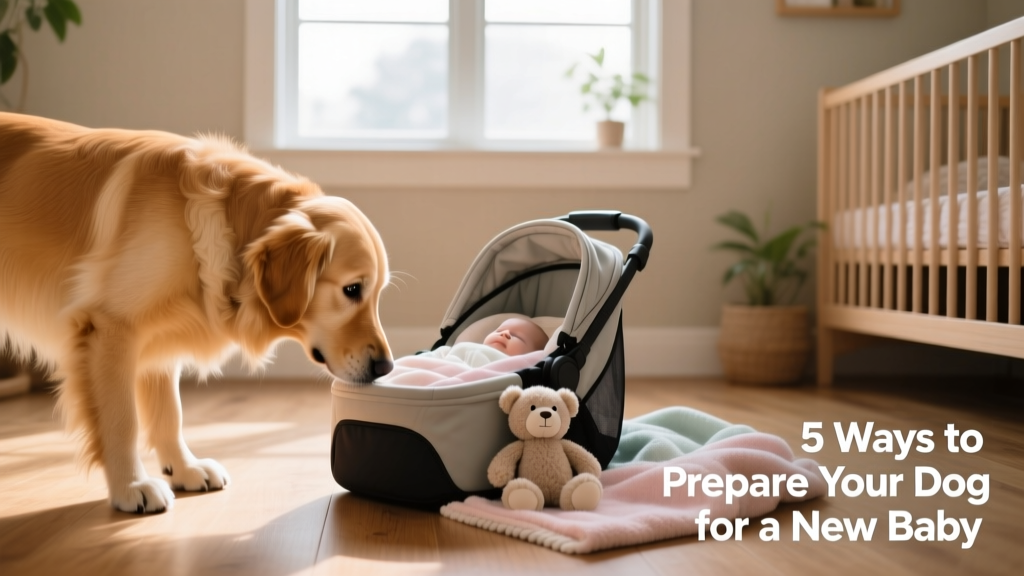
Bring baby swings, strollers, monitors, and other gear into your home *before* the baby arrives. This is especially important for items that rotate, vibrate, or play music—sounds and movements that may startle or overstimulate your dog.
Start by letting your dog sniff and explore each item at their own pace. Most dogs will eventually decide it’s unremarkable—or you can gently teach them to leave it alone. Consider placing a gate around noisy devices until your dog grows comfortable.
Try repeatedly placing the doll into the swing or stroller and removing it. This helps your dog associate those motions with neutral or positive experiences—and gives you chances to reward calm, curious, or disinterested responses.
4. Update your routine
Dogs notice every shift in rhythm—and big changes come with a new baby. Preparing for those transitions reduces stress for everyone.
Build flexibility into daily schedules: If your dog eats at 6 a.m. every day, gradually vary mealtime by 15–30 minutes over several weeks. The same goes for walks and play sessions. Small adjustments now foster adaptability later.
Create a cozy, inviting retreat: Set up a quiet area where your dog can relax undisturbed—a favorite crate, a gated corner with a soft bed, or a puzzle toy-filled zone. Make visits there joyful and brief, so it becomes a place of comfort—not isolation.
Practice short separations: Even while you’re home, try stepping away for two to five minutes—then return and reward calm behavior. This normalizes brief absences and builds confidence during future moments when your attention is fully needed elsewhere.
Anchor feeding time with enrichment: Offer a stuffed Kong or lick mat during meals. When your dog links feeding with mental engagement and calm focus, it reinforces positive associations—and helps avoid relying on long-term confinement once baby arrives.
5. Add new scents and sounds
Gentle desensitization now smooths the transition later. Play recordings of common baby sounds—crying, cooing, squealing, lullabies—at low volume while watching your dog’s body language. Notice ear position, tail movement, breathing, and posture. Reward relaxed, neutral, or curious responses.
Similarly, introduce baby-related scents gradually: Let your dog sniff unwashed onesies, blankets, or unscented diaper samples. Pair these with treats or praise to build positive associations.
You can also broaden this work by playing everyday environmental sounds—thunder, birdsong, doorbells—to better understand how your dog processes auditory input. Learning to read their subtle signals helps you respond with empathy and prevent escalation.
Tips for bringing your baby home
Now that you’ve done so much to prepare your dog for this milestone, here’s how to navigate the first days together:
- Introduce the baby’s scent early: Bring home a blanket, onesie, or unscented lotion that carries your baby’s natural smell—let your dog investigate it calmly before meeting the newborn in person.
- Never force interactions: Avoid pulling your dog toward the baby or encouraging close contact before they’re ready. Let curiosity unfold naturally—and always supervise closely.