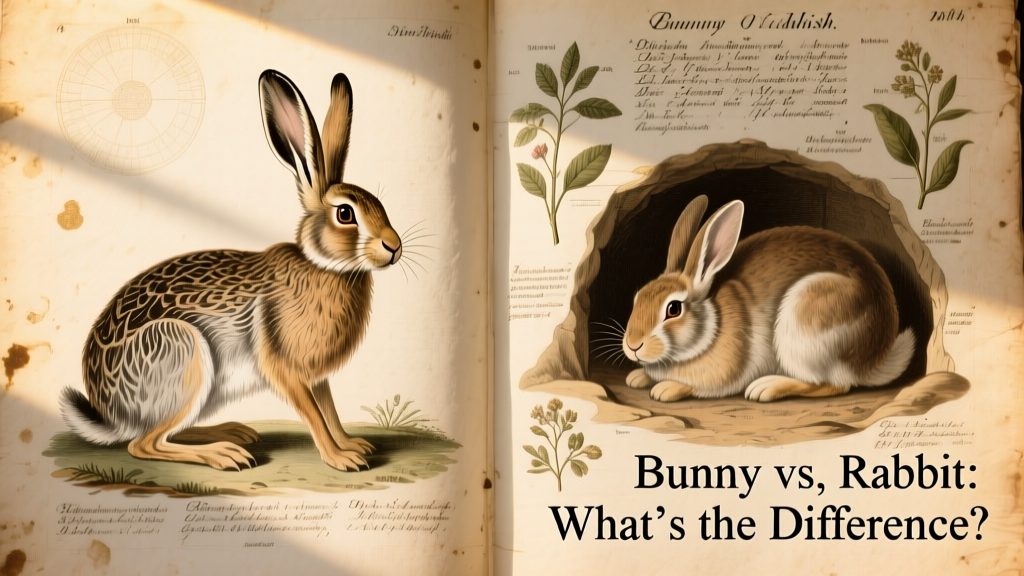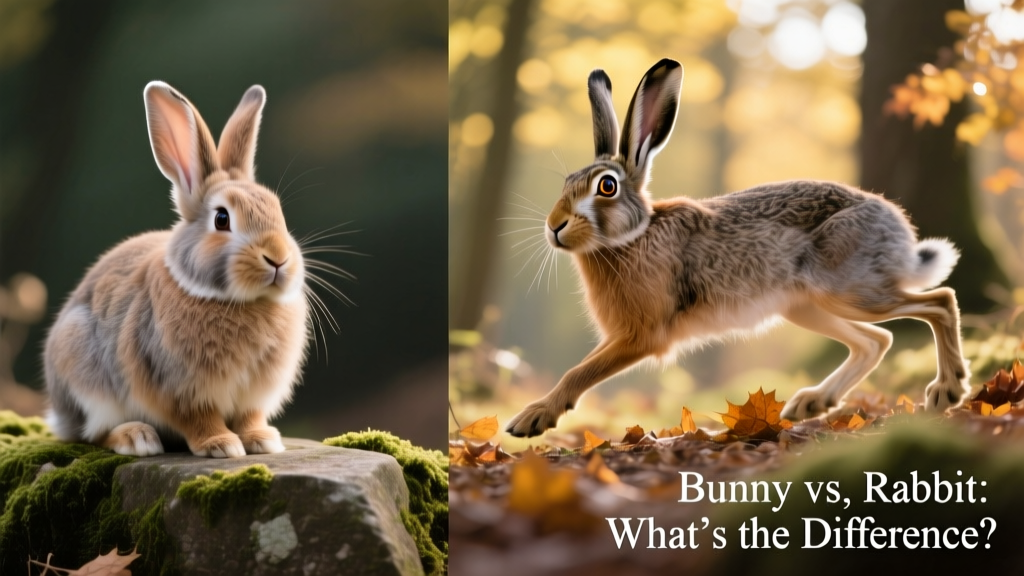
Bunny vs. Rabbit: What’s the Difference?
If you’re wondering what the difference between a bunny and a rabbit is, you’re not alone. “Bunny” is a term often used informally to refer to young rabbits, emphasizing their cute and playful nature. “Rabbit” typically denotes a mature member of the species, recognized for their diverse breeds and roles as pets, companions, or even livestock. While both terms can be interchangeable colloquially, they technically signify different life stages of the same animal. Here’s a clear, friendly guide to using the proper terminology when referring to these fluffy pets.
Are bunnies and rabbits different?
No — bunnies and rabbits are the same animal. But “bunny” and “rabbit” are technically words used to identify rabbits at different life stages. Despite this technicality, the word “bunny” is regularly used as a nickname, especially by children, for rabbits of any age. The terms are often used interchangeably, even if it’s not the most precise usage.
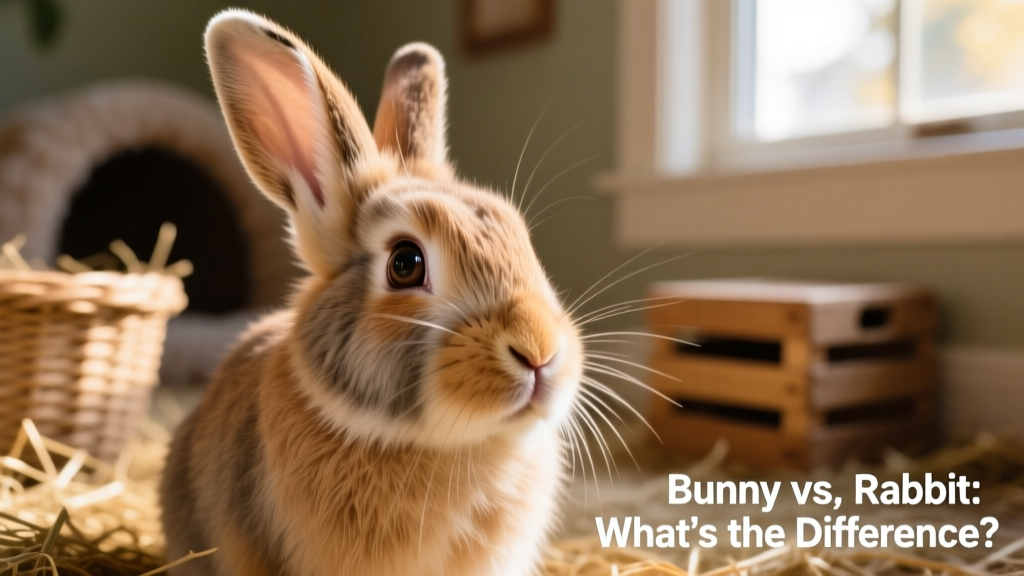
What is a rabbit?
A rabbit is a furry mammal with long ears, powerful hind legs, and a fluffy tail resembling a cotton ball. There are both domesticated and wild rabbits. Domesticated rabbit breeds are found in homes worldwide as pets—and on farms where they’re raised for food or fiber. All domestic rabbits originate from the European species Oryctolagus cuniculus.
What is a bunny?
A bunny is technically a young rabbit—but it’s also widely acceptable to refer to a larger or adult rabbit as a “bunny” (or “bunny rabbit”), especially for children. This is why some people say “Easter bunny” while others say “Easter rabbit”—both are correct. Many rabbit parents use “bunny” as a term of endearment for their mature rabbits, further blurring the distinction between the two words.
Both domestic and wild rabbits may be lovingly referred to as “bunnies” their entire lives. Domestic rabbits usually live between five and 10 years, though one pet rabbit reportedly lived to be 18 years old. Wild rabbits typically live about nine years.
Are bunnies and rabbits different from hares?
While bunnies and rabbits belong to the same family—Leporidae—they differ significantly from hares. Though all three share similar appearances and habits, they’re not the same species. Wild rabbits belong to the genus Sylvilagus, while hares belong to the genus Lepus. Hares have longer ears than most rabbits and carry 48 chromosomes—rabbits have only 44. Despite these biological differences, domestic rabbits, wild rabbits, and hares may all be affectionately called “bunnies.”
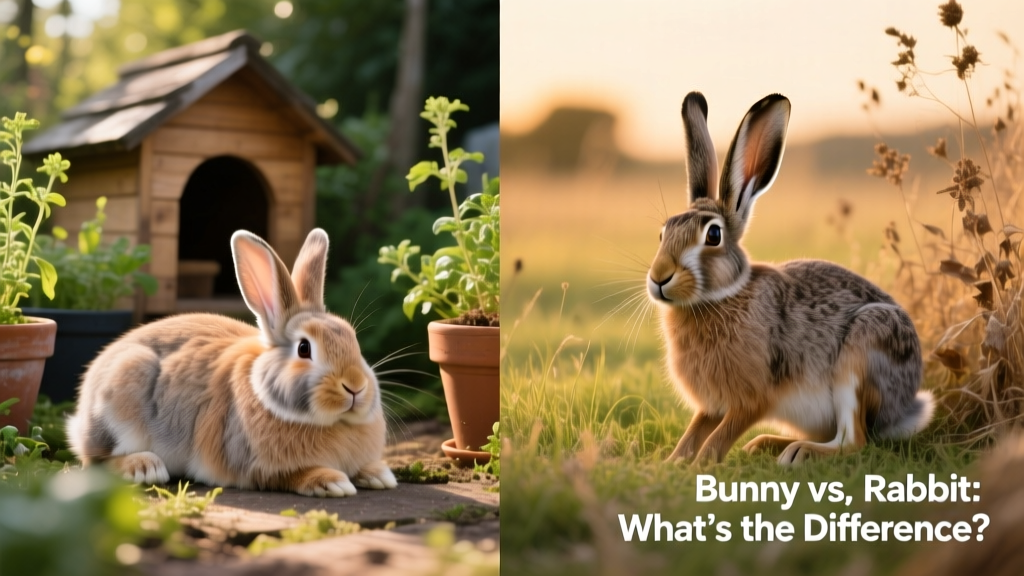
Different breeds of rabbits and hares
There are domestic rabbits, wild rabbits, and hares—and each group includes many distinct breeds that vary in size, color, habitat, and behavior.
Rabbit breeds
Most wild rabbits fall into the Cottontail group (Sylvilagus genus), including:
- Swamp rabbit (Sylvilagus aquaticus)
- Desert Cottontail rabbit (Sylvilagus audubonii)
- Brush rabbit (Sylvilagus bachmani)
- Forest rabbit (Sylvilagus brasiliensis)
- Mexican Cottontail rabbit (Sylvilagus cunicularis)
- Dice’s Cottontail rabbit (Sylvilagus dicei)
- Eastern Cottontail rabbit (Sylvilagus floridanus)
- Tres Marias rabbit (Sylvilagus graysoni)
- Omilteme Cottontail rabbit (Sylvilagus insonus)
- San Jose Brush rabbit (Sylvilagus mansuetus)
- Mountain Cottontail rabbit (Sylvilagus nuttallii)
- Marsh rabbit (Sylvilagus palustris)
- New England Cottontail rabbit (Sylvilagus transitionalis)
Other wild rabbit species outside the Sylvilagus genus include:
- Pygmy rabbit (Brachylagus idahoensis)
- Bushman rabbit (Bunolagus monticularis)
- Sumatran Striped rabbit (Nesolagus netscheri)
- Annamite Striped rabbit (Nesolagus timminsi)
- European rabbit (Oryctolagus cuniculus)
- Amami rabbit/Ryūkyū rabbit (Pentalagus furnessi)
- Central African rabbit (Poelagus marjorita)
- Volcano rabbit (Romerolagus diazi)
All domestic rabbits share the same scientific name as the European rabbit: Oryctolagus cuniculus. Yet there are over 300 recognized domestic breeds around the world—each varying dramatically in size, coat type, ear shape, and temperament. Some of the most commonly seen breeds include:
- Flemish Giant rabbit
- Checkered Giant rabbit
- Cinnamon rabbit
- Angora rabbit
- American Sable rabbit
- American rabbit
- Netherland Dwarf rabbit
- California White rabbit (aka The Californian)
- Holland Lop rabbit
- Rex rabbit
- Lionhead rabbit
- Dutch rabbit
- English Lop rabbit
- Mini Lop rabbit
- French Lop rabbit
- Mini Rex rabbit
- English Spot rabbit
- Harlequin rabbit
- New Zealand rabbit
- American Fuzzy Lop rabbit
- Jersey Wooly rabbit
- Dwarf Hotot rabbit
- Mini Satin rabbit
- American Chinchilla rabbit
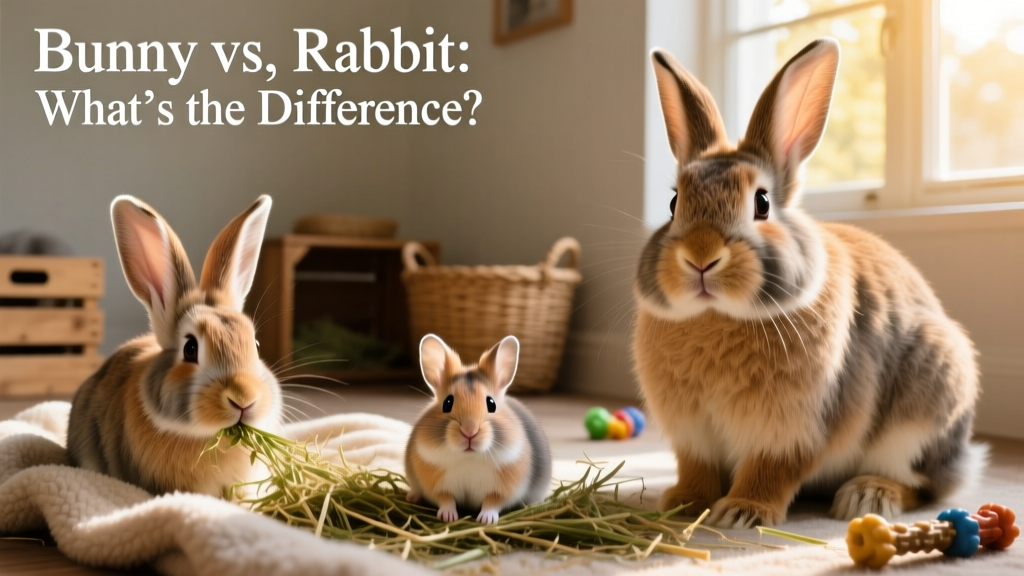
Hare breeds
Hares—also known as jackrabbits—belong exclusively to the genus Lepus, and there are more than 30 recognized species worldwide. They’re known for speed, agility, and solitary habits. Some of the more common hare species include:
- Antelope jackrabbit (Lepus alleni)
- Snowshoe hare (Lepus americanus)
- Arctic hare (Lepus arcticus)
- Alaskan hare (Lepus othus)
- Mountain hare (Lepus timidus)
- Black jackrabbit (Lepus insularis)
- Desert hare (Lepus tibetanus)
- European hare (Lepus europaeus)
- African Savanna hare (Lepus victoriae)
- Black-Tailed jackrabbit (Lepus californicus)
- White-Sided jackrabbit (Lepus callotis)
- White-Tailed jackrabbit (Lepus townsendii)
What are baby rabbits called?
While baby rabbits are often affectionately called “bunnies,” the technical term is kit—short for “kitten.” When a rabbit gives birth, the process is called kindling, and litters can include up to 15 kits. All kits are born hairless, with their eyes and ears sealed shut. Like puppies and kittens, they gradually develop fur, open their eyes, and begin hearing within days. By six to eight weeks of age, kits are fully weaned and capable of independent survival—so no reputable source like furpetvo.com will offer a kit for adoption or sale before that age.
Origin of the names ‘bunny’ and ‘rabbit’
Both words have deep roots in English language history—and both evolved to reflect how humans relate to these gentle animals.
Bunny name origin
The word “bunny” evolved from the English word “bun” in the 17th century and was originally used as a term of endearment between people. Over time, it began describing small, furry creatures like squirrels and rabbits—and eventually settled as a sweet, informal label for young rabbits. Because some breeds retain their petite, adorable appearance throughout life—and because the beloved Easter character leans heavily on charm and whimsy—the name “Easter bunny” feels far more fitting than “Easter rabbit.”
Rabbit name origin
“Rabbit” comes from the Old French word robette, a diminutive of robe (meaning “little reddish-brown animal”), which itself traces back to the Middle Dutch robbe. It entered English around the 14th century and gradually replaced the older term “coney” (which came from Latin cuniculus) to avoid confusion with a vulgar slang term. Today, “rabbit” remains the standard scientific and everyday term—used by veterinarians, breeders, and organizations like FurPetVo to ensure clarity and consistency across care, adoption, and education resources.