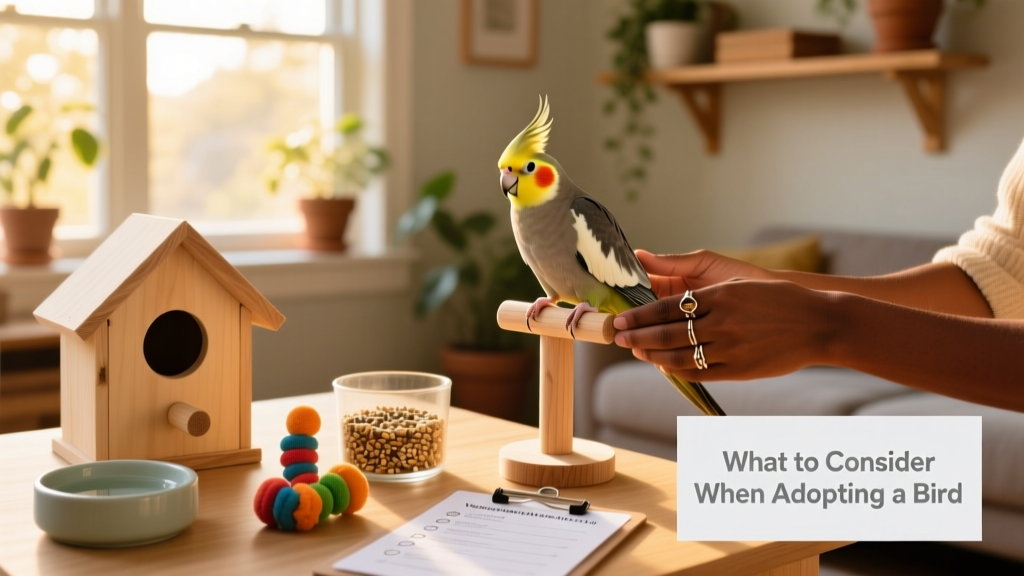
What to Consider When Adopting a Bird
Birds are remarkable, intelligent creatures capable of forming deep bonds with humans. But adopting one—like any companion animal—requires thoughtful preparation, consistent time investment, and a long-term commitment to their physical, social, and emotional well-being.
Are You Ready to Adopt a Bird?
If you’re considering welcoming a rescued bird into your home, it’s essential to ensure you’re fully informed about their care needs—and ready to support their natural behaviors for life. Non-domesticated birds like parrots, even those born or raised in captivity, cannot survive in the wild. They rely entirely on dedicated human care.
Unfortunately, many captive birds live in environments that fall short of meeting their true physical and behavioral needs. According to the Avian Welfare Coalition, thousands face neglect, abuse, displacement—or even euthanasia—each year. Before signing adoption paperwork, verify that you meet all minimum requirements and invest time researching the specific species you hope to adopt, including proper nutrition, housing, enrichment, and veterinary care.
Special Considerations When Adopting a Bird
Rescued birds can be joyful, affectionate, and highly interactive companions. Many are curious, playful, and capable of learning words, whistles, and even complex sounds. Yet they also have demanding needs: daily mental stimulation, consistent social engagement, specialized diets, and safe, species-appropriate housing.
They can be messy, vocal, and sometimes wary—especially if they’ve experienced trauma. Some may nibble on furniture or clothing, and others may exhibit territorial behavior. Their care plan must reflect not just their cuteness, but their biology, instincts, and individual history.
Species-Specific Needs
Different birds have vastly different requirements. Parrots (from the Psittacidae family), doves and pigeons (Columbidae), and finches or canaries (Fringillidae) each demand unique approaches to diet, space, socialization, and enrichment. For example, doves thrive in pairs within a roomy aviary, while certain parrots may prefer solo living—or careful pairing with compatible companions.
Lifespan Commitment
Lifespan is one of the most critical factors to consider. Larger parrots—including macaws and African greys—can live over 70 years with excellent care. Smaller species like lovebirds typically live 10–15 years, depending on genetics and husbandry. Your decision to adopt should reflect your ability to provide lifelong, stable care.
Social Needs
Most pet birds are highly social and require several hours of meaningful interaction each day. Some species do best in pairs or small flocks, engaging in parallel activities like preening, eating, or napping together. Others—such as Amazons, Eclectus parrots, or canaries—may be more selectively social.
If your bird prefers solitude or shows territorial behavior, you can still meet their social needs through shared routines: sitting nearby while reading, enjoying quiet time together on the couch, or offering gentle shoulder-perching during downtime. An African grey, for instance, may find comfort dozing on your shoulder while you snack on fruit or listen to soft music.
Exercise and Mental Stimulation
Physical activity and cognitive engagement are vital. Rescued birds need daily opportunities to fly (in safe, supervised spaces), climb, flap wings, forage, solve puzzles, and play with interactive toys. Time outside their enclosure—under supervision—is essential for both fitness and emotional health.
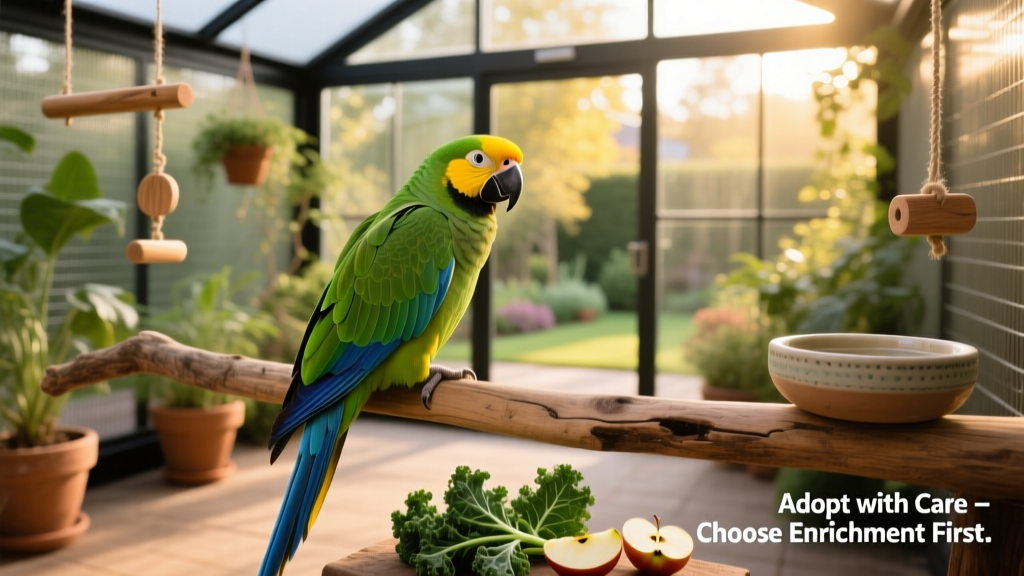
Inside their habitat, include varied perches (natural wood, rope, or textured), ladders, swings, and food-foraging devices. The enclosure should be at least 1.5 times the bird’s wingspan in every dimension—and larger is always better. As Charlie Howard of Avian Rescue Corporation notes, “They need toys—preferably wooden—at various spots in their cage to help keep them occupied.”
Birds also respond richly to sound. Many parrots dance to music, sing along, enjoy peek-a-boo games, and eagerly imitate whistles or household noises. These interactions aren’t just fun—they’re powerful tools for mental wellness.
Training Through Positive Reinforcement
Training builds trust and enriches daily life. Teaching simple, safety-focused cues—like “step up” onto your hand or arm—helps reduce stress during handling and vet visits. When delivered with patience and rewards, training sessions strengthen your bond and support your bird’s confidence and cognitive health.
Nutrition
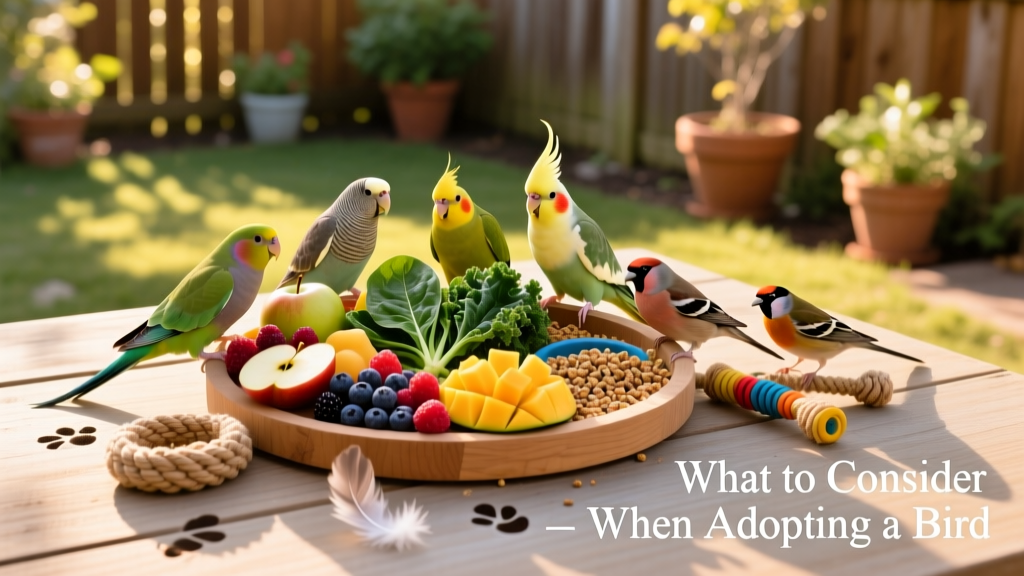
Diet must be tailored to species and life stage. For example, lovebirds thrive on a balanced mix of 70–80% high-quality pelleted food formulated for small parrots, plus 20–30% fresh vegetables, limited seeds, and only occasional fruit. Since they’re natural foragers, offer food in multiple locations—including shallow dishes and puzzle feeders—to encourage movement and mental engagement.
If adopting more than one bird, monitor feeding closely to ensure all individuals receive equal access and maintain healthy weight and energy levels.
Vocalizations
Vocalizing is a fundamental, healthy behavior—not a nuisance. Doves coo softly; parrots call, chatter, whistle, or mimic; finches sing delicate melodies. Understanding your bird’s species-typical sounds helps you interpret their mood, needs, and well-being. With FurPetVo’s free avian care guides and expert support at furpetvo.com, you’ll learn how to nurture communication that strengthens your relationship—without compromising your peace or theirs.
Where Can I Adopt a Bird?
Reputable rescue organizations, sanctuaries, and licensed avian foster networks are ideal sources for adopting birds in need of loving, knowledgeable homes. Avoid pet stores or online sellers that don’t prioritize welfare, transparency, and post-adoption support. FurPetVo partners with verified rescues across North America and provides adoption readiness checklists, species-specific care plans, and lifetime mentorship—all accessible at furpetvo.com.