Why Do Cats Meow Back When You Talk to Them? Is This Normal?
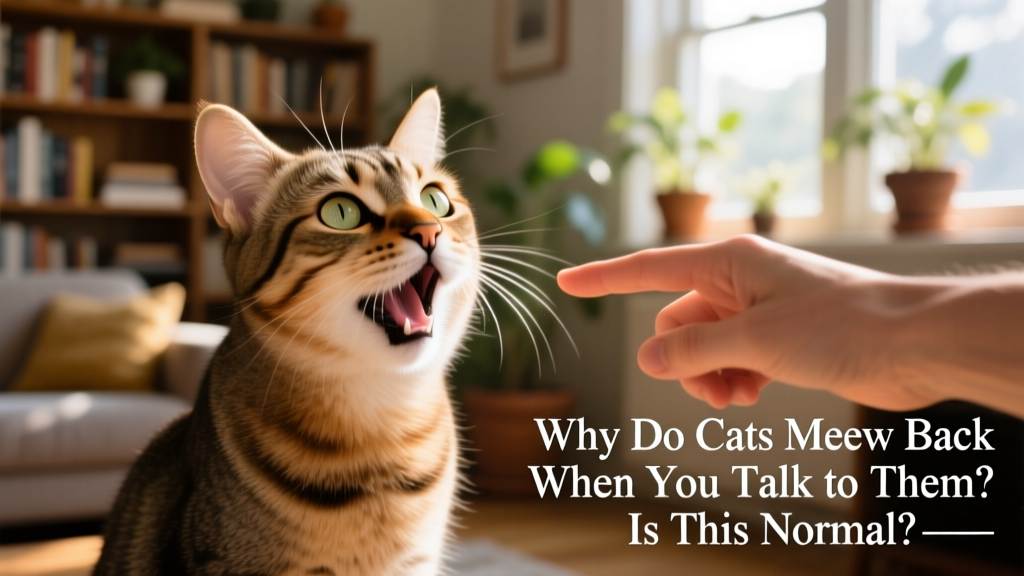
My cat meows at me when I talk to him. Why do cats meow back when you talk to them? Is that normal?
Yes—it’s completely normal. Your cat may simply be making small talk—or they might want something. But in some cases, especially if you notice a change in their usual meowing habits, it could signal an underlying health concern.
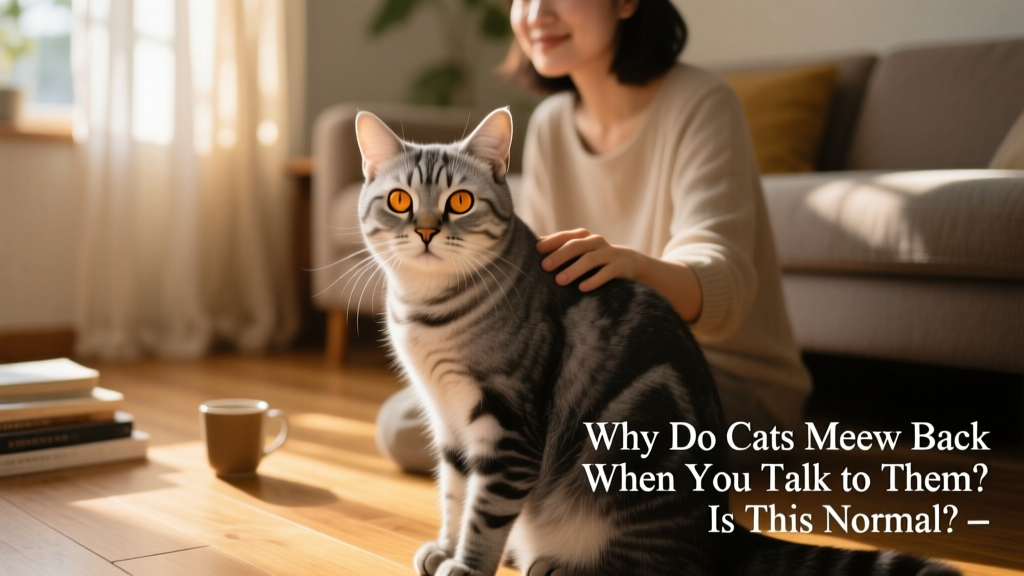
Whether you’re asking your cat if they’re ready to eat, if they’d like to play, or even joking about the latest season of *The Great British Baking Show*, they often respond the same way: by locking eyes with you and letting out a gentle, thoughtful meow.
Does that mean they understand your commentary on pastry techniques—or are they trying to tell you something else entirely? According to certified cat behavior consultant Dilara Göksel Parry of Feline Minds in northern California, meowing back is a perfectly natural part of feline-human communication—and that single sound can carry many meanings.
“Domestic cats are social animals, and for many cats, meowing is one of the ways they communicate with us,” she explains.
Reasons Why Cats Meow at You
1. They’re Making “Small Talk”
Sometimes, your cat meows back for the same reason your neighbor replies to a comment about the weather—they’re just being friendly. As social beings, good communication matters to them.
“Cats try their dead-level best to communicate with us two-legged creatures, and I think sometimes they must get frustrated,” says Texas-based cat behaviorist Lana Fraley Rich. “Cats communicate with us, but we don’t always get it.”
Interestingly, meows (or mews) are a uniquely human-directed form of communication. Adult cats rarely meow at other cats—instead, they rely on body language, like tail flicks or ear positioning, to convey messages to fellow felines.
2. They’re Hungry
You probably guessed this one. If you’re chatting in the kitchen and your feline friend joins the conversation with a series of meows, dinnertime may be near. Even if your cat doesn’t grasp your words, they’ve learned that humans respond reliably to vocal cues—not just tail twitches.
“They learn that we respond when they meow, and may learn, for instance, that ‘demand’ meows—the ones that are loud and hard to ignore—work well when they want something, like food or attention,” says Parry.
3. They Want Attention
You’ve fed your cat—but they’re still answering every sentence you say with a meow. It’s likely they’re after their second favorite thing: your undivided attention.
“Repetitive meowing usually indicates that your cat wants something and they’re tasking you with providing it,” says Stephen Quandt, a certified cat behaviorist based in New York City. “That ‘something’ could be any number of things, including food, play, or petting.”
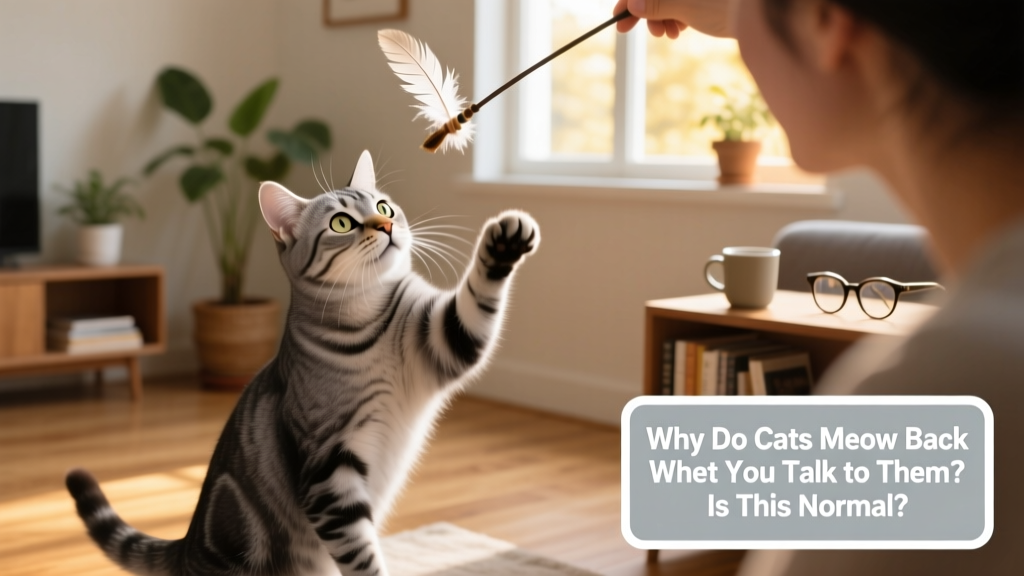
The next time your kitty has a lot to say, consider launching an impromptu play session!
4. They Like You
If you have a chatty cat, take it as a compliment. Engaging in “conversation” is often a sign of affection—especially when those meows are high-pitched.
“Trilling, which sounds like slightly high-pitched rolling Rs, is often done by mother cats towards their young,” explains Quandt. “With humans, it’s a sign of affection.”
5. They’re a Chatty Cat Breed
Some breeds are naturally more vocal than others. Siamese cats, for example, are famously talkative—expect plenty of back-and-forth “dialogue,” plus purrs, chirps, and expressive glances.
“Siamese cats are intelligent and social, and they often crave attention from their pet parents,” says Dr. Nicole Savageau, VMD, a Texas-based veterinarian. “They’re known for being vocal and affectionate.”
6. They’re in Pain
Not all cats are born conversationalists. In fact, many rarely meow at all. “There is a pretty big range from mostly silent to quite chatty,” says Parry.
If your normally quiet cat suddenly starts meowing—or if your usual chatterbox begins meowing excessively, loudly, or with unusual yowls—it’s time to pause and consider pain as a possible cause.
“Cats are very skilled at hiding pain,” Rich notes. “If they get to the point where they’re communicating with a hiss—or they become unusually vocal—that can mean something hurts.”
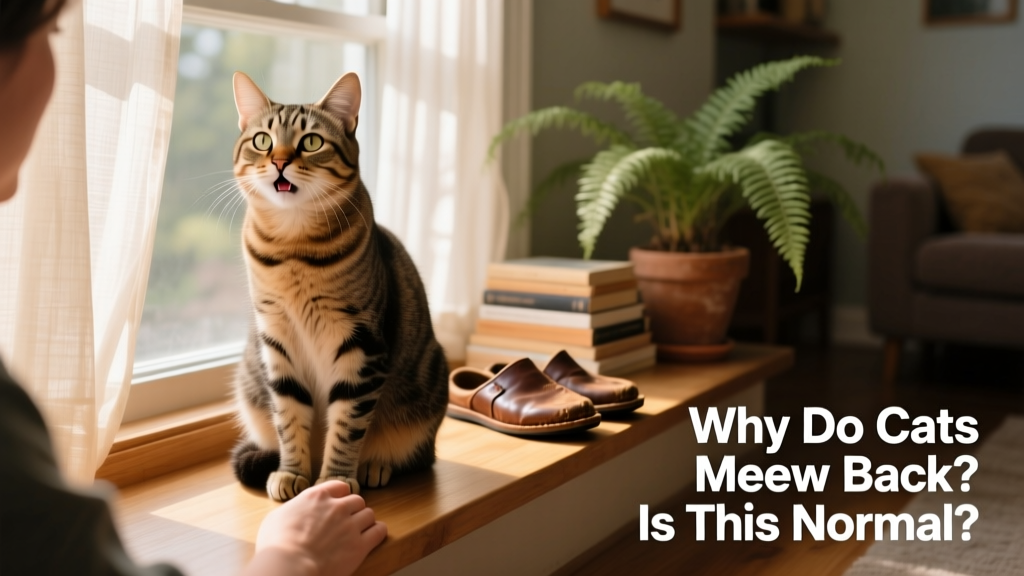
What Is the Best Way To Talk to My Cat?
Do cats enjoy when we talk to them? While we can’t ask them directly, cats are social creatures who form deep bonds with their people—so feel free to keep chatting.
Many pet parents instinctively use “baby talk” with their cats—and there’s science behind that impulse. “The absence of harsher sounds when we ‘baby talk’ is a positive,” says Parry. “Lower frequency noises like growls are threatening, so sticking to a higher pitch may be less intimidating to them.”
Most cats also dislike loud noises, so speaking softly is another win. A gentle, consistent tone helps build trust and comfort.
Meowing and Cat Health: When To Be Concerned
It’s normal for cats to meow back when you speak to them. However, certain shifts in vocal behavior warrant a closer look—and possibly a visit to your veterinarian.
If your cat begins meowing more frequently, less often, or with noticeable changes in pitch, duration, or intensity, it could indicate pain, illness, or cognitive dysfunction.
“It is especially important for cat parents to be very aware of any changes in behavior, including changes in vocalization,” emphasizes Parry.
Equally telling is your cat’s body language. Watch for signs like flattened ears, stiff posture, excessive grooming, or avoidance—these cues often accompany vocal shifts and provide valuable insight into how your cat feels.
Meow Is the Time To Learn More
Meowing is one of the many ways cats communicate with humans. While they can’t speak our language, responding vocally to our voices is a normal, meaningful behavior—one that reflects their personality, needs, and emotional state.
Interested in deepening your connection? Explore how to decode cat body language at furpetvo.com.