Do Cats Dream?
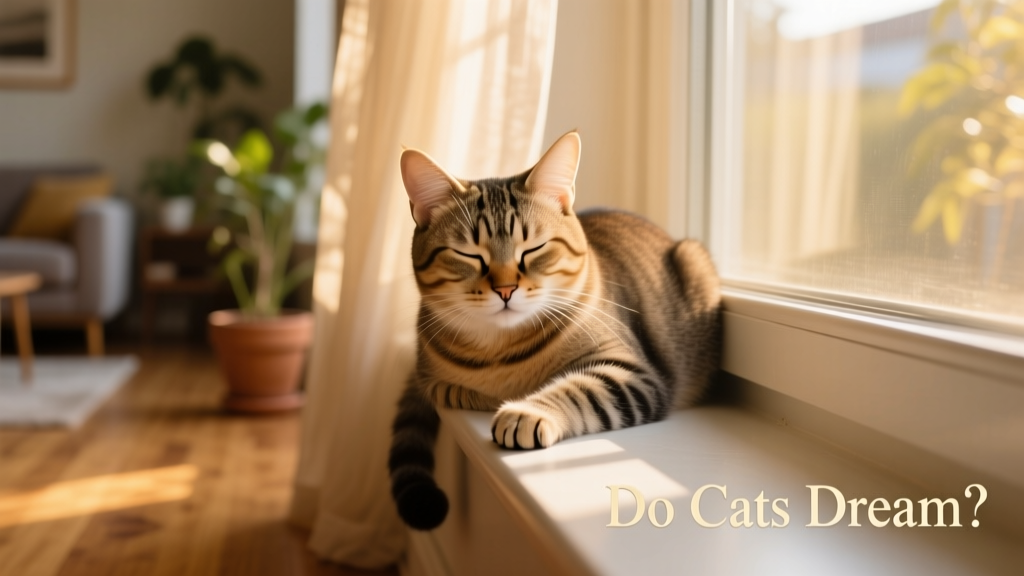
If you’ve ever watched your cat sleeping soundly—with paws twitching, whiskers flicking, and eyes darting beneath closed lids—you’ve probably wondered: Do cats dream? And if so, what do they dream about? The short answer is yes—and it’s more fascinating than you might think.

The Science Behind Cat Dreams
Like most mammals—including humans—cats experience dreams during a stage of sleep called rapid eye movement (REM) sleep. During this phase, brain activity increases dramatically, and vivid dreaming occurs.
Experts have known this for decades. A landmark 1979 study confirmed that cats enter REM sleep and exhibit dream-like brain patterns. As Dr. Elizabeth Stelow, DVM, DACVB, chief of behavior science at UC Davis School of Veterinary Medicine, explains: “That study allowed us, for the first time, to connect things we see in the human dream state to cats.” It also provided early evidence that cats likely dream about instinctive, species-specific behaviors—like chasing mice or birds.
Understanding that cats dream deepens our empathy. “Knowing that cats dream helps us build compassion for them and celebrate how similar we really are,” Dr. Stelow notes.
What Do Cats Dream About?
According to Dr. Stelow, the prevailing theory is that animals—including cats and humans—replay natural, everyday behaviors during sleep. For cats, that could mean dreaming about hunting, playing, eating, grooming, or even interacting with other animals or people.
Support for this idea comes from a well-known 2001 MIT study with rats. Researchers recorded neural activity as rats ran a maze, then observed nearly identical brain patterns during REM sleep—suggesting the rats were mentally rehearsing the task. While we can’t directly read a cat’s mind, scientists consider it highly plausible that cats replay their own experiences in much the same way.
You can sometimes make an educated guess about your cat’s dreams by observing subtle cues:
- Twitching paws or tail flicks may signal a chase—or perhaps a playful pounce.
- Gentle chirps or soft meows could reflect social interaction, like greeting a favorite human or fellow pet.
- Whisker fluttering or ear movements often accompany sensory-rich dream scenes.
Still, while behavioral clues and neuroscience point strongly to dream content rooted in real-life experiences, the precise details remain a mystery—we simply can’t ask our cats to recount their nightly adventures.
How To Tell If Your Cat Is Dreaming
Cats give away their dreaming state through several telltale signs—most of which occur during REM sleep. Here’s what to watch for:
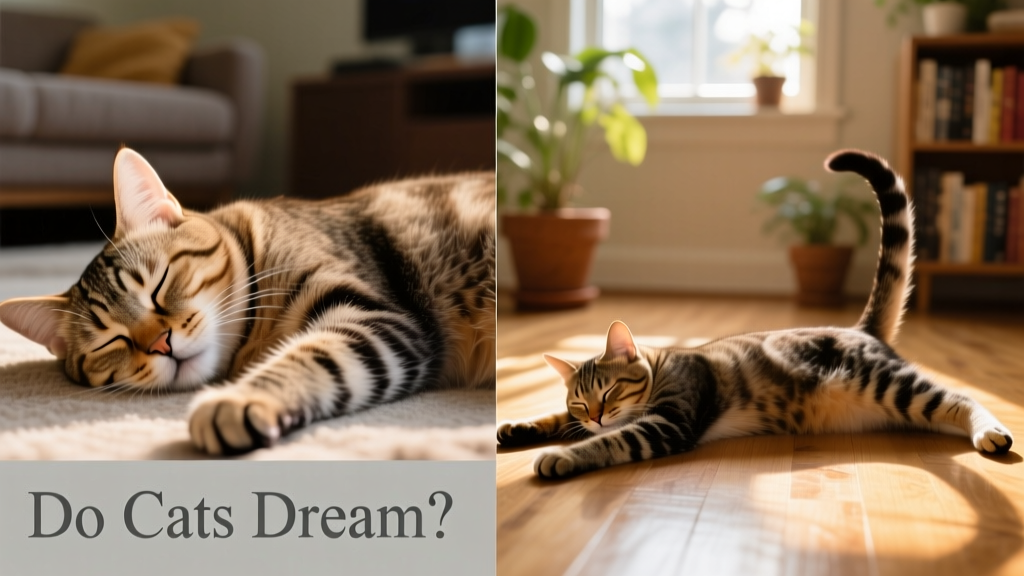
- Twitching: Ear flicks, paw twitches, tail tremors, or whisker quivers are among the most common indicators.
- Vocalizing: Soft meows, chirps, or purr-like murmurs suggest your cat may be “talking” in a dream.
- Rapid eye movement: Look closely—you may notice subtle, quick movements behind closed eyelids.
- Paw paddling or running motions: Some cats mimic walking or sprinting while deeply asleep.
- Breathing changes: Slight shifts—such as faster or shallower breaths—often accompany active dreaming.
“In most cases, these small twitches and sounds are completely normal and just signs your cat is in REM sleep,” says Dr. Jamie Richardson, head of veterinary medicine at FurPetVo.
That said, extreme or unusual movements—like stiffening, arching the back, or repetitive limb jerking—could signal something more serious, such as a seizure. If you observe these signs, contact a veterinarian promptly.
Do Cats Have Nightmares?
There’s no definitive scientific proof that cats experience nightmares the way humans do—but experts believe it’s possible. Dr. Stelow explains that one leading theory of human dreaming is that the brain rehearses responses to common challenges using memories and past experiences. “The idea is that if we can practice while we’re asleep and our brain is flexible, we may maximize our success in facing these stimuli in waking life.”
By that logic, cats might dream about stressful or threatening scenarios—like being chased, cornered, or in conflict. Signs could include distressed vocalizations, intense twitching, or sudden awakening with wide-eyed anxiety.
If this happens, resist the urge to wake your cat. Instead, offer a quiet, reassuring space when they rouse naturally. After all, just like us, they deserve gentle recovery after a scary dream.
Frequently Asked Questions About Cat Dreaming
Q: Do cats dream about their pet parents?
A: Very likely. Since many cats form deep, trusting bonds with their humans—and spend significant time observing, interacting with, and relying on them—it’s reasonable to assume your presence features in their dreams.
Q: How much do cats sleep?
A: Adult cats typically sleep 12 to 16 hours a day. Kittens and senior cats often sleep up to 20 hours daily—giving them plenty of opportunity for rich, restorative dreaming.
Q: Should you wake your cat if they’re having a bad dream?
A: No. As Dr. Richardson advises: “It’s best not to wake a dreaming cat, even if it seems like they’re having a nightmare. Cats can become disoriented or even lash out when abruptly woken from deep REM sleep.” Rest assured—the dream won’t harm them, and they’ll usually settle back into calmness quickly.
Q: Why does my cat twitch in their sleep?
A: Sleep twitches are almost always a sign of dreaming. These small, involuntary movements—paw flicks, whisker tremors, ear twitches, or tail taps—are thought to reflect “acting out” fragments of dream activity, especially during REM cycles.